If you’ve ever browsed industrial flow control components, you’ve almost certainly come across the terms double offset butterfly valve (DOBV) and triple offset butterfly valve (TOBV). As someone who’s supplied butterfly valves for over 12 years—sourcing components, troubleshooting installations, and working directly with process engineers across oil and gas, chemical, and power generation—this is one of the most common questions I get from buyers who aren’t sure which valve fits their application. It’s easy to mix these two up at first glance: both start with the same butterfly valve core design, but their tiny, intentional differences make all the difference for performance, cost, and long-term reliability. I’ll break this down from the shop floor perspective—no dry textbook jargon, just what I’ve seen hold up (and fail) in real-world sites. Butterfly Valve
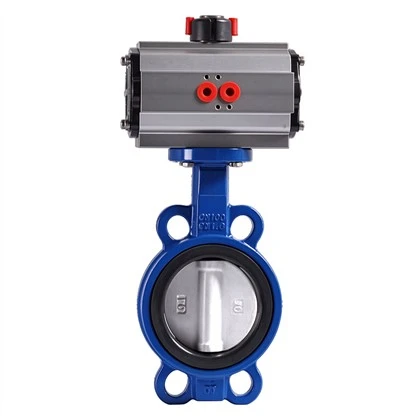
First, let’s start with the basic anatomy of a butterfly valve, because you can’t spot the offsets without understanding how a standard wafer-style valve works. A basic butterfly valve has a disc that rotates 90 degrees inside the valve body to open or close flow, a stem that turns the disc, and sealing elements that create a tight shut-off when the disc is seated. An offset, in valve terms, is a deliberate shift in the position of one or more of these components from the centerline of the valve body. That shift is what defines double vs. triple offset.
A double offset butterfly valve (DOBV) takes two offsets. The first offset moves the stem’s axis away from the valve body’s centerline, and the second moves the disc’s seat (or the area where the disc touches the body) in a second direction, typically perpendicular to the first. The goal here is to make the disc separate from the valve seat as soon as you start opening the valve, instead of scraping against it the entire time. That’s a big improvement over a standard concentric butterfly valve, where the disc sits directly on the centerline—you have to drag the disc across the seat every time you open or close it, which wears out the seal fast, especially for abrasive fluids.
From my time working with DOBVs, they excel in mid-range applications. We regularly supply them for water treatment, mild chemical processing, and low-pressure HVAC systems. They’re also a great budget option for temporary installations: I once sold a batch of 20-inch DOBVs for a plant’s seasonal water transfer, and even after a year of regular use, only one seal showed minor wear, compared to three standard concentric valves on a similar run. Their offset design means less seat friction than concentric valves, so they last longer than basic models, and they’re simpler to maintain than triple offsets. If a gasket needs replacing on a DOBV, you can usually swap it out in half the time it takes for a TOBV, because there are fewer precision components to align.
But here’s where triple offset comes in. A triple offset butterfly valve adds a third, critical offset: it tilts the disc’s sealing face at an angle, not just shifting it off-center. Let’s tie that back to the anatomy to make it clear. The first two offsets in a TOBV are the same as a DOBV: stem offset from body centerline, seat offset perpendicular to the stem. The third offset is a conical tilt to the disc’s sealing surface, angled away from the stem’s axis. That tilt is the game-changer. When a TOBV is closed, the disc’s seal presses tightly against the seat to create a bubble-tight shut-off—no gaps, even under high pressure. When you open it, the disc doesn’t just spin; it pulls away from the seat at an angle as it rotates, so there’s zero contact between the disc and seat during movement. No scraping, no friction, no wear on the seal during operation. That’s why TOBVs are built for the toughest jobs.
I’ve seen TOBVs hold up in applications where DOBVs fail fast. Last year, a chemical plant that kept blowing through DOBV seals in their 100°F, corrosive acid line reached out to us. We supplied three 12-inch TOBVs, and two years later, they still hadn’t needed a seal replacement. The difference? The acid wasn’t grinding away at the seal every time the valve opened, because the TOBV’s disc never touches the seat during rotation. That’s also why TOBVs work for high-pressure and high-temperature systems: most industrial valves lose their seal at temperatures over 450°F or pressures above 150 PSI, but triple offset designs, with their zero-contact rotation, maintain shut-off up to 1,000°F and 1,500 PSI, depending on materials.
Now, let’s get to the practical differences that matter when you’re buying, not just the engineering specs. First, cost. I can’t sugarcoat it: a TOBV is 20 to 50% more expensive than a comparable size DOBV. The precision machining needed for that third offset—aligning the stem, seat, and disc tilt to within thousandths of an inch—adds labor and material costs. Most buyers will opt for a DOBV if their operating parameters are within 150 PSI and 450°F, but if you’re dealing with extreme conditions, the higher upfront cost pays for itself in less downtime and fewer seal replacements. I once had a customer who tried to save $2,000 by going with DOBVs for a high-pressure gas line, and within six months, they were replacing seals every two weeks, costing them over $10,000 in labor and lost production. That’s the kind of call I try to walk buyers through.
Next, shut-off performance. Double offset valves get you a tight shut-off for low and medium pressure, but they can’t match TOBVs for zero-leakage requirements. Most process regulations (like API 609 or ASME B16.34) mandate bubble-tight shut-off for critical lines, and TOBVs are designed to meet that standard across far wider operating ranges. DOBVs can have minor leakage at the upper end of their pressure rating, which is fine for non-critical applications like water transfer, but not for chemical or hazardous gas lines where even a small leak is a safety hazard.
Maintenance is another key point. As I mentioned earlier, DOBVs are simpler to service. If you’re working in a plant with a basic maintenance team, swapping a DOBV’s seat or disc is a routine job that takes an hour or less. TOBVs, on the other hand, require precision alignment when you’re reassembling, because that third offset tilt has to stay perfect. If you misalign the disc even a little, you’ll get seat wear and leaks, which means you might need a specialized technician to service it. That’s not a knock on TOBVs—it’s just a trade-off for their durability. For facilities that do regular valve overhauls in-house, a DOBV is easier to manage, while TOBVs are better for facilities that prioritize uptime and have the budget for occasional specialized service.
Size and application flexibility: We work with valves from 2-inch to 60-inch, and I’ve noticed that below 4 inches, DOBVs are more common, because the smaller size makes it harder to machine that third offset with the precision needed for a TOBV. For large 30-inch and above valves, TOBVs start to make more sense, because the zero-contact rotation cuts down on the torque needed to operate the valve. A DOBV might require a larger actuator for a 24-inch valve, while a TOBV of the same size needs a smaller actuator, which saves on installation costs.
Wait, but let’s clear up a common misconception: some buyers think triple offset is just a “better” valve across the board, but that’s not true. I had a buyer last quarter who ordered TOBVs for a low-pressure irrigation line, and they ended up regretting it. The TOBV was overbuilt, hard to operate manually (since it’s designed for high-pressure torque), and cost twice as much as a DOBV that would have worked perfectly. It’s all about matching the valve to your specific needs, not just picking the most advanced option.
So, to wrap this up for anyone trying to decide: if your application is low pressure (<150 PSI), moderate temperature (<450°F), non-hazardous fluid, and you need a cost-effective, easy-to-maintain valve, go with a double offset. If you’re dealing with high pressure, extreme temperatures, hazardous fluids, or need bubble-tight shut-off, triple offset is the right choice. If you’re still not sure, reach out—we’ve installed thousands of these valves, and we can help you match the right design to your site’s needs. There’s no one-size-fits-all here, and that’s why taking a minute to talk through your application avoids costly mistakes down the line.
If you’re ready to discuss which valve fits your project, connect with our team to review your specifications, get a custom quote, and address any questions about installation, maintenance, or material options for your double or triple offset butterfly valve needs.
Butterfly Valve References
- American Petroleum Institute. API 609: Resilient and Metallic Butterfly Valves for Pipeline, Petroleum, and Related Industries. API Publishing Services, 2022.
- American Society of Mechanical Engineers. ASME B16.34: Valves—Flanged, Threaded, and Welding End. ASME International, 2021.
- valve World. “Double vs. Triple Offset Butterfly Valves: A Practical Guide for Industrial Applications.” valve World, vol. 47, no. 3, 2023, pp. 22–25.
- Miller, John. Flow Control Valve Design and Selection. CRC Press, 2020.
Ningguo Haidie Valve Manufacturing Co., Ltd.
We are one of the most experienced butterfly valve manufacturers and suppliers in China, also support customized service. Please feel free to buy bulk durable butterfly valve in stock here and get pricelist from our factory. Quality products and reasonable price are available.
Address: Haidie Valves, Nanshan Industrial Park, Ningguo Economic and Technological Development Area, Ningguo City, Xuancheng City, Anhui Province (located within the premises of Xintai Company)
E-mail: 13606716429@163.com
WebSite: https://www.haidie-vavle.com/
