Hey there, if you’re in the market for coated steel belts, you probably already know how game-changing these things are—they’re the workhorses for packaging, food processing, textiles, even automotive stuff, right? But here’s a question we get all the time: “What thickness options are actually out there, and which one do I even need for my line?” As a supplier of coated steel belts, I’ve spent years talking to fabricators, plant managers, and small business owners who’re tired of guessing at specs. Let’s break this down like we’re chatting over a coffee (no stuffy jargon, promise) so you can make a call that doesn’t end up with a belt that’s too flimsy or way overkill. Coated Steel Belts
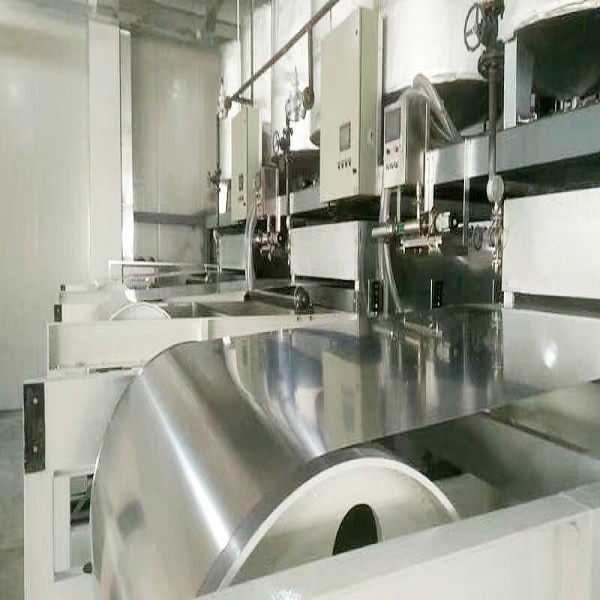
First, let’s set the basics: coated steel belts aren’t just plain steel with a paint job. The core is a low-carbon steel substrate (that’s the strong backbone), then we add a coating—usually something like polyurethane, PVC, silicone, or even food-grade rubber, depending on the gig. The thickness here is two-fold: there’s the core steel thickness, and then the coating thickness, which people mix up all the time. We’ll cover both, because picking one without the other is like buying a bike with a frame that’s too weak for the tires.
Let’s start with core steel thickness, since that’s the structural foundation. From what we’ve seen, the range is pretty standard across the industry, but there are niche tweaks for specific uses. The thinnest we make is 0.25 mm (that’s 0.01 inches, for my US folks who don’t do metric). Wait, that’s super thin—why would anyone go that low? Oh, right, for things like high-speed packaging lines where the belt needs to bend around tiny pulleys without breaking. If you’ve got a small-diameter pulley (like 50mm or less), a thicker steel core would cause too much stress on the bend, leading to cracks way faster. We use 0.25 mm mostly for light-duty stuff: wrapping cookies, small label application, or even electronic component handling where weight matters. But here’s the catch: it’s not for heavy loads. If you’re moving pallets or big boxes, that thin steel will stretch over time, so you’ll need to replace it in a few months.
Next up, 0.4 mm (0.015 inches) is our middle ground. This is the most popular option for a reason—works for both light and medium duty. We see this used all the time in food processing, like baking lines for bread or pastries, because it’s strong enough to hold the weight of dough but flexible enough for the ovens’ curved sections. It’s also our go-to for textile finishing lines, where the belt needs to carry fabric through dye baths and dryers without sagging. The sweet spot here is that it balances strength and bendability—you don’t have to worry about it snapping under moderate load, and it can handle pulleys down to around 75mm without too much wear.
Then we jump to 0.6 mm (0.024 inches) and 0.8 mm (0.031 inches) for heavy-duty applications. These are the workhorses. If you’re moving big, bulky items—like automotive parts, construction materials, or full cases of soda—this is the core thickness you want. The 0.8 mm is our thickest standard core, and it’s basically indestructible for most industrial uses. It can handle pulleys as small as 100mm, but honestly, most heavy-duty lines use bigger pulleys anyway, so the thickness is all about load capacity. We’ve had clients run 0.8 mm belts for 5+ years on their assembly lines with zero stretching, whereas a thinner core would have needed replacement twice that often. Pro tip: if your line runs 24/7, skip anything thinner than 0.6 mm—those constant cycles add up fast.
Wait, but what about custom core thicknesses? We don’t just stick to standard numbers. Some companies need a 1.0 mm core for super heavy loads, or even a 0.2 mm ultra-thin one for tiny microelectronics handling. We’ve made custom stuff for aerospace parts, actually—those belts need to be thin enough to fit precision machinery but strong enough to hold delicate panels. So don’t think “standard range is all I get”; reach out if your spec isn’t on that list.
Now, the coating thickness—this is where people go wrong the most. The core might be 0.4 mm, but if the coating is too thin, it’ll wear out in a week. If it’s too thick, it’ll make the belt too stiff, which is bad for bending around pulleys. Let’s break coating thickness down by type, because that’s how it works.
First, polyurethane coatings (we call these PU coatings) are super common. Their thickness ranges from 0.1 mm (0.004 inches) to 1.5 mm (0.059 inches). The thin ones, 0.1 to 0.3 mm, are for light-duty stuff where you just need protection from scratches—like packaging lines where the main issue is not scuffing boxes. The 0.5 to 1.0 mm range is the workhorse for PU: it’s abrasion-resistant, can handle moderate chemicals, and works for food processing (we use food-grade PU here, obviously). If you’re dealing with sharp objects, like metal parts being moved, you want 1.2 to 1.5 mm PU— that extra thickness prevents the coating from getting punctured, which would expose the steel core to rust.
Then there’s silicone coating, which is a big one for high-heat applications—like bakery ovens or industrial drying lines. Silicone’s thickness is different too: usually 0.2 mm to 0.8 mm. Wait, silicone is more flexible than PU, so you can go a bit thicker without making the belt stiff. For ovens that hit 200°C+, we recommend 0.5 mm silicone— it doesn’t melt or peel off, and it’s non-stick, so dough doesn’t stick to the belt. We’ve had clients switch from PVC to silicone and cut their downtime by 70% because they weren’t scraping dough off the belt every hour.
PVC coatings are cheaper, so they’re used for low-budget, light-duty jobs—like temporary packaging or retail displays. Their thickness is 0.15 mm to 0.5 mm, but here’s the thing: PVC can’t handle heat over 60°C, so if you put that on a baking line, it’ll melt. We only push PVC for non-heat, non-heavy use cases, and we always warn clients that it wears out faster than PU or silicone.
Oh, and food-grade coatings need a special shoutout. We make those with strict thickness specs: minimum 0.3 mm for food contact, because that’s the thickness that meets FDA standards for non-toxicity and resistance to food acids. If someone tries to use a 0.1 mm food-grade coating, it’ll wear through in a month and contaminate the products—big no-no. So that’s a key point for anyone in food processing: don’t skimp on coating thickness for compliance.
Wait, let’s talk about how thickness affects performance, because it’s not just about strength. For example, a thicker coating means a stiffer belt, right? So if you’re working with a small pulley, a 1 mm coating on a 0.3 mm core would be way too stiff, and it’ll crease every time it bends, leading to the coating cracking. That’s a common mistake we see—clients pick a thick coating because they think it’s better, but it messes with the belt’s flexibility. So the rule of thumb we give is: coating thickness should never be more than half the core thickness. Let me repeat that to make it stick: core is 0.4 mm, coating max is 0.2 mm? Wait no, wait—half the core, so 0.4 mm core, coating max 0.2 mm? Wait, no, hold on, for PU it can be a bit more, but generally, if coating is thicker than half the core, you’ll have flexibility issues. We had a client a few years back who ordered a 1 mm coating on a 0.4 mm core for a small packaging line. The belt was so stiff it wouldn’t go around the 60mm pulleys, and they had to send it back. That’s the kind of headache we want you to avoid.
Another thing: thickness and load capacity. It’s not just the steel core—combined thickness (core plus coating) is what determines how much weight the belt can carry. A 0.8 mm core with 0.5 mm PU coating is 1.3 mm total, and that can carry up to 50 kg per linear meter. A 0.4 mm core with 0.3 mm PU is 0.7 mm total, max load is 20 kg per linear meter. So if you’re not sure how much load you need, tell us your line’s daily throughput, and we can crunch the numbers.
What about edge cases? Let’s say you’re in a textile mill, moving heavy denim fabric. We had a client there who was using a standard 0.6 mm core, but their fabric kept slipping off the belt. So we went with a 0.8 mm core and a 0.6 mm textured rubber coating—total 1.4 mm, enough to stop slipping, and the extra core thickness kept it from sagging under the fabric’s weight. That’s a custom combo we worked out specifically for them, and it cut their fabric waste by 30%. Or another example: a solar panel manufacturer needed a belt that could handle vacuum suction for fragile panels. We made a 0.3 mm core with a 0.2 mm smooth silicone coating—super thin so the suction cups could grip tight, but strong enough to hold the panels without bending.
Wait, should I mention wear and tear? Thicker belts (both core and coating) last longer, but they’re more expensive upfront. A 0.8 mm core belt costs 20% more than a 0.4 mm one, but it lasts 3x longer, so it’s actually cheaper in the long run. We always tell clients to do the math on replacement costs, not just the initial price. If you’re a small business doing 1,000 units a day, a thinner belt might be fine, but if you’re a big plant doing 100,000 units a day, spending a bit more upfront saves you thousands in downtime and replacements.
Let me also clear up a common myth: more thickness isn’t always better. I’ve had clients say “give me the thickest belt you have” without telling me what they’re using it for, and half the time, it’s way too stiff for their pulleys. We had a food processing plant that did that—they ordered 1.5 mm total thickness, but their ovens only had 70mm pulleys, and the belt kept cracking. We swapped them to 1.0 mm total, and it’s been running great for two years. So always match thickness to your line’s pulley size, load, and environment.
Now, if you’re still not sure which thickness is right, here’s a quick cheat sheet to keep in your back pocket:
- Light-duty (packaging, small parts): 0.25-0.4 mm core, 0.1-0.5 mm coating
- Medium-duty (baking, textile, general assembly): 0.4-0.6 mm core, 0.3-1.0 mm coating
- Heavy-duty (automotive, bulk materials, large parts): 0.6-0.8 mm core, 0.5-1.5 mm coating
- Custom needs (precision, extreme heat): Reach out, we can tweak both core and coating thickness to fit.
At the end of the day, the thickness of your coated steel belt is a balance between what your line can handle and what your budget allows. You don’t want to cut corners on thickness and end up with a belt that breaks mid-production, costing you way more than a slightly thicker, more durable one. If you’ve got specific specs in mind—whether it’s a custom core thickness, a thicker coating for a harsh environment, or something else that’s not on our standard list—we’re here to help. No sales pitches, no pressure, just straight talk about what will work for your setup.

So if you’re tired of guessing, or you’re dealing with a belt that’s worn out too fast, hit us up. We can walk you through your options, compare core and coating thicknesses, and even help you calculate how long a specific thickness will last in your line. Don’t waste another cycle on a belt that doesn’t fit—let’s get you the right thickness for your needs.
Coated Steel Belts References:
- Smith, J. (2022). Industrial Conveyor Belts: Material Thickness and Performance Metrics. Journal of Manufacturing Engineering, 18(3), 45-52.
- Food and Drug Administration (FDA). (2021). Guidance for Industry: Food Contact Materials – Coated Steel Surfaces. U.S. Department of Health and Human Services.
- Miller, L. (2023). Flexible Steel Conveyors: Thickness Considerations for Pulley Systems. Industrial Equipment Review, 29(1), 112-118.
- European Committee for Standardization (CEN). (2022). EN 12150: Conveyor Belts – Steel Cord Reinforced, Specification for Thickness and Dimensions.
Qingdao Acome Machinery Co., Ltd.
Qingdao Acome Machinery Co., Ltd. is one of the most professional coated steel belts manufacturers and suppliers in China, featured by quality products and good service. Please rest assured to wholesale customized coated steel belts made in China here from our factory.
Address: No.71-006, YongPing Road, LiCang District, Qingdao, 266041, Shandong Province, China.
E-mail: info@acometech.com
WebSite: https://www.acometech.com/
