If you’ve ever walked down a commercial building’s exterior corridor, a warehouse’s loading dock, or even a residential deck with exposed wiring, you’ve probably seen cable trays. As a cable tray supplier, I get asked this question all the time: Can PVC cable trays be used outdoors? The short answer is yes, but it’s not as simple as grabbing any PVC tray from the warehouse and mounting it under an eave or along a fence. Over the 12 years I’ve worked in this industry, I’ve seen installers cut corners on outdoor PVC applications, leading to premature cracking, failed wiring, and costly callbacks. So let’s break this down with the kind of practical, on-the-ground knowledge I’ve picked up working directly with electricians, contractors, and building managers across the country. Cable Tray
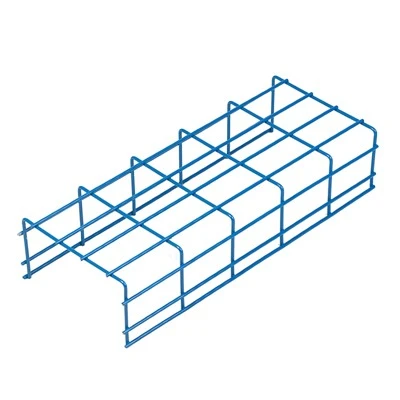
First, let’s get clear on what PVC cable trays are, and why they’ve become a go-to for both indoor and outdoor projects. Unlike metal trays (steel, aluminum) that require corrosion treatment and regular maintenance, PVC is a non-conductive polymer resin—most often polyvinyl chloride, hence the abbreviation. It’s lightweight, relatively low-cost, and doesn’t rust, which makes it popular for projects where weight is a concern, or where a metal tray’s corrosion risk (from salt spray, moisture, or industrial fumes) would add extra expenses. But outdoor environments are way harsher than controlled indoor spaces. Think UV radiation from the sun, fluctuating temperatures, moisture from rain or humidity, and in some cases, chemicals or salt exposure. So the key isn’t “can PVC be used outside” but which type of PVC tray is designed for outdoor use, and how to install it correctly.
Let’s start with the biggest outdoor enemy of PVC: UV rays. Regular indoor-grade PVC is designed for low or no sun exposure. It will start to degrade quickly when left in direct sunlight—within a few months, you’ll notice it becomes brittle, turns yellow, and cracks. I once had a contractor come to me three months after installing a low-cost indoor PVC tray along a retail store’s front awning; the tray had split so badly, half the wiring it held was hanging loose. He’d picked up the tray from a big-box hardware store, not from a specialized cable tray supplier, and didn’t realize there’s a critical difference: outdoor-rated PVC. Outdoor PVC trays are formulated with UV stabilizers—additives that absorb or deflect UV radiation, slowing down polymer breakdown. These stabilizers aren’t cheap, which is why the cheap generic trays fail. At our supplier, every outdoor PVC tray we stock meets industry standards like NEMA (National Electrical Manufacturers Association) standards, which require UV resistance testing for outdoor-rated products.
Next up: temperature extremes. Outdoor environments swing from freezing winters to scorching summers. PVC has a glass transition temperature—meaning it becomes brittle below a certain point, and softens above another. Indoor PVC is engineered to handle mild indoor temperatures, usually between 0°C and 40°C. Outdoor PVC, though, is made with plasticizers and impact modifiers that widen that temperature range. Our outdoor trays are tested to perform from -40°C up to 85°C, which covers just about every climate in North America. I’ve seen outdoor trays fail in places like Minnesota, where winter lows drop to -35°C; only the trays with reinforced impact modifiers stayed intact during that freeze. That’s a big reason contractors trust our outdoor PVC for cold-storage facilities’ exterior wiring—freezing temps don’t faze it, as long as it’s the right grade.
Moisture is another factor, but here’s where PVC actually has an edge over metal. Metal cable trays will corrode when exposed to standing water, rain, or high humidity, even if they’re galvanized or powder-coated. That corrosion eats through the tray, can damage wiring insulation, and creates electrical safety risks. PVC, on the other hand, is inherently moisture-resistant—it doesn’t rust, corrode, or support mold or mildew growth. That’s why it’s perfect for outdoor applications like pool decks, boatyards, or agricultural facilities where water exposure is constant. I recently worked with a farm contractor who needed to run wiring for irrigation pumps along a water tank; he used our outdoor PVC trays, and after two years of daily exposure to water and fertilizer runoff, there’s no rust, no cracking, and the wiring is completely protected. There is a caveat here: if water is allowed to pool inside the tray, it can create a breeding ground for pests or even lead to trapped moisture that affects wiring over time. But that’s an installation issue, not a product flaw—more on that later.
Now, the myths that still circulate about outdoor PVC trays. One I hear all the time: “PVC is too flimsy for heavy outdoor loads.” Wait, no—while it’s lighter than metal, modern outdoor PVC trays have high load ratings. NEMA standards test cable trays for maximum weight capacity, and our outdoor trays can handle loads up to 50 pounds per foot, which is enough for most low-voltage wiring (security, lighting, low-voltage power) common in outdoor projects. For high-voltage power runs, metal trays might still be better, but for most commercial and residential outdoor applications, PVC is more than sturdy enough. Another myth: “Outdoor PVC isn’t fire-resistant.” That’s only true for low-grade PVC. Our outdoor trays are formulated with flame-retardant additives, meeting UL 94 V-0 standards, which means they self-extinguish if exposed to a small flame—something that’s non-negotiable for outdoor installations near structures.
So when should you use outdoor PVC cable trays, and when should you skip them? Let’s outline the ideal use cases: low-voltage outdoor wiring (security cameras, landscape lighting, Wi-Fi access points), exterior runs along building facades, agricultural settings, pool and spa areas, coastal areas (as long as they’re UV-stabilized—salt spray is hard on PVC, but UV stabilizers also help resist salt degradation), and temporary outdoor installations (like construction sites, where you need something easy to install and remove). Now, the cases where PVC might not be the best: high-voltage power lines over 600V, heavy loads (like multiple large power cables), areas with extreme chemical exposure (like industrial plants with strong acids or solvents), and locations where long-term exposure to very high temps (like near industrial furnaces) is a factor. For those, metal or specialty composite trays are a better bet.
But even the best outdoor PVC tray will fail if installed wrong. Here’s where I see most installers go wrong, and what I always emphasize to contractors I work with. First, mounting: you can’t just lay the tray on a flat surface and call it done. Outdoor PVC trays need to be mounted with proper supports, spaced no more than 3 feet apart for straight runs, and you have to account for thermal expansion. PVC expands when it’s hot and contracts when it’s cold—if two sections of tray are butted tight together without a ¼-inch gap for movement, they’ll buckle in summer or split in winter. I once had a client call me because a tray had buckled along a west-facing wall in Arizona; they’d cut two sections so tight there was no expansion gap, and the 40°C heat made the PVC swell enough to warp the tray. That’s an installation mistake, not a product flaw.
Second, sealing and drainage. Even though PVC is moisture-resistant, you need to make sure water can’t get trapped inside the tray. That means installing the tray with a slight slope (1/8 inch per foot) toward the ends, so any rainwater runs out instead of pooling. Also, use PVC-approved sealants on any joints or end caps—regular silicone sealant can degrade PVC over time. We carry specialty PVC sealants for outdoor use, and I always tell contractors to use those, not whatever’s lying around the toolbox. If you’re running the tray along a wall, make sure there’s no way water can backflow into the tray from the top—some installers mount trays too low, so rain running down the wall seeps into the open top. The correct height for an exterior wall run is at least 6 inches above any surfaces that could shed water onto the tray.
Third, protection from physical damage. Outdoor trays are vulnerable to impact—lawnmowers, construction debris, animals chewing on wiring, even hail. So you can’t just mount a tray 2 feet off the ground in a yard and expect it to hold up. For ground-level runs, you need to cover the tray with a rigid plastic or metal cover, or bury it in conduit if it’s near foot traffic. We stock heavy-duty PVC covers for outdoor trays that add an extra layer of protection against impact, and I always recommend them for exposed runs in residential or commercial yards.
Now, let’s talk about real-world examples to make this concrete. Last year, I worked with a municipal park that needed to upgrade its landscape lighting and security system along a ¼-mile walking path. The contractor initially wanted to use metal trays, but the park’s budget was tight, and metal would have required regular corrosion treatment. We recommended our UV-stabilized outdoor PVC trays, rated for low-voltage loads, with covers for the ground-level runs. Two years later, I checked in with the park manager—he said the trays look brand new, no cracking, no rust, and the installation cost was 30% less than metal. The only issue they ran into was an installer who skipped the expansion gap; we sent a team out to adjust the sections, and it’s been fine since. Another example: a coastal hotel in Florida that needed wiring for its pool deck and exterior stairwells. They tried a generic indoor PVC tray for the first six months, which started turning yellow and cracking from UV and salt spray. Swapping to our UV-stabilized outdoor trays fixed the problem, and now, three years later, they have zero maintenance costs for the trays.
I’ve also talked to electricians who swear by outdoor PVC trays for small-scale projects. One residential electrician I work with does a lot of backyard deck lighting installations; he uses our PVC trays instead of running individual underground conduit, because it’s faster to install, easier to repair if a wire needs replacing, and way cheaper. The key, he says, is never cutting corners on the outdoor-rated grade—he used to buy cheap trays and deal with callbacks, now he only uses our outdoor stock, and he hasn’t had a failure in four years.
So to circle back to the original question: Can PVC cable trays be used outdoors? The answer is a resounding yes—when you choose the right grade, install it correctly, and account for the outdoor environment. It’s not a one-size-fits-all, but for most outdoor applications that don’t involve extreme loads or harsh chemicals, outdoor PVC trays are a cost-effective, durable alternative to metal. And as a cable tray supplier, that’s why we spend so much time testing our outdoor trays, educating installers on the right products for the job, and making sure we stock everything they need to get the job done right.
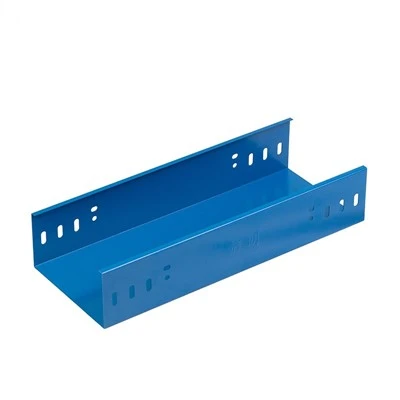
I know how frustrating it is to pick the wrong product for an outdoor job, especially when you’re on a tight timeline or budget. If you’re planning an outdoor project and aren’t sure which cable tray is best—whether you need something for landscape lighting, security wiring, or any other outdoor installation—reach out to our team. We can walk you through load ratings, UV resistance, installation best practices, and help you pick the right tray that fits your needs and budget. Don’t waste time or money on generic products that will fail in the sun or rain—let’s make sure your outdoor wiring is safe, code-compliant, and built to last.
References
Light Duty Cable Tray National Electrical Manufacturers Association (NEMA) Standards for Cable Trays, NEMA VE 1-2020
Underwriters Laboratories (UL) Standard for Flame-Resistant Polymeric Materials, UL 94-2021
International Residential Code (IRC) for Exterior Wiring Installations, 2021 Edition
National Electrical Code (NEC) Article 318 for Cable Tray Applications, 2023 Edition
Hebei Jinglang Industrial Co., Ltd.
As one of the most professional cable tray manufacturers and suppliers in China, we also support customized service. We warmly welcome you to wholesale high quality cable tray in stock here from our factory. If you have any enquiry about quotation, please feel free to email us.
Address: Nanxinzhuang Village, Daweihe Hui and Manchu Township, Wen’an County, Langfang City, Hebei Province
E-mail: wei32830@gmail.com
WebSite: https://www.jinglangcabletray.com/
