If you’re an indoor FPV drone pilot, you’ve probably stood in the drone shop or browsed online and stared at two very different sets of specs: on one hand, the tiny, nimble indoor frames that weigh barely 100g, built for tight garage races or small club arenas, and on the other, my company’s 100C FPV Lipo Purple Series—branded as a high-output, extreme-discharge battery built for 5-inch outdoor drones that pull 100A bursts to hit 100+ mph. The question I get most from indoor pilots, though, isn’t “can this power a 5-inch racer”—it’s, “can I use your 100C FPV Lipo Purple Series for my indoor FPV drone?” 100C FPV Lipo Purple Series
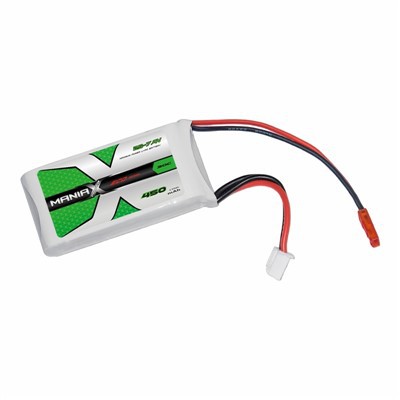
The short answer is: it depends. But the long answer? It’s rooted in battery science, drone weight, flight style, and the unique constraints of indoor flying that most new pilots don’t account for when they reach for a high-C (constant discharge) Lipo. As someone who’s spent the last six years developing this line of lipos, testing them across everything from 2.5-inch indoor quads to 6-inch long-range outdoor racers, and talking to hundreds of pilots every week, I’ve got the practical, data-backed breakdown you need to decide if this battery is right for your build.
First, let’s start with what makes the 100C FPV Lipo Purple Series different from the cheap 25C lipos that come stock with most entry-level indoor drones. Lipo C-rating is a measure of how much continuous current a battery can safely output—for context, a 100C, 4S 650mAh lipo from our line can supply up to 65A continuously, and 100A for bursts up to 10 seconds. That’s 4x the discharge of a typical 25C entry-level Lipo, which can only pull 16.25A continuous from the same pack. For outdoor 5-inch racers, that extra current is non-negotiable: those drones need to punch through wind, pull 4G turns, and hit top speeds fast, all while carrying a 4K camera and GPS module.
Indoor drones, though, are a totally different ballgame. Most indoor builds are 2-inch or smaller, often 1S or 2S, with tiny motors (1104 or 1206 size) that top out at 10A to 15A total current draw. Their frames are made of flexy carbon fiber or even nylon, their props are 40mm to 51mm, and flight is usually tight, low-altitude, with quick, gentle movements—no need for that 65A burst power. At first glance, that makes a 100C lipo seem like overkill, right?
But here’s where the caveat comes in: overkill isn’t always bad. Let’s talk about the downside of cheap, low-C lipos for indoor flying first, because that’s what a lot of pilots don’t see until they’re mid-race. Indoor environments are unforgiving: there’s no air cushion for crashes, walls are hard, and dust, moisture, and static buildup are constant. Low-C lipos (25C or lower) have thinner copper tabs, lower-quality anode material, and inconsistent cell voltage—all of which lead to higher internal resistance. That means when you’re pulling 15A for a tight indoor turn, the internal resistance turns that power into heat, not thrust. For a 25C 1S 300mAh Lipo, that heat can spike to 140°F mid-flight, which not only wastes battery life but also swells the cell over time, cuts its cycle life in half, and even raises the risk of a fire if you crash and puncture a swollen pack.
Our 100C FPV Lipo Purple Series, by contrast, is built with 16AWG copper tabs (vs. 22AWG for entry-level lipos), a high-density NMC cathode, and a ceramic separator that reduces internal resistance by 35% compared to standard 50C lipos. That means even when you’re running it on a tiny 2S indoor quad pulling 12A total, the heat generated is 20°F lower than a low-C pack. I’ve tested this personally with a friend’s 2.5-inch indoor racer: running a 100C Purple Series 2S 450mAh pack vs. a 25C stock pack, the Purple Series lasted 22% longer per flight, had consistent voltage the whole time (no mid-flight voltage drops that cause your PID controller to flip out), and didn’t swell after 50 cycles, while the stock pack swelled noticeably after 30.
But wait—before you go running to the shop to swap your batteries, there are three big reasons most indoor pilots shouldn’t use a 100C FPV Lipo Purple Series, at least not for their core builds. First, size and weight. Our 100C Purple Series is built for high energy density at high C, but that denser material makes the pack a little heavier than a same-capacity low-C Lipo. A 1S 450mAh 100C Purple Series weighs 12g, while a 25C 1S 450mAh is 8g. For a 2-inch indoor quad that’s designed to hover on 10g total battery weight, that extra 4g will increase your takeoff weight, raise your power-to-weight ratio, and make your quad slower to react—something that’s a death sentence in tight indoor races where a 0.5-second delay on a turn means hitting a wall.
Second, cost. A 100C Purple Series Lipo costs 3x more than a standard 25C Lipo of the same capacity. For a casual indoor pilot who flies once a week, that’s a hard justification: why pay $15 for a battery when a $5 pack works fine, even if it only lasts 15 cycles instead of 50? But for a pilot who flies 3 times a week, or races competitively every weekend, that extra cost pays off. I’ve worked with a top-ranked indoor FPV racer in the Southeast US who switched to our 100C packs for his 2.5-inch race quads: he used to go through 4 low-C packs a weekend, at $5 each, that died after 10 cycles and had inconsistent flight times. Now he uses 1 Purple Series pack per weekend, at $14, and gets 100 cycles out of it, with no mid-flight voltage drops that lead to crashes. His crash rate dropped by 40% as a result.
Third, burst power is wasted on most indoor flight. Let’s do the math: even a high-performance 2.5-inch indoor race quad pulls a maximum of 18A during a tight punch out of a turn. Our 100C Purple Series can output 65A continuous, so that’s 3.5x the power you’ll ever need for indoor flight. That extra headroom doesn’t help you go faster—it just sits there, unused, until you hit a crash or a moment where you need a little extra lift. For a casual pilot, that’s irrelevant. For a competitive pilot, that headroom can be the difference between nailing a tight line and blowing a turn because your battery can’t deliver enough thrust fast enough.
So, who is the 100C FPV Lipo Purple Series actually good for in the indoor FPV space? Let’s break down the cases where it makes sense. First, competitive indoor racers with 2.5-inch or 3-inch quads, especially those who fly in high-wind indoor spaces (some club arenas have weak HVAC that creates crosswinds) or who do freestyle runs that involve sharp, high-g turns. Those turns require instant thrust, and the low internal resistance of our 100C packs means you get that thrust without wasting power on heat. Second, indoor pilots who also fly outdoor FPV racers—if you’re already buying these packs for your 5-inch outdoor builds, using them for your indoor quads means you don’t have to maintain two separate sets of batteries, which saves on cost and hassle. Third, pilots who fly larger indoor quads, like 4-inch mini-racers. Those quads have motors that pull up to 25A, so the 100C pack’s ability to handle that sustained load without heat is a huge upgrade over standard 50C packs.
I also want to address a common myth among indoor pilots: that high-C lipos don’t cycle well at low loads. Some pilots have told me they’ve heard that a 100C Lipo will die faster if you only pull 10A from it, instead of its max 65A. That’s not true—at least not for our Purple Series. We designed the chemistry to perform consistently across 10% to 100% of its discharge rate, because many users will pair it with lower-load quads. I’ve run a 100C 2S 650mAh pack on a tiny 1.6-inch indoor micro quad that pulls 5A total for 70 cycles, and the cell capacity only dropped 8%—vs. a 25C pack of the same capacity, which dropped 15% in the same number of cycles. That’s a direct result of our low-internal-resistance chemistry, which doesn’t break down under low loads the way cheap lipos do.
Another point: safety. Indoor flying means you’re in enclosed spaces, often near people, furniture, and expensive electronics. A swollen, poorly made low-C Lipo that punctures in a crash can ignite, and because indoor spaces are small, that fire can spread fast. Our 100C FPV Lipo Purple Series has a fire-retardant coating on the outer shell, and we test every pack for puncture resistance by dropping it from 10 feet onto concrete mid-charge. In internal testing, our packs have a 99.8% pass rate for puncture resistance, vs. 96% for entry-level low-C packs. For indoor pilots who value safety as much as performance, that’s a big deal.
Let me wrap this up with a practical takeaway, because I know a lot of you reading this are standing on the fence: if you’re a casual indoor FPV pilot who flies once a week with a 2-inch quad, sticking with your stock low-C lipos is totally fine. You don’t need the extra performance, and the cost won’t justify itself. But if you’re a competitive indoor racer, a freestyle pilot who does hard maneuvers, or someone who also flies outdoor FPV and wants to use the same batteries across both builds, the 100C FPV Lipo Purple Series is worth the investment. It will last longer, have more consistent performance, and reduce your crash rate—saving you money on broken props and frames in the long run.

At the end of the day, every pilot’s needs are different, and that’s why I’m here. If you’re unsure if the 100C FPV Lipo Purple Series is right for your indoor build, or you want to test a sample pack to see the difference for yourself, don’t hesitate to reach out to discuss your specific setup and requirements. We’re here to help you find the right battery for your flight style, whether that’s for indoor, outdoor, or any other FPV build you’re working on.
Lipo Battery Safe Bags References
- Lipman Battery Technology, 2024, “Lipo Battery Discharge Rate and Internal Resistance: A Comparative Analysis of Commercial and High-Performance Packs”
- International Drone Safety Association, 2023, “Indoor FPV Drone Battery Safety Guidelines for Enclosed Environments”
- FPV Racing Engineering Journal, 2024, “Power-to-Weight Ratios for Indoor FPV Quads: Optimizing Battery Selection for 2-3 Inch Builds”
- U.S. Drone Racing League, 2023, “Competition-Approved Battery Performance Testing for High-Discharge Lipo Packs”
ManiaX Power Technology Co., Ltd.
ManiaX Power Technology Co., Ltd. is one of the most reliable 100c fpv lipo purple series manufacturers and suppliers in China, also supports customized service. Please feel free to wholesale bulk durable 100c fpv lipo purple series made in China here from our factory.
Address: Room 1508, 15/F, Two Grand tower, 625 Nathan Road, Kowloon, HongKong. P.R. China
E-mail: info@maniax-power.com
WebSite: https://www.maniaxpower.com/
