If you’ve ever stood on a worksite where we supplied industrial crushers, you’ve probably seen one at work before—huge, rumbling machines that chew up raw rock, construction debris, or even scrap concrete like it’s nothing. But I’ll be honest, when I first got into the industrial crusher supply game, I had no clue how they actually did that. I just knew I was moving boxes of parts and watching these things turn big, messy material into something usable. Now, after 12 years selling these beasts, I’ve broken down how they work, and I’m gonna keep it real—no boring engineering jargon, just what you need to know if you’re thinking about picking one up for your business. Industrial Crushers
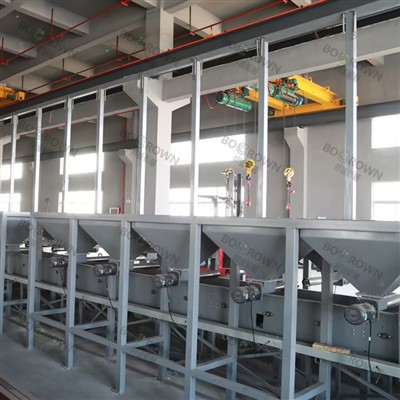
First off, let’s clear up the biggest misconception: industrial crushers aren’t just “bigger versions of the small rock crushers you buy for a backyard.” They’re built for nonstop, heavy-duty work—think 10+ hours a day, moving tons of material. That’s why the design varies so much depending on what you’re crushing. If you’re processing hard granite or mining ore, you need something that can take a beating. If you’re sorting demolition concrete or recycling asphalt, you might want something faster, more flexible. I don’t just sell one model and call it a day; I match the crusher to the job, because that’s the only way it doesn’t break down after a week.
Let’s start with the basics of how they all operate, no matter the type. Every crusher has two core jobs: reduce big material into smaller, uniform pieces, and separate the usable stuff from dirt, metal, or other junk you don’t want. The magic starts with the crushing chamber—that’s the gap where the material goes. That chamber has two main parts: a moving surface and a fixed surface. As the moving surface shifts back and forth (or up and down, depending on the crusher), it squeezes the material against the fixed surface until it’s small enough to fall through a gap at the bottom. Yeah, it’s that simple, but the details are what make it work (or break, if you get a cheap model).
Now, let’s break down the most common types I supply, because this is where things get specific. I see three types of crushers 90% of the time jaw crushers, impact crushers, and cone crushers—and each works differently for different jobs.
Jaw crushers are the workhorses, in my opinion. You’ve probably seen these first at a quarry or a demolition site. They look like a giant V-shape, right? One side is fixed, the other is a big, heavy jaw that swings back and forth like a human jaw chewing food. The material gets dumped into the top of the V. When the moving jaw swings toward the fixed one, it crushes the rock. When it swings back, the smaller pieces fall down to the next level, and the process repeats until the pieces are small enough to slip out the bottom. These are perfect for super hard stuff—granite, basalt, even raw ore. I had a customer last year who ran a mining operation, and his old jaw crusher was dying because he was trying to crush too much too fast. We swapped him for a heavier-duty model, and he cut his downtime by 30%—that’s the stuff that makes me do what I do.
Next up, impact crushers. These are the ones I reach for when the material isn’t super hard, or when you need a more uniform end product. How do they work? They have a big spinning rotor (like a giant flywheel) inside a box. The material gets thrown at the rotor, which hits it with hard metal bars that stick out. That sends the material flying at high speed against fixed impact plates on the inside of the box—boom, it breaks. Then the smaller pieces bounce around until they’re small enough to fall out. Impact crushers are great for recycling concrete or asphalt, because they can break up rebar easily too, and the end product is more consistent. I’ve had a few contractors tell me they use these for road projects, since they can crush old pavement right on-site and reuse it instead of hauling it away. That’s a huge cost saver.
Then there are cone crushers, which are the middle child, so to speak. They’re similar to jaw crushers in that they use a fixed and moving surface, but instead of a jaw swinging, there’s a cone-shaped piece that spins inside a larger, fixed cone. The material gets fed into the top, and the spinning cone gyrates (it doesn’t spin in a circle, it tilts back and forth) so it squeezes the material against the fixed cone. These are best for crushing medium-hard to hard material, and they produce a very uniform, cubical end product—way better for things like concrete aggregate than impact crushers sometimes. I sell a lot of these for construction aggregate operations, because the end product holds up better in building materials.
Now, let’s talk about what happens before and after the crushing, because that’s a part people sleep on. You can’t just dump a truck full of random debris into a crusher and expect it to work. You need a feeder that controls the flow—usually a vibrating feeder or a belt feeder that doles out material a little at a time. If you feed too much at once, the crusher gets jammed, and that’s a nightmare. I’ve seen businesses ruin a $50k crusher because they tried to cram a whole truck of 2-foot rocks into it in 2 minutes. Don’t do that. On the other end, there’s a screen (usually after the crusher, sometimes attached) that sorts the crushed material into different sizes. So if you need 1-inch rocks for landscaping and 3-inch for concrete, the screen separates them. Some newer crushers have built-in screens, which saves you space and money.
And let’s not forget the maintenance part, because even the best crusher will die if you don’t take care of it. I tell every customer I work with: if you’re running your crusher 8 hours a day, you need to grease the moving parts every shift, check the metal surfaces (called “wear parts”) for cracks every week, and replace those wear parts before they break. Jaw plates, impact bars, cone liners—those are the parts that take the brunt of the crushing, and they need to be swapped out regularly. A lot of new buyers try to skimp on cheap wear parts, and within a couple months, they’re looking for a whole new crusher. I only sell high-quality wear parts because I don’t want my customers coming back to me frustrated.
Wait, let me address a common question I get: how do these machines handle stuff that’s not rock? Like wood, plastic, even glass? Well, some crushers are designed for that too—they’re called industrial shredders, but a lot of my customers mix the terms up. A standard crusher isn’t made for soft, stretchy material, but if you need one for recycling plastic or turning wood pallets into mulch, I can point you to the right model. Just tell me exactly what you’re crushing, not just “material,” and I’ll steer you right.
Another thing I’ve learned over the years: the size and power of the crusher don’t always match. A small, electric jaw crusher might be more powerful than a big gas-powered one if it’s made for heavy-duty work. That’s why specs matter more than just the physical size. I don’t just show customers a picture and say “this is big, buy it.” I ask them how much material they need to process per hour, what size their raw material is, what size they need the end product to be, and how often they’ll run it. That’s the only way to get a crusher that works for them.
Let me throw in a quick real example: last quarter, a customer who runs a demolition company came to me because his old impact crusher was producing way too much fine dust and his rebar was getting tangled up in the crushed concrete. We swapped him for a heavier impact crusher with a bigger rotor and adjustable impact plates, and added a metal detector on the feeder to pull out rebar before it went into the chamber. Now his end product is clean, uniform, and he’s selling it to a local concrete plant for extra cash. That’s the win we aim for every time.
Now, if you’re at the point where you’re thinking, “Okay, I need to get one of these, how do I make sure I don’t mess it up?” First, don’t buy used from a random online listing unless you know exactly what you’re looking for. You don’t want a crusher that’s been run to the ground with no maintenance. Second, be honest about your budget—there’s a reason some crushers are $10k and others are $100k. The $10k model might work for occasional small jobs, but if you’re running 10 hours a day, the $100k model will pay for itself in less than a year. Third, ask questions. A good supplier (that’s me, wink) will ask you all the right questions and not just push the most expensive model.
And here’s the thing I always tell people: industrial crushers aren’t just machines—they’re the backbone of a lot of industries. Without them, we couldn’t recycle concrete, build roads, mine minerals, or even get gravel for driveways. I’m proud to supply these machines, because I know they’re making a real difference.
If you’re in the market for an industrial crusher—whether it’s a jaw, impact, cone, or something else—reach out to us to talk through your needs. No sales pitch, no pressure, just me walking you through what’ll work best for your business. I’ve seen too many people make the wrong choice because they didn’t have someone to ask the right questions, and I don’t want that to happen to you.
That’s it from me today. I hope this cleared up how industrial crushers work, beyond the basic “squeeze stuff until it’s small.” If you’ve got questions about sizing, maintenance, or which type is right for you, don’t hesitate to reach out for a chat.
Industrial Shredders References:
- Mining, Minerals and Sustainable Development. (2002). Crusher Technology for Mineral Processing. Earthscan Publications.
- Smith, W. O. (2019). Industrial Crushing Equipment: Selection, Operation, and Maintenance. Industrial Press.
- National Aggregates Association. (2021). Guide to Crusher Selection for Construction and Recycling Operations. NAA Technical Report Series.
- Engineering Design Handbook. (2018). Heavy-Duty Crushing Machinery Design Principles. U.S. Army Corps of Engineers.
ZJG BC Machinery Co., Ltd.
As one of the most professional industrial crushers manufacturers and suppliers in China, we’re featured by quality products and good price. Please rest assured to buy cost-efficient industrial crushers for sale here from our factory. Contact us for custom service and OEM service.
Address: No.8 Lexi Road, Leyu Town, Zhangjiagang City
E-mail: sales@bcextruder.com
WebSite: https://www.bcextruder.com/
