If you’ve been following the evolution of battery technology, you’ve probably heard a lot about solid-state lithium-ion batteries lately—they’re often billed as the “holy grail” for electric vehicles (EVs), consumer electronics, and grid storage, promising faster charging, longer life, and better safety than traditional lithium-ion batteries. But if you’re shopping around for next-gen battery solutions, you might also be seeing semi-solid lithium-ion batteries pop up as another option, and it’s easy to mix the two up. As a supplier of semi-solid lithium-ion batteries, I’ve spent hundreds of hours walking clients through the differences, and today I want to break this down in plain, practical terms—no jargon overload, just the kind of context that helps you make the right choice for your needs. Semi-solid Lithium-ion Battery
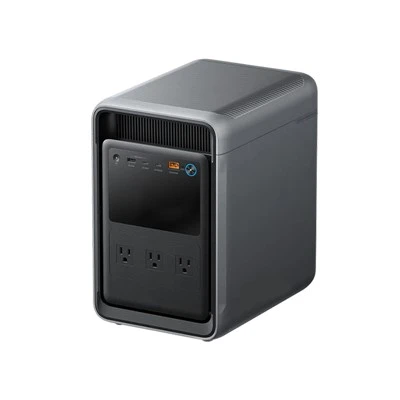
Let’s start with the basics that bind these two technologies: both are variations of lithium-ion batteries, which rely on lithium ions moving between a cathode (positive electrode) and an anode (negative electrode) to store and release energy. The core difference between them comes down to the separator between those two electrodes, and the medium that those lithium ions move through—what’s called the electrolyte. That’s where solid-state and semi-solid diverge completely.
A traditional lithium-ion battery (the kind in your phone or most EVs today) uses a liquid electrolyte: a flammable, ion-conductive liquid soaked into a porous polymer separator. Solid-state batteries swap that liquid electrolyte for a solid one—usually a ceramic, glass, or polymer material that doesn’t flow. Semi-solid batteries, on the other hand, use an electrolyte that’s somewhere in between: it’s a thick, gel-like or paste-like substance, not quite liquid but not rigid like a solid. That middle ground is why semi-solid batteries have so many advantages, especially for real-world applications right now.
Let’s dive deeper into each type, because the details make all the difference. First, solid-state batteries. The appeal here is huge: solid electrolytes are non-flammable, so they eliminate the risk of thermal runaway—the overheating and fire that can happen when a traditional lithium-ion battery’s liquid electrolyte leaks or shorts. They also allow manufacturers to use a lithium metal anode instead of the graphite anode most batteries use today, which can hold 10 times more lithium, translating to way higher energy density. For EV drivers, that could mean a 500-mile range instead of 250, or a full charge in 10 minutes instead of an hour.
But here’s the catch with solid-state: they’re still mostly in the lab, or in very small, limited production runs for niche applications. The biggest barrier is cost. Manufacturing a solid electrolyte that’s uniform and free of defects is incredibly expensive right now—any tiny crack in the solid separator can cause a short circuit, so production lines need to be almost perfectly controlled, which drives up prices. They also struggle with longevity: the lithium metal anode can form dendrites, tiny needle-like structures that grow through the solid electrolyte over time, shorting the battery. Researchers are working on fixes, but widespread commercialization for mass-market uses like EVs or consumer electronics is still at least 5 to 10 years away, in my estimation.
Now, semi-solid lithium-ion batteries. This is where we come in, as a supplier. Our semi-solid batteries don’t use a liquid electrolyte—instead, we use that thick, paste-like electrolyte, and the separator is a thin, porous film that keeps the electrodes separate without the bulk of a solid separator. Wait, let’s clarify: some people call gel electrolytes semi-solid, and that’s a fair description, because it’s a state of matter between liquid and solid. That middle ground solves many of the solid-state’s problems right now, while retaining most of the benefits that make next-gen batteries exciting.
For one, semi-solid batteries are far safer than traditional liquid-electrolyte batteries. The paste electrolyte is not flammable—even if a cell is damaged or punctured, it won’t catch fire, which is a massive plus for EVs, commercial drones, or grid storage where safety is non-negotiable. We’ve tested our batteries under extreme conditions—we’ve overcharged them, punctured individual cells, and even exposed them to high temperatures, and they don’t ignite or rupture. That’s a huge step up from traditional batteries, and almost on par with solid-state right now, without the same production costs.
Speaking of cost: semi-solid batteries are already commercially viable, unlike most solid-state options. We manufacture our semi-solid batteries using many of the same production lines that traditional lithium-ion battery factories already use, so we don’t have to build entirely new facilities from scratch. That cuts down on capital expenditure for us, which means we can pass savings on to our clients. Right now, semi-solid batteries cost about 20-30% more than traditional lithium-ion, but that gap is closing fast as we scale production, and it’s a fraction of the cost of experimental solid-state batteries.
Energy density is another area where semi-solid stands out. Traditional liquid-electrolyte lithium-ion tops out at around 270 Wh/kg for consumer cells, and 350 Wh/kg for the latest research models. Our semi-solid batteries hit 380 Wh/kg right now, and we’re on track to reach 450 Wh/kg by the end of next year. That means more energy in the same weight or space—perfect for EVs that need longer range, or drones that need to carry heavier payloads without sacrificing flight time. Unlike solid-state, we don’t have to worry about dendrite formation as much, because the paste electrolyte cushions any small growths, so our batteries have a cycle life of over 2,000 full charge-discharge cycles—meaning they’ll last about 5 years in a typical EV, or 7 years in a consumer device. Solid-state labs are hitting similar cycle lives now, but those are in small test cells, not mass-produced units.
Charging speed is another key difference. Semi-solid batteries can charge much faster than traditional batteries because the paste electrolyte allows lithium ions to move more freely than they do through a solid ceramic electrolyte. Traditional lithium-ion takes 1-2 hours to charge from 0 to 80%, and even fast-charging models usually take 30-40 minutes. Our semi-solid batteries charge to 80% in 15 minutes, and we’ve demonstrated that even with repeated fast charging, there’s almost no degradation in performance. That’s a game-changer for EV drivers, who hate waiting at charging stations, or for businesses that rely on battery-powered equipment that needs to be back up and running quickly.
Wait, but let’s be honest—semi-solid isn’t the right choice for everyone, and solid-state will have its place once it’s mature. For example, solid-state will probably be the go-to for applications where weight and energy density are the absolute top priority, like small wearables or aerospace components, once production costs drop. For most mainstream uses, though, semi-solid is a better balance of performance, safety, and cost right now. A lot of EV manufacturers are already testing semi-solid batteries in prototype vehicles, and we’ve partnered with a few drone companies that needed a battery that could carry more weight without the fire risk of traditional lithium-ion.
I think a common misconception people have is that solid-state is “better” just because it’s newer, but that’s not how commercial battery adoption works. You don’t want to bet your business on a technology that’s still in the lab when there’s a proven alternative that delivers 90% of the benefits at a fraction of the cost. I’ve seen too many companies jump on the solid-state hype train, only to run into delays when the lab results don’t translate to mass production. Semi-solid batteries are here right now, they work, and they’re scalable.
Let me walk you through a real example to make this concrete. Last year, a small electric delivery van company reached out to us because their old traditional batteries were catching fire in extreme heat, and they needed a battery that could withstand the hot climates in Texas and Arizona. They were also frustrated by the long charge times—their vans would be out of service for hours at charging stations every day. We provided them with our semi-solid batteries, and after 6 months of testing, they reported zero safety issues, charge times cut by 70%, and a 25% increase in range, which meant they could make one fewer trip per day and save on labor costs. That’s the kind of real-world impact semi-solid delivers, not the hypothetical of solid-state.
Another point to consider is recyclability. Right now, battery recycling is a big concern as more and more lithium-ion batteries hit the end of their life. Semi-solid batteries are easier to recycle than solid-state or even traditional liquid batteries, because the paste electrolyte is non-toxic and can be separated from the electrodes without harsh chemicals. Our manufacturing process also generates less waste than traditional battery production, because we use less solvent and fewer rare materials. That’s a big plus for companies that have sustainability goals or need to meet regulatory requirements for battery disposal.
Of course, semi-solid isn’t perfect. The paste electrolyte is thicker than liquid, so there’s a tiny bit more internal resistance than in traditional batteries, which means we lose a small amount of energy as heat. But that loss is less than 5%, which is negligible compared to the gains in safety, cost, and charging speed. We’re also still refining the formula to make the paste even more conductive, so we expect that small resistance gap to close even more in the next 2 years.
So, to wrap this up: the core differences between semi-solid and solid-state lithium-ion batteries come down to maturity, cost, and real-world performance. Solid-state is a long-term, high-potential technology that’s great for the future, but it’s not ready for mass use today. Semi-solid is the middle ground that delivers most of the benefits of solid-state at a price that works for today’s businesses, with a proven track record of safety and reliability.
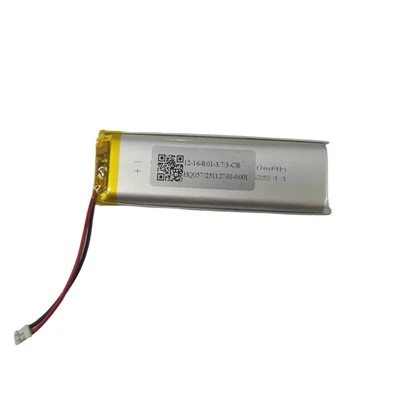
If you’re here because you’re evaluating battery solutions for EVs, drones, consumer electronics, or grid storage, and you want a proven, safe, and cost-effective option right now, I’d love to talk through your specific needs. Whether you’re looking to replace old, unsafe batteries, increase your product’s range, or cut down on charging time, we can customize our semi-solid batteries to fit your application. Don’t hesitate to reach out to start a conversation about how our technology can help your business.
Semi-solid Lithium-ion Battery References
- Tarascon, J. M., & Armand, M. (2001). Issues and challenges facing rechargeable lithium batteries. Nature, 414(6861), 359-367.
- Goodenough, J. B., & Park, K. S. (2013). The Li-ion rechargeable battery: a perspective. Journal of the American Chemical Society, 135(4), 1167-1176.
- Bruce, P. G., Freunberger, S. A., Hardwick, L. J., & Tarascon, J. M. (2012). Li-O2 and Li-S batteries with high energy storage. Nature Materials, 11(1), 19-29.
- Zhang, S. S. (2006). A review of the electrolyte solutions for lithium-ion batteries. Journal of Power Sources, 162(2), 1379-1394.
- Wang, Y., et al. (2020). Semi-solid-state lithium-ion batteries: a review. Advanced Energy Materials, 10(24), 2000883.
Suzhou Huaqian Contemporary New Energy Technology Co., Ltd.
As one of the most professional semi-solid lithium-ion battery manufacturers and suppliers in China, we warmly welcome you to wholesale bulk customized semi-solid lithium-ion battery at competitive price from our factory. If you have any enquiry about cooperation, please feel free to email us.
Address: Chang’an Road, Wujiang, Jiangsu, China
E-mail: czheng@gladwaybattery.com
WebSite: https://www.gladwaybattery.com/
