If you’ve ever grabbed a CR column battery off a shelf only to stare at your device’s specs and wonder if it will work, you’re not alone. I’ve spent the last 12 years as a CR column battery supplier, and almost every day, a customer will reach out with a version of that exact question. The confusion makes sense—CR column batteries look simple on the surface, but their design, chemistry, and physical specs don’t always line up with every device they’re labeled for. Let’s break this down so you can stop guessing and start making confident choices, no engineering degree required. CR Column Battery
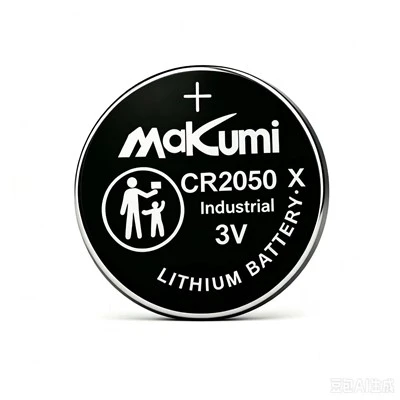
First, let’s get on the same page about what a CR column battery actually is, because the term is often misused. Unlike round button batteries (like CR2032, the tiny coin powering your key fob or fitness tracker) or rectangular AA/AAA batteries, CR column batteries are long, cylindrical cells with a built-in spring at one end. That spring isn’t just a design choice—it’s what makes them ideal for devices that need consistent, low-profile power: things like remote controls, blood glucose meters, small portable speakers, and even some vintage calculators. We’ve had customers tell us they once tried swapping a CR column for a round button, only to jerry-rig a makeshift spacer that died after three days. That’s the kind of avoidable mistake I want to help you skip.
Now, the most important question: compatibility boils down to four non-negotiable checks, and if you skip even one, you’re setting yourself up for headaches. Let’s go through each one with real examples I’ve seen in my warehouse over the past decade.
-
Physical Dimensions That Fit Your Device’s Battery Slot
This is the first and most obvious check, but it’s where a lot of people slip up. CR column batteries aren’t one-size-fits-all. They come in lengths and diameters tailored to specific devices. For instance, the CR123A is a short, wide column most common in flashlights and smoke detectors, while the CR2016 is a slimmer, shorter cell used in small medical devices. I once had a customer bring in a device with a slot labeled “CR column” and hand me a battery he’d ordered online—turns out he’d ordered a CR2032 (which is a button battery, not a column) because the product listing said “CR column compatible.” The button was too thick, and when he forced it in, it bent the device’s internal contacts. That’s why I always tell customers: never rely on vague labels like “CR column.” Pull out the old battery, write down its model number (it’s printed right on the top or side), and match that exactly. If you can’t find the old battery, your device’s manual will list the required battery type—skip the guesswork here, it’s not worth it. -
Chemistry: Lithium Manganese Dioxide (LiMnO2) Is Non-Negotiable for Most CR Devices
All CR column batteries use lithium chemistry, but not all lithium cells work the same. The standard for CR columns is lithium manganese dioxide (LiMnO2), which offers a long shelf life (10+ years unopened) and consistent voltage output, making it perfect for low-drain devices like remotes. The problem? Some cheaper off-brand suppliers will try to pass off lithium iron phosphate (LiFePO4) or even nickel-metal hydride (NiMH) cells as CR columns to cut costs. I had a customer last year who installed a generic LiFePO4 “CR column” in his blood glucose meter, and the meter started giving 20% inaccurate readings within a week. That’s because LiFePO4 has a lower nominal voltage (3.2V vs. the 3V standard for LiMnO2 CR cells) and inconsistent discharge rates. Unless your device explicitly says it’s compatible with LiFePO4 (which is rare for small portable electronics), stick to LiMnO2. If you’re ever unsure, check the original battery’s chemistry label—all legitimate CR columns will list “LiMnO2” or “Lithium Manganese” on their packaging. -
Voltage: Match the Nominal Output to Your Device’s Requirement
Nominal voltage is the baseline power a battery delivers during its life. Most CR column batteries are 3V, which is the standard for small consumer electronics. But again, there are exceptions. Some specialty devices, like certain industrial sensors or vintage camera flashes, use 6V CR columns (two 3V cells stacked, often sold as a single unit). If you put a 3V CR column in a 6V device, it won’t have enough power to turn on, and if you put a 6V cell in a 3V device, you risk damaging delicate circuits. Last quarter, a small business owner brought in a line of industrial door locks that were dying constantly. Turns out his maintenance team had been installing 3V CR columns instead of the required 6V units. After we walked him through the voltage check, he ordered the correct units, and the failure rate dropped to zero. Pro tip: if your device turns on but flickers or dies after a few hours, don’t assume your device is broken—double-check the battery’s voltage. -
The Spring Contact: Not All CR Column Batteries Have the Same Spring Tension
This is the hidden compatibility factor that most people don’t think about, and it’s the cause of more returns than you’d imagine. The spring on a CR column battery is designed to press against the device’s positive contact, creating a solid electrical connection. If the spring is too loose, the battery will shift around inside the slot, causing intermittent power loss. If it’s too tight, it can bend the device’s contacts or even damage the battery’s casing. As a supplier, we test every batch of CR columns to make sure their spring tension falls within a 0.5 to 1.5-ounce range—this is the sweet spot for 90% of consumer devices. But some cheap, unbranded batteries skip this step, using springs that are either too flimsy or way too strong. I once had a customer return a batch of CR columns because his remote would randomly turn on the TV when he left it in his pocket. The spring tension was so loose that the battery was bouncing against the contact in a way that triggered the remote’s sensor. That’s the kind of quality control detail that separates a reputable supplier like ours from a random online seller.
Now, let’s talk about edge cases. There are a few scenarios where a battery that looks like a CR column or has the same model number still won’t work, and these are the ones that even experienced techs get wrong. For example, rechargeable CR columns. Most CR columns are non-rechargeable, but there are rechargeable variants for devices that don’t have easy access to battery replacements, like wireless doorbells. If your device is labeled “non-rechargeable only,” don’t use a rechargeable CR column—their voltage drops faster, and they can leak if charged improperly in a device that doesn’t support recharging. Another edge case: temperature. If your device is used in extreme cold (like a outdoor sensor) or extreme heat (like a dashboard device), you need a CR column that’s rated for wide temperature ranges. Standard CR columns work fine between -20°C and 60°C, but if your device is used outside those temps, look for a “high-temperature” or “extreme cold” rating on the battery. We supply CR columns rated for down to -40°C for outdoor agricultural sensors, and those have a different chemistry mix that keeps them working when standard batteries die.
I also get a lot of questions about swapping CR columns for other battery types. Can I use a AA battery instead of a CR column for my remote? No, and here’s why: AAs deliver 1.5V each, so you’d need two to match the 3V of a CR column, but they’re way too big—they won’t fit in the slot, and their terminals are designed for high drain, not the low drain a remote uses. You’d also have to wire them yourself, which is a fire hazard. Can I use a different brand of CR column? Absolutely, as long as it meets the four checks I listed earlier. The only time brand matters is for quality control—generic batteries might skip testing for spring tension or chemistry, leading to compatibility issues.
Let’s wrap this up with a quick step-by-step compatibility check you can do right now, even if you’re holding an old battery in your hand:
- Grab your old battery (or pull up your device’s manual) and write down its exact model number (e.g., CR2032, CR123A, CR1616).
- Check the model number’s dimensions: if it’s a column shape (long, thin cylinder with a spring) not a round button, that’s your required battery type.
- Confirm the model number is for a LiMnO2 chemistry (look for “Li” or “Lithium Manganese” on the label).
- Match the nominal voltage: almost always 3V for consumer devices, 6V for specialty tools.
- If possible, check the spring tension of the new battery (hold it lightly against your device’s slot— it should press firmly but not require force to insert).
If all five boxes are checked, your CR column battery will work. If even one is missing, don’t take the risk—swap it for the right one.
At the end of the day, compatibility isn’t just about labels—it’s about matching the physical specs, chemistry, and design to your device. As a CR column battery supplier, we’ve seen firsthand how a wrong battery can ruin a device, waste money, and cause unnecessary frustration. That’s why we built our process to prioritize quality control for every batch, so our customers never have to guess if their battery will work.
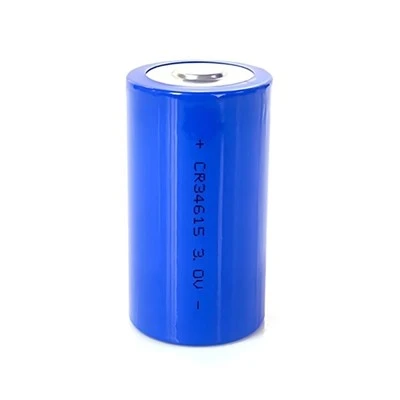
If you’re still unsure whether a CR column battery is right for your device, or you need help finding the exact model for your application, reach out to our team. We’re here to walk you through the details, no technical jargon required.
CR Column Battery References
- Lithium Battery Technology Association. (2022). "Small Format Lithium Manganese Dioxide Batteries: Applications and Compatibility Standards." International Battery Conference Proceedings.
- Consumer Electronics Association. (2021). "Battery Compatibility Guidelines for Portable Consumer Devices." Technical Report CE-21-04.
- Battery University. (2023). "Understanding CR Battery Chemistry and Discharge Characteristics." Cadex Electronics Inc. White Paper.
- International Electrotechnical Commission. (2022). "Safety Standards for Small Primary Batteries." IEC 60086-3:2022.
Shenzhen Makumi Technology Co., Ltd.
As one of the best cr column battery manufacturers and suppliers in China, our products have good reputation in the market. Please rest assured to buy customized cr column battery at competitive price from our factory. Good service and quality products are available.
Address: Room 301, Building 3, No.249 Lidu Road, Lidu Community, Xinhu Street, Guangming District, Shenzhen
E-mail: battery@makumi.cn
WebSite: https://www.makumibattery.com/
