Hey there, I’m Jake—been in the circuit breaker game for 12 years now, walking job sites, fixing blown panels, and answering the same question so many times it’s become my go-to story: Can a circuit breaker protect against power surges? It’s such a common mix-up, and honestly, I get why folks confuse these two devices. Back when I first started, I’d show up to a customer’s house after their TV and fridge fried during a thunderstorm, and they’d say, “But my circuit breaker didn’t trip—shouldn’t it have caught that?” That’s the moment I realized most people don’t know the real job of a circuit breaker, or what actually stops those dangerous spikes in voltage that wreck their gear. Today, I want to break this down straight, no fancy jargon, and share what I’ve learned as a supplier of reliable, tested circuit breakers to electricians, contractors, and homeowners across the country. Circuit Breakers
Let’s start with the basics: what’s a circuit breaker’s actual purpose? When I explain this to new electricians on my team, I use a simple analogy. Think of your home’s electrical system like a highway. Wires are the lanes, carrying electricity to every room and appliance. A circuit breaker is the road guard at the entrance of each lane. Its only job is to stop two things: overcurrent and short circuits. Overcurrent is when too much electricity flows through a single lane—think plugging 10 space heaters, a microwave, and a hair dryer into one outlet. That overheats the wires, melts their insulation, and can start a fire. A short circuit is when a “wrong turn” happens—like a frayed wire touching another hot wire, creating a super fast, massive burst of electricity. When either of these happens, the circuit breaker senses the extra current, trips, and cuts power to that line in milliseconds. That’s why you don’t have fires popping up every time you plug in too many devices. But here’s the key: circuit breakers react to current, not voltage. Power surges are spikes in voltage, not current—they’re two totally different problems. That’s where the confusion starts.
What is a power surge, exactly? Let’s define it clearly. Your home’s electrical system is designed to run at a steady 120 or 240 volts (depending on where you live). A power surge is when that voltage jumps suddenly, usually from 200 to 1,000 volts or more, for a split second. They come from two main places: external and internal. External surges are the big ones you hear about during thunderstorms—lightning strikes that hit power lines or transformers miles away send surges racing through the grid straight into your home. Internal surges are smaller, but still damaging: things like turning off a high-power appliance (like an AC unit or a water heater) creates a tiny surge, or a neighbor running a big industrial tool that pulls extra current and spikes the line for a fraction of a second. The worst part about power surges? Most of them are over in a few nanoseconds—way faster than a circuit breaker can react. Circuit breakers take time to sense extra current and trip, and even the fastest ones take milliseconds, which is like an hour compared to the speed of a surge.
Okay, so does that mean circuit breakers do nothing against surges? Not exactly—they’re just not built for it. Think back to the highway analogy: a circuit breaker is the road guard stopping traffic from piling up and causing a wreck, but it’s not equipped to handle a sudden flood (that’s a surge) that rushes through a lane. Some circuit breakers have minor surge resistance built in, but it’s negligible. The biggest, most common surges (lightning) will blow right through a standard circuit breaker without it tripping. I’ve seen it a hundred times: a storm rolls through, the power flickers, and a dozen people call me saying their TV, gaming console, or washer died. Their circuit breakers are fine—no tripped switches, but their expensive electronics are toast because the surge bypassed the breaker completely.
So what does protect against power surges, then? That’s the job of a surge protector, also called a surge suppression device (SPD). A surge protector is like a flood gate for electricity—it’s installed at your home’s main electrical panel (or as a power strip for individual devices) and absorbs extra voltage spikes before they reach your gear. But here’s the thing for my customers: you don’t have to choose between a circuit breaker and a surge protector. They work together, like teammates. The circuit breaker handles the fires and overcurrent, the surge protector handles the voltage spikes. But I’ve noticed over the years that even some electricians mix these up, or skip explaining why both are necessary. A few years back, I worked on a project for a new office building—their contractor installed cheap circuit breakers and skipped the whole-home surge protector. Six months later, a lightning hit a mile away, and they had $20,000 worth of computer and server damage. The circuit breakers didn’t trip because the surge was voltage, not current, and the surge protector wasn’t there to catch it. That’s a avoidable mistake.
Wait a second—are there any exceptions where a circuit breaker might offer some surge protection? Let’s be honest, I don’t want to leave any room for doubt. Some industrial-grade circuit breakers, specifically those labeled “combination-type” or “surge-resistant,” have tiny surge suppression components built into their design. But even then, they’re not rated to handle the large surges from lightning or grid spikes. Their surge resistance is only meant for small, internal surges from turning off appliances, not the big ones that fry your whole home theater. I’ve tested these for our own product line—we make a line of residential circuit breakers with minor surge dampening, but I always label them clearly so customers know they’re not a replacement for a dedicated surge protector. You still need that whole-home SPD plugged into your main panel, and for sensitive devices like TVs, laptops, and gaming consoles, plug them into individual surge-protecting power strips too.
Another common myth I hear all the time: “If my circuit breaker doesn’t trip, the surge didn’t harm anything.” That’s wrong on two counts. First, small, frequent surges (the kind from turning off your AC or running a dryer) add up over time. They don’t trip your circuit breaker because they’re low-voltage, but they slowly wear out your electronics, shortening their lifespan by years. I see this all the time—people replace their TV every 5 years instead of 10, and it’s not because the TV is bad, it’s because those tiny surges are eating away at the circuit boards. Second, even a single big surge that doesn’t trip a circuit breaker can fry your device’s internal components instantly, and you’ll never see it coming because the breaker didn’t do its job. That’s why I always tell customers: if you lose electronics to a power surge, don’t assume your circuit breaker failed—it was never meant to stop that in the first place.
Now, let’s talk about what this means for homeowners and contractors looking to pick the right gear. As a circuit breaker supplier, I tell every client to stop wasting money on circuit breakers that claim “full surge protection” because those don’t exist. Instead, focus on: first, making sure your circuit breakers are properly rated and installed to handle overcurrent and short circuits. A bad circuit breaker is just as dangerous as no circuit breaker—tripped breakers are there to protect you from fires, so if you have a breaker that doesn’t trip when it’s supposed to, replace it. Second, pair your circuit breakers with a whole-home surge protector installed at your main electrical panel. This is the most effective way to stop large surges before they reach any of your wiring or devices. Third, for sensitive electronics, use surge-protecting power strips as an extra layer of defense. It’s like wearing a seatbelt and an airbag—better safe than sorry.
I’ve also seen cases where people try to use surge protectors instead of circuit breakers, and that’s just as bad. A surge protector won’t stop an overcurrent from plugging too many appliances into one outlet, and if you overload a circuit, the surge protector will do nothing to stop the overheating wires. That’s a recipe for a house fire, and I’ve been on more than one call where that’s exactly what happened. So again, it’s not either/or—it’s both. Circuit breakers for fire and overcurrent, surge protectors for voltage spikes. That’s the combo that works.
Let me share a recent story that drives this home. Last month, I met a couple in Ohio whose house had taken a direct lightning strike. I thought for sure their electrical panel was toast, and their circuit breakers would have either tripped or been destroyed. When I got there, the main breaker was still in the “on” position, and none of the branch breakers had tripped. But the surge had blown out their whole-home surge protector, which was installed right next to the main breaker. Without that surge protector, the lightning surge would have gone straight through the panel and into their walls, starting a fire that could have burned their house down. The circuit breakers worked perfectly—they only failed at their job if you thought they were supposed to stop the surge. The surge protector did exactly what it was built for: absorbed the surge, took the damage, and saved the house. That’s the example I use when I explain how the two devices work together.
So to circle back to the original question: Can a circuit breaker protect against power surges? The short answer is no—not on their own, not in the way most people mean it. The long answer is that circuit breakers are critical for electrical safety, but their job is to stop overcurrent and short circuits, not voltage spikes. Surge protectors are the specialized devices that handle power surges, and the two work in tandem to keep your home safe.
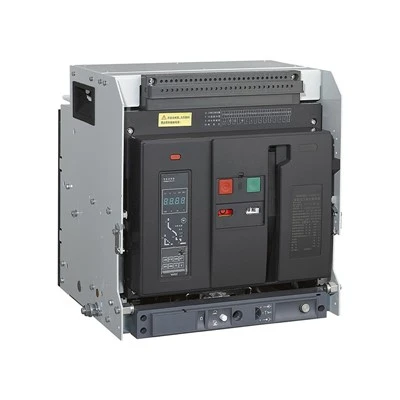
If you’re a homeowner looking to upgrade your electrical system, or a contractor needing reliable circuit breakers and surge protection for your projects, I’d be happy to chat through what you need. Don’t hesitate to reach out to learn more about our products and how we can help keep your space safe.
LV Pole Mounted Circuit Breakers References:
- Electrical Safety Foundation International. (2022). Surge Protection and Circuit Breaker Basics. ESFI Research Library.
- Underwriters Laboratories. (2021). Standard for Safety for Surge Protective Devices (UL 1449). Underwriters Laboratories Inc.
- National Electrical Code. (2023). Article 240: Overcurrent Protection. National Fire Protection Association.
- U.S. Department of Energy. (2020). Residential Electrical Safety: Understanding Circuit Breakers and Surge Suppression. DOE Office of Energy Efficiency and Renewable Energy.
Wenzhou Lanen Electrical Co., Ltd.
Wenzhou Lanen Electrical Co., Ltd. is one of the most professional circuit breakers manufacturers and suppliers in China, also supports customized service with low price. Please feel free to buy CE approved circuit breakers made in China here from our factory. Contact us for more discount information.
Address: Zhiguang Liushi Town Yueqing City Wenzhou City Zhejiang Province
E-mail: lanen@luyele.cn
WebSite: https://www.lanenelectrical.com/
