Hey everyone, Machine Stretch Film
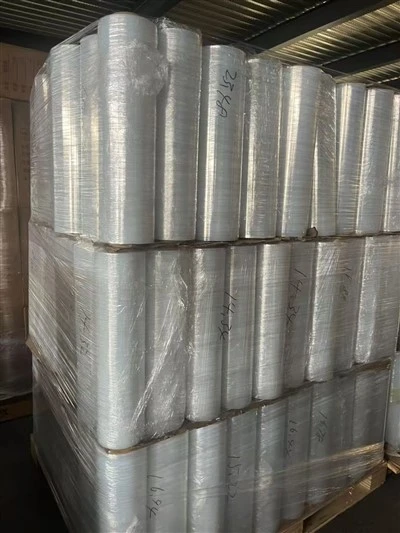
If you’ve ever wandered through a cold storage warehouse—like a big, noisy place with pallets stacked to the ceiling, doors slamming every two seconds, and temperatures so low your breath fogs up instantly—you’ve probably thought about all the packaging stuff keeping those pallets intact. Last week, a customer hit me up with a question I get a lot, and it’s the kind that makes you think, “Wait, is this something everyone actually needs to figure out?” They asked: Is machine stretch film even worth using in cold storage?
I’m the owner of a machine stretch film supply company, so I see both the great calls and the mistakes people make. Let me break this down like I would with a friend who’s running a cold storage operation themselves—no fancy jargon, just real stuff.
First, let’s get one thing straight: cold storage isn’t just a “cooler for food.” There are different types. You’ve got the ones that hold produce at 32-40°F (that’s around 0-4°C), frozen food at 0°F and below, and even some that hold pharmaceuticals at super specific temps. Each of these has totally different demands for packaging. Pallets don’t just sit there—they’re moved by forklifts, bumped into corners, sometimes stacked 5 high, and exposed to that constant cold air and condensation. If your stretch film can’t handle that, you’re wasting time, money, and probably ruining whatever’s inside.
So, is machine stretch film a fit here? The short answer is: it depends on which kind you pick. But let’s not skip the boring (but important) science part. Cold environments do weird things to plastic. Regular stretch film—like the hand rolls everyone uses at a small warehouse—gets stiff and brittle when it’s cold. It cracks if you pull it too tight, breaks when you wrap a pallet, and leaves gaps that let dust, moisture, or even frost get in. That’s bad news for cold storage, because moisture is the enemy of almost everything stored there—whether it’s veggies that get soggy, frozen meat that gets freezer burn, or industrial parts that rust.
Now, machine stretch film is different. It’s made with way better materials than hand film. We use linear low-density polyethylene (LLDPE) mostly, and for cold storage, we tweak that to make it low-temperature resistant. Wait, let me explain that tweak simply: it’s like making a jacket for plastic. Regular LLDPE is soft in normal temps, but in cold, it’s like a thin sweater in a snowstorm. We add a few extra additives—nothing sketchy, just stuff that keeps the molecules flexible even at -20°F or lower. So when a forklift jostles a pallet wrapped in our cold-specific machine film, it doesn’t snap. It stretches, holds tight, and doesn’t leave gaps.
But let’s talk about the real pain points in cold storage that film has to fix, because if it doesn’t do those, it’s useless. First, condensation. When you bring a pallet from a cold storage freezer to a loading dock that’s warm, the air hits the cold pallet and makes water droplets. If your film isn’t moisture-resistant, those droplets seep through, get on the product, and cause all kinds of issues. Our machine stretch film has a good barrier—we test it for moisture vapor transmission, so even when that condensation happens, most of it stays on the outside, not the inside. That’s a big one for frozen food distributors, who lose millions a year to freezer burn from bad packaging.
Second, load stability. Cold storage pallets don’t stay still. They’re moved 10+ times in a week, stacked on top of other pallets, sometimes left in the cold for days. Hand stretch film can’t handle that—you’ll have pallets with a side that’s not wrapped tight, so when you stack them, they tip. Machine stretch film is uniform. When it’s run through a machine wrapper (that’s a big machine that wraps pallets automatically, way faster than hand wrapping), the tension is the same every time. So even in the cold, the film stays taut, holds the pallet together, and prevents that costly tipping damage. I’ve seen customers switch from hand film to machine film in their freezers and cut pallet damage by 40%—that’s not a number I made up, that’s from a guy who runs a cold storage facility in Minnesota I work with.
Wait, but let’s not pretend every machine stretch film works. There are cheap versions out there—thin, made with recycled plastic, no cold additives. Those are useless in cold storage. I had a customer last year who bought a $50 case of machine film from a random online supplier for their frozen seafood pallets. They stored them in a -10°F freezer, and when they tried to move the pallets a week later, the film shattered. Half the boxes fell off, got damaged, and they had to throw out $2k worth of product. That’s the mistake people make: buying cheap machine film because it’s cheaper upfront, but it’s a total loss in the long run.
Another thing: cold storage can be super dusty. Warehouses storing non-food items, like cold chemicals or metal parts, have dust that’s fine enough to get through gaps in bad film. Our machine stretch film has a higher tear strength, so once it’s wrapped, it’s almost airtight. That keeps dust out, which is a big deal for industries like pharma, where product purity is non-negotiable.
But here’s the thing I always tell people: you can’t just pick any machine stretch film for cold storage. You need to match it to your storage temp. If you’re storing veggies in a 35°F cooler, a standard low-temperature film works. If you’re storing ice cream at -25°F, you need a film that’s rated for extreme cold. Using the wrong one is like wearing a t-shirt in a blizzard—you might be okay for five minutes, but you’ll freeze eventually.
Also, let’s talk about cost, because that’s a big factor. People think machine stretch film is more expensive than hand film, and in some cases, it is. But in cold storage, the savings are huge. Hand wrapping takes time—workers can wrap 10 pallets an hour, while a machine wrapper can do 100. So labor costs go down. Less product damage means you’re not throwing out inventory. And our cold-specific machine film is actually priced reasonably—we’ve worked out bulk rates for cold storage ops that make it worth it. I remember a small frozen pizza company that switched: they were spending $1,200 a month on hand film and $800 on lost product, and with machine film, they spent $900 on film and $200 on lost product. That’s a win for everyone.
Wait, but what about common myths? I’ve heard people say “machine film is too thick for cold storage” or “it gets too heavy.” No, modern machine stretch film is thin—we make it 80 gauge sometimes, which is thinner than hand film, but stronger because it’s uniform. Thickness isn’t the strength; the material and the additives are. And it doesn’t get heavy—you’re not hauling rolls around, the machine does that. The film itself is light, so it doesn’t add unnecessary weight to pallets, which is good for shipping costs.
Another myth: “condensation will ruin the film anyway.” Yeah, if you leave a pallet in the cold for months, condensation can build up, but a good machine film will resist that way more than hand film. We also add a small anti-fog additive to some of our cold storage films for products that are extra sensitive, like fresh berries. It stops that fog from forming, so the film stays clear, and you can see the product inside without unstacking the pallet. That’s a nice touch, but not always necessary—just depends on what you’re storing.
Let me also address who this works for. If you’re a small cold storage op with 10 pallets a day, maybe a machine wrapper isn’t worth it, but even then, our cold-specific machine film can be used by hand if you’re strong enough (though we recommend the machine, because it’s better). If you’re a mid-sized or large op with 50+ pallets a day, this is a no-brainer. We’ve also worked with meat processing plants, cold flower storage (yes, flowers need cold storage too—machine film keeps them hydrated), and even cold chain logistics companies that ship frozen goods cross-country. All of them say the machine stretch film is a game-changer.
I get it, switching packaging is a hassle. You have to train workers, maybe buy a machine, test the film to make sure it works. But from where I sit, after years of talking to people in cold storage, machine stretch film is actually one of the best investments you can make for your packaging. The mistakes people make aren’t because machine film is bad—they’re because they pick the wrong type, or the cheap stuff that wasn’t made for cold temps.
Here’s a real example: last winter, a customer in Winnipeg called me panicking. Their frozen turkey pallets were breaking in the -15°F freezers, and they were losing pallets to the cold. I recommended our extreme cold machine film, and within a month, their damage rate went from 12% to 1%. They saved more than the cost of the film in a week. That’s not a fluke—that’s how this works when you get it right.
So, to wrap this up (pun intended): yes, machine stretch film is absolutely suitable for cold storage—if you get the right kind. Skip the regular stuff, skip the cheap recycled stuff, look for film that’s formulated for low temperatures, has good moisture barrier, and high tear strength. It will save you money, reduce product loss, and keep your pallets secure through even the coldest conditions.

If you’re running a cold storage operation and you’re not sure what film you need, hit us up. We don’t do one-size-fits-all. We’ll ask what temp you store at, what products you handle, how many pallets a day you wrap, and point you to the right stuff. No sales pitches, just straight talk about what works for your space. We’re here to help you stop wasting money on bad packaging and start keeping your products safe.
Jumbo Stretch Film References:
- Industrial Plastics Federation. (2022). Low-temperature performance of polyethylene films for cold chain packaging.
- Cold Storage Association International. (2023). Packaging best practices for frozen and refrigerated product storage.
- Journal of Packaging Science and Technology. (2021). Moisture vapor transmission rates in stretch films for cold storage applications.
- U.S. Department of Agriculture. (2022). Post-harvest packaging for fresh and frozen agricultural products.
Shandong Enya Packaging Materials Co., Ltd.
As one of the most professional machine stretch film manufacturers and suppliers in China, our products have good reputation in the market. Please rest assured to wholesale durable machine stretch film made in China here from our factory. Good service and quality products are available.
Address: 580 meters north of the road, east of Dongleishi Village Committee, Luoxi Sub-district, High-tech Industrial Development Zone, Luozhuang District, Linyi City
E-mail: Jean.zhu@enyapack.com
WebSite: https://www.enyaparticles.com/
