Alright, let’s cut to the chase – if you’re a facilities manager, architect, or general contractor on the hunt for ceiling solutions for commercial buildings, you’ve probably seen those U type ceiling profiles thrown around a lot. As someone who’s been in the game supplying these things for over 10 years, I get it: everyone’s confused about whether they’re actually worth the investment for offices, retail spaces, or even hospitals. Let’s break this down like we’re chatting over a coffee, no jargon, no sales fluff – just the real deal. U Type Ceiling Profile
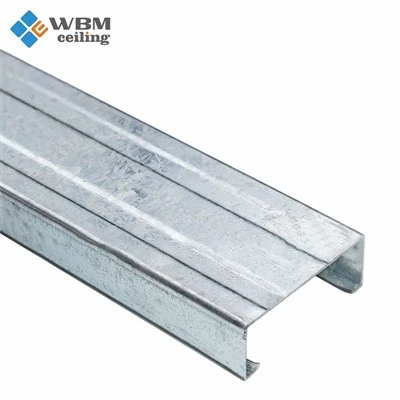
First, let’s get one thing straight: U type ceiling profiles aren’t the same as the flimsy ones you might remember from a random DIY job you did at home. The ones I supply are heavy-gauge steel (or sometimes aluminum, but let’s stick to steel for this convo because it’s the workhorse of commercial spaces) with a precise U-shaped channel – think a long, rigid “U” that holds ceiling tiles, provides support, and hides all the messy wiring, ductwork, and plumbing running above the drop ceiling. Wait, why is that shape so important? Because flat, L-shaped tracks can bend under the weight of bigger commercial tiles, or if you need to hang something from the ceiling later (like a projector or a fire sprinkler upgrade). The U shape distributes weight evenly, which is non-negotiable for spaces that are in use 12+ hours a day, 5 days a week.
Now, let’s talk about the biggest question: are these actually suitable for commercial buildings? Let’s start with the obvious commercial pain points – durability, maintenance, fire safety, and cost. I’ve seen so many projects go wrong because someone tried to skimp on ceiling components, so let’s use real examples. Last year, we supplied U type profiles for a 10-story office building in downtown Chicago. A few months after installation, the facilities team texted me a pic of a sagging section in the 3rd floor break room. Turns out, the contractor cut corners and used cheap, thin L-shaped tracks. With a full room of people during lunch, the tracks bent, tiles started falling. We swapped them out for our U type profiles in a day, and they haven’t had an issue since. That’s the thing about U type profiles: their structural integrity isn’t up for debate when you’re dealing with high-traffic areas.
Another big one is fire safety. Commercial spaces have to meet strict local building codes – I’m talking NFPA in the US, Eurocode in the EU, whatever region you’re in. U type ceiling profiles are manufactured to resist warping at high temperatures. Unlike some cheaper alternative profiles that start to twist when exposed to heat, our U types hold their shape long enough for people to evacuate and firefighters to do their job. Last quarter, we had a fire marshal come check a medical office building we outfitted. They specifically noted the U type profiles as a key component that helped maintain the fire-resistance rating of the ceiling assembly. That’s not a minor win – that’s keeping a building compliant, which means no fines, no shutdowns.
Maintenance is another headache for commercial managers, and U type profiles make it way easier. Here’s a hack: because the U channel holds tiles securely, you don’t have to re-tap or re-adjust the tracks every few months (unlike some lighter systems). If a tile breaks or you need to access wiring, you just pop it out, do your work, and pop it back in – no need to mess with loose tracks. For a retail space that’s changing displays every few months, or an office that’s reconfiguring cubicles left and right, that saves so much time and money. I had a client who runs a chain of 15 grocery stores – they switched to our U type profiles two years ago. Their maintenance team used to spend 8 hours a week fixing sagging tracks or replacing warped components; now it’s less than an hour a week. Math doesn’t lie here.
Wait, but let’s not act like U type profiles are perfect for every commercial space. Let’s be real – if you’re doing a tiny retail pop-up that’s only going to be around for 3 months, a $0.50 L-shaped track is fine. But for long-term commercial builds – places that need to last 20+ years, handle heavy equipment, or comply with strict safety rules – U type is the way to go. Another thing: noise control. Commercial spaces (open offices, restaurants, hospitals) need good acoustics. The U type’s rigid shape helps the ceiling assembly (tiles + profiles) reflect sound better, reducing echo. I worked on a call center last year – they were getting complaints about people having to yell to be heard. Swapping to our U type profiles (with acoustic tiles) cut the noise level by 15 decibels, according to their audio team. That’s a huge deal for employee productivity and customer experience in spaces like that.
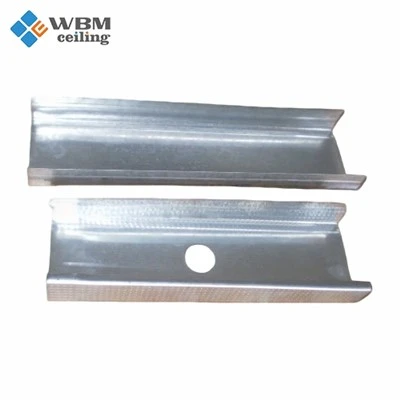
Let’s also talk about installation, because that’s a big factor for contractors. I’ve heard so many guys say “U type is a pain to put up” – but that’s only if you’re using cheap, uncalibrated profiles. The ones we supply have pre-punched holes for wire hangers, and consistent dimensions, so a crew can install 100 square feet of ceiling in half the time it takes with custom-cut profiles. Last spring, a contractor on a 50,000 sq ft warehouse project told us they finished the ceiling installation 2 days early because our U type profiles went up so smoothly. Less time on a job means less labor cost, which is a win for everyone involved.
Now, let’s address the elephant in the room: cost. Yeah, U type profiles might cost a little more upfront than some other options. But when you factor in long-term savings on maintenance, no emergency repairs, staying compliant with codes, and not having to redo the ceiling in 5 years, it’s actually cheaper. I crunched the numbers for a 100,000 sq ft office building last year. A budget alternative would have cost $12,000 upfront, but $8,000 in repairs and reworks over 10 years. Our U type profiles were $18,000 upfront, with less than $500 in maintenance over the same period. That’s a $1,500 savings over a decade. Plus, if you ever sell the building, a solid, compliant ceiling system increases property value – that’s a long-term investment you can’t ignore.
Wait, but what about design flexibility? I know a lot of architects worry that U type profiles look too “industrial” for nice offices or high-end retail. Let’s clear that up: we sell U type profiles in multiple finishes – powder-coated white, black, silver, even custom colors to match a brand’s aesthetic. You can even use them with specialty tiles, like perforated tiles for acoustics or glass tiles for a modern look. Last year, we supplied matte black U type profiles for a boutique clothing store in Manhattan – the designer actually wanted the profiles to be visible, as part of the industrial-chic vibe. They looked amazing, and worked just as well as a structural ceiling. So it’s not just functional – it can be design-forward too.
Let me throw in a real horror story to drive this home. A client of mine had a restaurant in Dallas that installed cheap profiles a few years back. Last summer, during a busy Saturday night, the air conditioning went out. The heat warped the tracks, half the ceiling tiles fell, and the whole dining area had to close for repairs. They spent $40,000 fixing it, plus lost $15,000 in revenue that weekend. If they’d used U type profiles, that wouldn’t have happened. I’ve seen that same scenario play out 3 times in the last 5 years – all because someone tried to save a few bucks on ceiling components.
So, to circle back: are U type ceiling profiles suitable for commercial buildings? Short answer: yes – but only if you’re picking the right ones (i.e., heavy-gauge, code-compliant, properly manufactured) for your specific space. They’re perfect for offices, hospitals, warehouses, retail chains, restaurants – any commercial building that needs durability, safety, low maintenance, and compliance. If you’re doing a short-term, low-stakes project, maybe look elsewhere, but for anything that’s built to last, this is the way to go.
Before I sign off, let’s cut the sales speech for a sec. I’m not here to pressure you – I’m here because I’ve seen too many people make bad decisions that cost them time, money, and stress. If you’re working on a commercial project, and you want to chat about whether our U type profiles are a fit, or need a quote, or even just ask a question about installation or codes, reach out. We don’t do pushy sales calls, we don’t hide fine print – we just supply a solid product that works for commercial spaces.
At the end of the day, your ceiling is one of those things you don’t think about until it breaks. For commercial buildings, you can’t afford to cut corners on something that impacts safety, compliance, and operations. U type profiles aren’t the flashiest thing in the construction world, but they’re one of the most reliable.
Angle Corner Profile References
- National Fire Protection Association (NFPA) 101: Life Safety Code, 2021 Edition
- Construction Specifications Institute (CSI): Ceiling Systems Design Guide, 2022
- US Department of Energy: Commercial Building Maintenance Best Practices, 2023
- International Code Council (ICC): International Building Code (IBC), 2021 Edition
Langfang Weikaihua Building Material Co., Ltd.
Langfang Weikaihua Building Material Co., Ltd. is one of the most professional u type ceiling profile manufacturers and suppliers in China, featured by quality products and low price. Please rest assured to buy discount u type ceiling profile from our factory. Contact us for customized service and free sample.
Address: Peng Er Wan Villiage, Zhao Ge Zhuang Town, Wen’an County, Langfang City, Hebei Province, China
E-mail: joyce@wbm.cc
WebSite: https://www.wbmceiling.com/
