When I first started in the motor soft starter business back in 2012, I had a customer who ran a large water treatment plant in the Pacific Northwest. They’d just had a 4,000-horsepower, 13.8 kV pump motor installed, and their engineering team was convinced that soft starters were only for low-voltage motors—you know, the 480V or less ones that power conveyor belts and small fans. They were planning to use a reduced-voltage autotransformer starter, which is bulky, costly, and throws that sharp voltage spike every time the motor kicks on. I spent three hours on a site walk that day, showing them data from a similar installation we’d done two years prior for a wastewater plant in Oregon, and by the end of the day, they agreed to test a 13.8 kV soft starter. A year later, their maintenance team told me that not only had they cut peak electricity demand by 18%, but they hadn’t had a single motor bearing failure since the upgrade—something their old autotransformer setup was causing every 18 months. That story stuck with me, and it’s why I still get asked this question at least once a week: Can a soft starter be used for high voltage motors? The short answer is yes, but there’s a lot more to it than just a simple “yes.” Motor Soft Starter
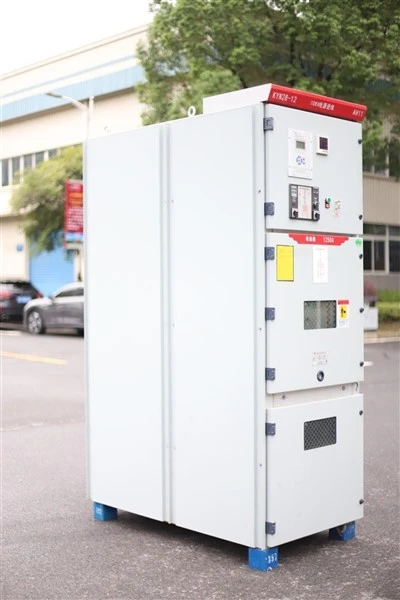
Let’s start by breaking down what we mean by “high voltage motor.” Most of our work with these motors falls in the 2.3 kV to 13.8 kV range—common for large pumps, compressors, crushers, and the kind of motors you find in heavy industry, mining, power generation, and large-scale water/wastewater facilities. These motors are built for heavy loads, but starting them is a whole different beast. When a high voltage motor starts directly across the line (DOL), it draws 500-600% of its full-load current. That’s like flipping a giant switch that pulls a huge surge of electricity from the grid, which can cause voltage dips for other equipment on the same line—think of lights flickering at a neighboring factory, or control systems resetting. It also puts massive mechanical stress on the motor’s shaft, couplings, and driven equipment, because the torque jumps from zero to full in a fraction of a second. That stress leads to wear and tear, which adds up to more maintenance, shorter equipment life, and unplanned downtime. That’s where soft starters come in, even for high voltage applications.
Wait, but what’s a soft starter, exactly? I meet a lot of people who confuse soft starters with variable frequency drives (VFDs), and that’s a fair mix-up. A VFD changes the frequency and voltage to adjust a motor’s speed, which is great for applications where you need variable speed, like a conveyor belt that runs at different speeds for different products. A soft starter, on the other hand, controls the voltage supplied to the motor during startup, gradually ramping it up to full voltage over a set period of time. It doesn’t change frequency, so the motor runs at full speed once it’s started—but that’s exactly what you want for most fixed-speed high voltage motors, which is the vast majority of them. For high voltage motors, soft starters do the same core job as their low-voltage counterparts: reduce starting current, minimize mechanical stress, and protect both the motor and the grid. The key difference is how they’re built to handle that higher voltage. Low-voltage soft starters use SCRs (silicon-controlled rectifiers) rated for 480V, but high voltage soft starters have SCRs (or other switching components) that are insulated and rated for thousands of volts, plus additional isolation and protection systems to handle the higher electrical loads safely.
Let’s get into the technical side that matters for our customers. When we design a high voltage soft starter, one of the biggest challenges is isolation. At 13.8 kV, a simple component failure can arc through the equipment and cause massive damage, so we use phase-shift transformers and isolated gate drivers to separate the low-voltage control circuits from the high-voltage power circuits. We also use series-connected SCRs, because individual SCRs can’t handle 13.8 kV on their own—so we string several together, making sure they fire in perfect sync to distribute the voltage evenly. Another thing we focus on is heat management. High voltage soft starters dissipate a lot of energy during startup, so we use either forced-air cooling or liquid cooling, depending on the size of the motor and the application. We recently installed a 5,000-horsepower, 6.6 kV soft starter for a mining company in Nevada, and they went with liquid cooling because their site is in a desert, where the ambient temperature hits 110°F in the summer. The forced-air units they’d used before would overheat during startup, causing unnecessary shutdowns—our liquid-cooled unit doesn’t have that issue.
Now, I know what some of you are thinking: “High voltage soft starters are way more expensive than autotransformer or star-delta starters.” That’s true—initial cost is higher, but you have to look at the total cost of ownership, not just the upfront price. Let’s go back to that water treatment plant I mentioned earlier. They calculated that their autotransformer setup was costing them around $45,000 a year in extra electricity from peak demand, plus $30,000 a year in maintenance on motor bearings and couplings. Our soft starter cost them $120,000 upfront, but within two years, they’d already made that money back in savings. On top of that, they eliminated the risk of unplanned downtime—when that big pump goes down, they have to shut off the entire treatment process, which means discharging raw sewage into the river until they can get it fixed. That kind of downtime isn’t just costly; it’s illegal in most places. So the real value of a high voltage soft starter isn’t just about electricity savings—it’s about reliability and risk reduction.
Another common question I get: “Can a soft starter be used for any high voltage motor?” The short answer is almost, but there are a few caveats. First, soft starters work best for fixed-speed motors—if you need variable speed, a VFD is still the right choice. But most high voltage motors are fixed-speed, so that’s not a big limitation. Second, you have to match the soft starter’s rating to the motor’s voltage and horsepower. You can’t use a 2.3 kV soft starter on a 13.8 kV motor, that’s a safety hazard. Third, some types of high voltage motors have specific requirements. For example, synchronous motors have different startup characteristics than induction motors, so we adjust the soft starter’s ramp profile to match. We did a project last year for a power plant with a 10,000-horsepower synchronous motor, and their original soft starter didn’t account for the motor’s low starting power factor, so it kept triggering overcurrent faults. We reprogrammed the ramp to gradually increase voltage based on current draw, rather than time, and that fixed the issue right away. That’s the kind of customization we do—one size doesn’t fit all, even in soft starters.
I also want to talk about common misconceptions. A lot of older engineers will tell you that soft starters cause harmonic distortion, but that’s only partially true. Harmonics come from non-linear loads, and high voltage soft starters do produce some harmonics during startup, but modern designs use pulse-width modulation (PWM) and harmonic mitigation techniques to keep distortion below the levels required by IEEE standards. Our soft starters are rated to meet IEEE 519, which is the standard for power system harmonics. In fact, the harmonics from a high voltage soft starter during startup are usually lower than the harmonics from an autotransformer starter, because the autotransformer’s sharp voltage spikes create more harmonic content. We had a steel mill customer who was getting complaints from their local utility about harmonic levels, and they switched from autotransformers to our soft starters, and the utility hasn’t had a complaint since.
Another point: maintenance. High voltage soft starters are actually easier to maintain than other types of starters. They have fewer moving parts than autotransformers or star-delta starters—no switches, no contacts, no brushes that wear out. The main things you have to do are annual inspections of the cooling system, checking the SCR connections, and updating the control software every few years. We have a 12,000-horsepower soft starter installed at a paper mill in the Midwest that’s been running for 15 years, and the only maintenance they’ve had is a cooling filter replacement and a firmware update. That’s unheard of for a mechanical starter—their old autotransformers would need contact replacements every 2-3 years, which costs tens of thousands of dollars each time.
Let me share a recent project to put this all in perspective. A customer in Texas reached out to me last quarter because their 7,500-horsepower, 4.16 kV induced-draft fan motor kept tripping on overcurrent during startup. They were using a DOL starter, and each time they started the fan, it caused a 12% voltage dip on their plant’s main grid, which was shutting down their backup generators. They tried adjusting the motor’s protection relays, but that just led to overheating. We recommended a 4.16 kV soft starter, and after installation, the peak starting current dropped from 580% of full-load current to 220%. The voltage dip was down to 3%, so their backup generators never tripped again. They told us that the first month after installation, they saved $12,000 in demand charges alone, and they haven’t had a single overcurrent trip in the eight months since. That’s the kind of result that makes all the engineering work worth it.
Now, I know every customer’s application is different. A mining company driving a crusher has different needs than a water plant driving a pump, which is different than a power plant driving a generator. That’s why we take the time to walk through each customer’s specific requirements before recommending a solution. We start with a site assessment: what’s the motor’s voltage, horsepower, and type? What’s the load profile of the driven equipment? What are the grid constraints at the site? Do they need remote monitoring or integration with their plant’s control system? All of these factors affect the right soft starter for the job.
If you’re reading this and you’re dealing with a high voltage motor startup issue, or you’re looking to upgrade your current starter setup, don’t write off soft starters just because you’ve heard they’re only for low voltage applications. The technology has come a long way in the last 10 years, and modern high voltage soft starters are safe, reliable, and cost-effective for almost every fixed-speed high voltage motor application. We’ve installed soft starters on motors ranging from 1,000 horsepower to 15,000 horsepower, at voltages from 2.3 kV to 13.8 kV, in industries from water treatment to mining to power generation. Every single one of those installations has delivered on reduced starting current, lower mechanical stress, and better grid stability.

If you’re ready to talk through your specific needs, don’t hesitate to reach out. We don’t do one-size-fits-all solutions, and we’re not here to push the most expensive option—we’re here to find the right soft starter that fits your application, your budget, and your goals. Whether you have a single motor that keeps tripping during startup, or you’re planning a whole new facility with multiple high voltage motors, we can help you navigate the options and find a solution that works for you.
Motor Soft Starter References
- Miller, T.J.E. (2008). Starting Methods for Large Induction Motors. IEEE Transactions on Industry Applications, 44(2), 552-559.
- IEEE Std 519-2014, IEEE Recommended Practice and Requirements for Harmonic Control in Electric Power Systems.
- Bose, B.K. (2013). Power Electronics and Motor Drives: Advances and Trends. CRC Press.
- Water Environment Federation. (2019). Electrical Systems for Wastewater Facilities Manual. WEF Press.
- Mining Association of Canada. (2021). Energy Efficiency Guidelines for Large Industrial Motors.
Worldwide Electric Stock Co., Ltd.
As one of the most professional motor soft starter manufacturers and suppliers in China, we have world-leading production equipment and strong manufacturing capabilities. Please feel free to buy advanced motor soft starter at competitive price from our factory.
Address: No. 1 Wanzhou Road, Xiangyang City, Hubei Province, China
E-mail: sales@worldwide-electric.com.cn
WebSite: https://www.wwegroup-electric.com/
