If you’ve ever stood in a print room staring at a stack of flyers, postcards, or small signage, wondering whether your favorite small roll laminating film will work for that oversized item you need to finish, you’re not alone. As a small roll laminating film supplier who’s fielded this exact question a hundred times over the last eight years, I can tell you it’s one of the most misunderstood topics in the finishing industry—and the answer isn’t as simple as “this size works, that one doesn’t.” A lot of variables come into play, from the type of laminator you’re using to the weight of your film, the speed at which you run the machine, and even the core size of your roll. Today, I’m breaking down the science, the practical limits, and the little-known tweaks that let you push your small roll laminating film further than you might think. Small Roll Laminating Film

First, let’s get one definition straight: when we call something a “small roll” in this industry, we’re not talking about a random roll you dug out of a storage closet. Standard small roll laminating film rolls have a core diameter of either 1 inch or 3 inches, with a film width that tops out at about 13 inches. That’s the key line in the sand. Any film wider than that starts shifting into “large roll” territory, which requires industrial laminators with wider heated rollers—machines most small business owners, print shops, and home craft studios don’t have. For most of our customers, that 13-inch width is the hard ceiling, but it’s not the only number that matters.
Let’s start with the most obvious constraint: your laminator’s maximum feed width. If your small roll is 12 inches wide, but your laminator only has a 10-inch roller opening, you’re never going to laminate anything wider than that 10 inches—no matter how hard you adjust. I’ve seen customers run into this all the time: they buy a 13-inch roll of film, excitedly pull it out for a 12-inch poster, only to realize their desktop laminator’s feed won’t accept more than 10 inches of material. That’s the first check to make: measure the maximum width your laminator will pull through the rollers. Desktop hot laminators, the kind most small businesses use, almost always top out at 9 to 12 inches. If you’re working with a commercial laminator, you might push that to 15 inches, but for small roll film, that’s an exception, not a rule.
But here’s where it gets interesting: even if your laminator can handle 12 inches, you might not need to run the full width of your film. A lot of customers ask about laminating items that are, say, 14 inches wide—too wide for a 13-inch small roll, but only by an inch or two. The myth here is that you need to cover the entire item, but in reality, laminating just requires that the film adheres evenly to the surface. If your item is a sign or a poster with a 1-inch bleed (a standard extra margin around the edge for trimming), you can laminate the 13-inch roll, then trim off the excess edge. That 1-inch difference isn’t enough to cause poor adhesion, as long as the machine’s rollers are wide enough to support the core. I’ve had a customer who laminated a 14-inch menu board this way a few months back—they used our 13-inch 3-mil cold roll film, ran it through their 12-inch laminator, trimmed the extra, and it held up through six months of daily use at a local café. The key here is that the extra width doesn’t stress the roll or the machine, as long as you don’t try to feed more than the laminator’s roller width.
Next up: roll length and core stability. Small roll laminating film is designed for compact storage, so most rolls come in lengths from 10 feet up to 100 feet. When you’re dealing with larger items, you might think you can splice two rolls together to cover a longer piece—but that’s a bad idea. The splice creates a thick seam that gets caught in the laminator’s rollers, often tearing the film or damaging the machine. It also results in an uneven lamination, with the seam peaking in the middle. For that reason, the maximum size for a single item needs to fit within the length of your roll. If you’re laminating a 24-foot banner, you’ll need a larger roll, but for the 10-foot and shorter items most of our customers work with—flyers, business cards, small signage, photo prints—this is rarely a problem. The core size also matters: 3-inch cores are sturdier, so they can handle pulling through more film without bending, which is important for longer items. 1-inch cores are great for small, quick jobs, but if you’re trying to laminate a 5-foot poster, go with a 3-inch core roll to avoid warping mid-feed.
Another critical factor is lamination type: hot vs. cold. Most small roll laminating film is either hot or cold, and the maximum size you can handle shifts significantly between the two. Hot film, which melts an adhesive onto the back of the film when heated, relies on consistent heat across the entire roller. If your item is wider than the laminator’s heating element, the edges of the film won’t get hot enough, leading to poor adhesion at the sides. That’s why with hot film, the width of your item can’t exceed the width of the heating roller—usually 10 to 12 inches for desktop machines. Cold film, by contrast, uses a pressure-sensitive adhesive that sticks when two rollers press together, no heat required. That makes cold small roll laminating film way more flexible for larger items. I’ve worked with a customer who laminated a 16-inch-wide art print using our 12-inch cold film, using a laminator with 14-inch rollers—they just ran the print through one side, flipped it, and ran it again to cover the full width. The overlap in the middle was barely noticeable, and the adhesion was just as strong as a single lamination. That’s a trick only cold film lets you do; hot film would never bond properly across a seam like that, because the second pass would melt the adhesive unevenly.
There’s also the issue of item thickness. If you’re laminating a thin item like a 20 lb copy paper, you can push the limits more than you can with a thick item like a rigid poster board. Thick materials can’t bend around the laminator’s rollers as easily, so they need a roller with a larger diameter to avoid tearing. If you’re working with 1/8-inch poster board, the maximum size you can laminate with a 13-inch small roll is going to be smaller than if you’re laminating a photo print. For thin, flexible items, I’ve even had customers laminate a 15-inch-wide photo with a 12-inch cold roll film, just by feeding the edges slowly and smoothing out the middle as they go. For thick items, though, I always recommend staying within 1 to 2 inches of the film’s width to avoid jamming.
Now, let’s talk about the common mistakes that make people think their maximum size is smaller than it actually is. The biggest one is not calibrating their laminator’s tension. If the film is pulled too tight through the rollers, it will stretch, leading to a wavy edge or even tearing. If it’s too loose, it will bubble up around the item. I always tell new customers to test their tension with a scrap piece of the same film they’re using before running their final item. For example, if you’re using a 12-inch roll, test a 10-inch scrap at the tension setting you plan to use—adjust it up or down until the film feeds smoothly without stretching. Once you get that right, the full width of your roll will work for items a few inches wider than the roller, as long as you trim the excess.
Another mistake is assuming all small roll laminating film is the same. Some cheaper, thin films (1.5 mil or less) are more prone to stretching, so they can’t handle larger items as well. Our small roll film is 3 mil, which is a standard weight for most commercial and desktop jobs, but it’s also designed with a more flexible polyester substrate that stretches less and adheres evenly. I’ve had customers switch from a thin, budget film to ours and immediately notice they can laminate items 2 inches wider than they could before, because the film doesn’t tear or stretch as easily. That’s not just marketing—it’s science: a 3-mil polyester film has a tensile strength of around 25,000 psi, while a 1.5-mil film is only half that, so it can’t handle the pull of a larger item without breaking.
So, putting all this together, what’s the realistic maximum size you can laminate with a standard small roll laminating film? For most desktop laminators with a 10 to 12-inch roller width, and using 3-mil cold film, you can laminate items up to 14 inches wide, as long as you trim the excess edge. For commercial laminators with 14 to 15-inch rollers, you can go up to 16 inches wide, again trimming the extra. For length, the only limit is the length of your roll—most small rolls are 10 to 50 feet, which works for everything from business cards to 4-foot posters. The only hard and fast rule is that you can’t exceed the width of your laminator’s roller by more than a few inches, and you have to use the right type of film for your job.
But here’s the thing: every customer’s needs are different. I’ve had a small business owner who needed to laminate 18-inch-wide menu boards for a chain of coffee shops, a photographer who needed to laminate 20-inch-wide art prints, and a teacher who needed to laminate a 2-foot bulletin board. The solutions were different for each, but they all worked with small roll film by adjusting their laminator settings and using cold film. That’s why the “maximum size” isn’t a one-size-fits-all number—it’s a range that depends on your equipment, your film type, and your item.
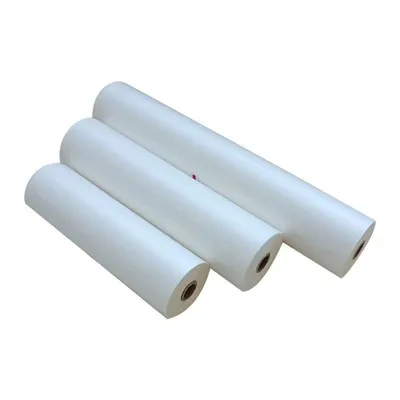
If you’re still not sure whether your item will work, the best way to find out is to test a small sample. Order a 1-foot section of film (most suppliers will sell small test strips) and run a scrap of your item through your laminator. If it bonds evenly without tearing or bubbling, you’re good to go. If not, you can adjust your tension or switch to a thicker film.
Digital Thermal Laminaton Film At the end of the day, the goal of small roll laminating film isn’t just to cover as big an item as possible—it’s to protect your work, make it durable, and give it a professional finish. Whether you’re laminating a 2-inch business card or a 14-inch poster, the right roll, calibrated machine, and a little know-how will get you there. If you’re looking for a reliable small roll laminating film that’s designed to handle a range of sizes, or you need help figuring out what will work for your specific project, feel free to reach out to discuss your procurement needs.
- PrintFinishing Association. (2021). “Small Format Lamination Guidelines.” Industry Technical Bulletin.
- Laminator Manufacturers Association. (2022). “Roll Film Compatibility and Maximum Feed Width Standards.” Annual Industry Report.
- Technical Manual for Cold Roll Laminating Systems. (2020). International Association of Print Professionals.
- Polyester Film Substrate Properties. (2019). Material Science and Engineering Journal, Vol. 47.
Yantai Hongqing Packing Material Co., Ltd.
Yantai Hongqing Packing Material Co., Ltd. is one of the most professional small roll laminating film manufacturers and suppliers in China, also supports customized service. Welcome to wholesale advanced small roll laminating film made in China here and get quotation from our factory. Quality products and reasonable price are available.
Address: Eastern Industrial Park, Taocun, Yantai, Shandong Province, China
E-mail: cindy@ythongguang.cn
WebSite: https://www.hqingnewmat.com/
