Hey there, I’m Jake, and I’ve spent the last 12 years working with everything from brand-new UV coating lines to old ones that are just getting by. Let me tell you, most shop managers I chat with aren’t thinking about replacing their entire line right now—they’re looking to squeeze more power, speed, and consistency out of the one they already have. Last month alone, I helped three different businesses upgrade lines that were only 5 to 10 years old, and one of them doubled their output in three weeks without dropping a dime on a brand-new line. If that sounds like something you might need to figure out, let’s break down the real, actionable upgrade options I actually talk to clients about every day. UV Coating Line

First off, let’s get one thing straight: when people say “upgrade,” they’re not always talking about spending six figures. Some of the best upgrades I’ve seen take a day, cost less than a new pickup truck, and fix problems that old lines have been kicking down the road for years. Let’s start with the stuff that’s low-hanging fruit, the kind you can do over a weekend without shutting down production for more than 24 hours.
The first big one is UV bulb and reflector upgrades, and this is where most old lines go wrong. A lot of people run the same bulbs they installed back when the line was new, not realizing that UV bulbs lose output 20-30% after just 1000 hours of use—about six months of running two shifts a day. I see shops still cranking up the line speed to compensate for faded bulbs, which just makes the coating cure unevenly: the edges are sticky, the center’s too brittle, and you’re wasting half your coating. But here’s the thing: you don’t have to buy the exact same bulbs that came with your line. LED UV bulbs are a game-changer here. They use 40% less energy, last 10x longer, and put out a way more consistent UV wavelength—perfect for almost every coating type, from wood to plastic to metal. The best part? You can usually swap them out in the exact same fixture, no rewiring needed. I worked with a furniture shop last quarter that swapped their old mercury bulbs for LEDs on their 3-bulb curing section, and their defect rate dropped from 8% to less than 2% on high-gloss kitchen cabinets. They also saved $1,200 a month on electricity— that was their electricity bill alone, not counting less rework.
But wait, bulbs aren’t the only thing dying in that old fixture. The reflectors behind the bulbs get coated with dust, overspray, and yellowed plastic over time, which bounces 30% less UV light onto the part. Even if your bulb’s brand new, if the reflector’s gunked up, you’re not getting full cure. Upgrading to a high-purity aluminum or polished stainless steel reflector is like turning a dim flashlight into a spotlight. I’ve seen some shops combine bulb and reflector upgrades and call it their “entry-level big win”—it’s quick, cheap, and delivers results almost immediately.
Next up, maybe the most overlooked upgrade: conveyor system tweaks. Old lines usually have a conveyor that’s either too fast, too slow, or inconsistent—one part’s moving at 10 ft/min, the next at 12, because the old motor’s starting to slip or the chain is stretched. A lot of managers will just crank the speed knob to “average” and hope for the best, but that leads to that uneven cure I mentioned earlier. Now, you don’t need a whole new conveyor if yours is still structurally sound. Most old lines use a analog motor control, which is basic and prone to drift. Swapping that out for a variable frequency drive (VFD) with a digital speed controller takes out all the guesswork. You can set exact speeds for each section of the line—like 8 ft/min for the primer coat, 10 ft/min for the topcoat, and 12 ft/min for the curing section—and it stays consistent, even when you’re running parts of different sizes. I also recommend adding photoelectric sensors to the conveyor. These little guys tell the line when a part is approaching, so it slows down just enough to get perfect placement under the spray guns or curing lamps, then speeds back up. A metal fabrication shop I worked with had parts that were either partially cured or stuck under lamps because they were spaced wrong; adding sensors fixed that, and their yield went up another 5%.
If you’re already getting consistent cure but you want to run more parts, faster, without sacrificing quality, then upgrading the coating application system is the next step. A lot of old lines use air-assisted spray guns, which are cheap but waste a ton of coating (like 30% ends up on the floor or the line itself) and spray unevenly, especially on irregularly shaped parts. Swapping for HVLP (high volume low pressure) or airless spray guns cuts coating waste by half, so you save money on materials. But even better, if your line can handle it, a robotic spray system—small, collaborative robots that work right alongside your line—can apply coating way more consistently than a human or even a basic automated gun. One cabinet maker I talked to upgraded their manual spray section to two small collaborative robots, and they went from spraying 12 doors an hour to 22, with the same amount of coats and no drips. They also stopped having to pay overtime for weekend shifts to keep up with orders. Now, before you roll your eyes and think “robots are only for big factories,” these small collaborative ones cost less than $25k, which is way cheaper than hiring and training a new spray tech.
Wait, another big one people miss: cure monitoring systems. Old lines don’t tell you if the cure is actually happening—they just run the same program they had in 2015, and hope for the best. You get a bad batch, and you don’t know if it’s because the bulb died, the conveyor speed messed up, or the coating formulation changed. A cure monitoring system uses small sensors to measure UV intensity right at the part’s surface, in real time. It’ll send you an alert on your phone or tablet if the intensity drops below the threshold for your coating, so you can swap a bulb before it ruins a whole batch. I had a client with a bike parts coating line who was throwing away $800 worth of parts a week because of inconsistent cure. Adding a $3k monitoring system cut that waste by 90% in a month. It also lets you track data over time, so if your new coating formula needs a slightly different intensity, you can adjust the line instead of guessing.
Now, if your line is older, like 15+ years, and it’s having issues with compatibility, automation, or meeting new environmental regulations, you’re going to want to look at control system upgrades. The old analog control panels—you know, the ones with big knobs and blinking lights that only work when you tap them twice—are a nightmare. If you’re trying to integrate with your inventory system, or run the line with a screen instead of a manual log, you can’t do that with old controls. Swapping to a PLC (programmable logic controller) with a touchscreen HMI (human-machine interface) lets you save presets for every part type, so you don’t have to re-calibrate the line every time you switch from small brackets to large panels. It also makes changing production runs way faster. One sign shop I worked with used to take 45 minutes to switch from printing signs to coating them; with the new control system, they do it in 7 minutes. That’s more production time, less downtime. And on top of that, new controls are built to meet OSHA and EPA rules now, so you don’t have to retrofit a bunch of safety stuff just to stay compliant.
Wait, but before you start pulling the trigger on any upgrade, there’s a rule I always tell clients: do a line audit first. I show up, run the line for a day, check bulb output, conveyor speed variation, spray pattern, cure intensity, even the ambient temperature in the curing booth. 9 times out of 10, the “problems” people think they have are just one or two small issues, not a total line overhaul. I had a shop last year that thought they needed to replace their entire line because their topcoat was always uneven. Turned out the air compressor feeding the spray guns was old and putting out too much moisture, which was ruining the spray pattern. Fixing the compressor cost $1,800, and they got perfect coats after that—no new line needed. So don’t skip the audit, even if you think you know what’s wrong.
Now, I know what some of you are thinking: “I don’t have time for this, my line is running 24/7.” The good news is almost all these upgrades can be done during scheduled shutdowns—like a planned weekend break, or a holiday—without taking more than 2-3 days. The bulbs and reflectors? Swap out in a few hours. The control panel? You can usually get the new one installed and programmed in a day. Even the conveyor and sensor stuff can be done while the line’s down for maintenance.
If you’re looking at more heavy-duty stuff—like expanding the line to handle wider parts, or adding a second curing zone for thicker coatings—we can do that too. A lot of older lines are too short for today’s larger parts, like big appliance panels or full-size furniture pieces. Adding a 10 ft extension to the conveyor and a couple extra curing bulbs doesn’t require a whole new line, it just adapts the one you have.
At the end of the day, upgrading your existing UV coating line isn’t about keeping up with the Joneses—it’s about making the line you already have work harder, save you money, and produce better parts. I’ve been doing this long enough to know that most businesses don’t need a $100k+ new line when a $5k bulb swap or a $15k control upgrade will do the trick. Every line is different, every shop’s goals are different, so the best upgrade is the one that fits your specific needs, not a one-size-fits-all solution.
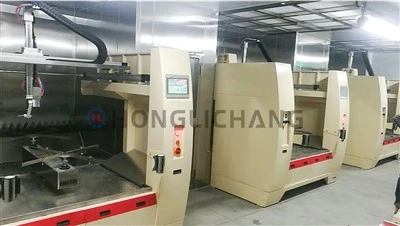
If you’re tired of dealing with uneven cure, wasted coating, lost production time, or constant rework from your current line, I can help you run a free line audit and figure out exactly what upgrades will move the needle for your business. No sales pitch, no pressure, just straight talk about what works and what doesn’t for UV coating lines. Reach out, and we can start talking about how to make your line better without breaking the bank.
Exterior Parts References
- Industrial Coating Magazine. (2022). UV Coating Line Upgrade Best Practices.
- International Union of Operating Engineers. (2021). Conveyor System Automation for Manufacturing Lines.
- UV Technology Association. (2023). LED UV Bulb Performance and Longevity Standards.
- EPA. (2022). Compliance Guidelines for Industrial Coating Application Equipment.
- Society of Manufacturing Engineers. (2021). Cost-Benefit Analysis of Production Line Upgrades.
Shenzhen Honglichang Machinery Manufacturing Co., Ltd.
We are one of the most professional uv coating line manufacturers and suppliers in China, also support customized service. Please feel free to buy advanced uv coating line for sale here from our factory. Welcome to contact us for quotation.
Address: No. A802, Building 2, Tianan Digital Plaza, Longgang, Shenzhen, China
E-mail: victor@honglichang.com
WebSite: https://www.honglichang-paint.com/
