As a palletizing robots supplier, I get asked this question all the time by factory managers and production leads who are on the fence about upgrading their line: “Do palletizing robots reduce product damage?” It’s a totally fair question—after all, changing out a manual process for automated equipment is a big investment, and no one wants to shell out cash only to run into new problems. I’ve been around these robots long enough to see first-hand how they shake out for different customers, so I thought I’d break this down like I would when I’m chatting with a shop floor manager, no stuffy jargon or corporate fluff. Palletizing Robots
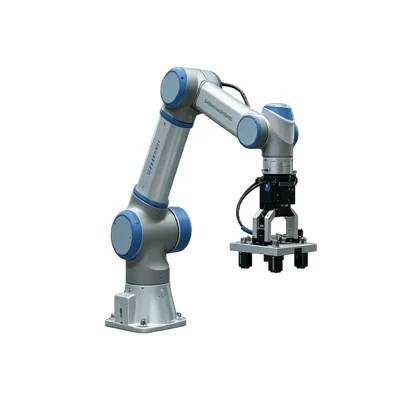
Let’s start with the obvious: manual palletizing is rough on products. Think about it—when a worker is stacking cases by hand, they’re moving anywhere from 20 to 40 cases an hour, depending on the product. Sometimes they’re rushing to hit a production quota, sometimes they’re tired at the end of a shift, and sometimes they’re lifting heavy loads that strain their arms and backs. I’ve heard stories from customers who’d lose 5 to 10% of their product every month to cracked boxes, dented cans, broken bottles, or even spilled goods during palletizing. One food packaging client I worked with a few years back was throwing out almost a whole skid of snack cases every week because manual stackers would misalign them, and the top boxes would fall off during transport. That’s not just wasted product—that’s wasted money, not to mention the time spent picking up the mess and reporting the damage.
Now, palletizing robots? They eliminate most of that human error. These machines are programmed to handle every load with consistent pressure and precision. When a robot picks up a case, it doesn’t grip too tight (which crushes cardboard or breaks thin plastic containers) or too loose (which lets the case shift). It stacks layers perfectly aligned, following the exact pattern the customer sets—whether that’s a block pattern for heavy boxes, a column pattern for fragile items like glass jars, or a interlocked pattern for stability. One of my customers that makes cleaning products swapped manual for robots, and their damage rate dropped from 8% to less than 1% within three months. That’s not a fluke; that’s just what happens when you take the inconsistency out of the process.
Wait, but let’s address the counterpoint I hear all the time: “What if the robot is programmed wrong, or breaks down, and causes more damage?” Yeah, that’s a risk—just like if a manual worker isn’t trained right, they might mishandle products. But here’s the thing: modern palletizing robots are way more reliable than most people think. The ones we supply have safety sensors that stop the robot immediately if it detects an obstacle or a misplaced case, so it doesn’t slam into the pallet or other cases. They also have self-diagnostic tools that alert us (and the customer’s team) before a small issue turns into a big problem. We train every customer’s maintenance staff on how to adjust programs, replace worn parts, and troubleshoot minor glitches—so the risk of damage from the robot itself is pretty low, especially if you invest in a quality machine instead of a cheap, off-brand model.
Another big factor: product type. Some products are way more prone to damage when handled manually, and that’s exactly where robots shine. For example, fragile items like ceramic mugs, electronic components, or fresh produce—you can’t really “wing it” with stacking those, because one wrong move and you’ve got a pile of broken stuff. One of our tech clients packages small circuit boards in thin cardboard trays; before using robots, they were damaging about 12% of the trays during palletizing because manual stackers would drop or twist them. Now, the robot picks up each tray with a gentle suction cup (we can swap out end-of-arm tools for whatever the product needs—suction grippers for flat items, mechanical clamps for heavy cases, even specialized tools for irregular shapes like buckets or bags) and sets them down perfectly aligned. Their damage rate now is less than 0.5%.
What about non-fragile products, like heavy cardboard cases of laundry detergent or canned goods? Do robots still help here? Absolutely—because even if the product is sturdy, manual stacking can cause damage over time. When a worker is lifting 50-pound cases all day, they might drop a case here or there, or stack the top layers unevenly, so the whole skid tilts and gets damaged during shipping. We had a customer that makes canned soup; before robots, their skids would often shift on the truck, and the top cases would get crushed by the ones next to them. The robot stacks each layer with precise alignment, so the skid is way more stable. Now, their in-transit damage is down 6% because the skids don’t shift. That’s a big win, even for “tough” products.
Let’s also talk about the hidden costs of product damage. It’s not just the cost of the product itself—there’s labor spent picking up damaged goods, time lost reworking or restacking, customer complaints if damaged products reach them, and even the cost of disposing of waste. One of our retail packaging clients calculated that their monthly losses from manual damage were around $15,000. After installing three robots, that number dropped to under $1,500. That’s a return on investment in less than a year, which is a big deal for any business.
I do want to be honest, though—palletizing robots aren’t perfect for every situation. If you’re handling super small batches of unique products, or if your production line changes frequently (like switching between 10 different product types a day), you might need to invest in a robot that’s easy to reprogram, which we have, but it’s still a bigger upfront cost than sticking with manual. But for most mid-sized to large production lines—where you’re making 500+ pallets a week—the payoff from reduced damage is worth it.
Another thing I see a lot: people worry that robots will replace workers, which leads to tension on the floor, and that might mess with the process. But honestly, most of our customers don’t fire their palletizing staff—they retrain them to work with the robots. Instead of stacking cases all day, workers now monitor the robot, adjust programs when a new product comes in, and handle any minor issues. That keeps your team involved, and since they know the production line better than anyone, they can make small tweaks that help reduce damage even more.
Let me circle back to the original question: do palletizing robots reduce product damage? From what I’ve seen with dozens of customers, the answer is a resounding yes—when implemented right. The consistency, precision, and specialized tools that robots bring to the table eliminate most of the human errors that cause damage in manual processes. Sure, there’s a learning curve, and you need to pick a robot that fits your product and line, but the long-term savings from less wasted product, less labor spent on damage control, and happier customers make it totally worth it.
If you’re curious about how a palletizing robot would work for your specific products, I’d love to chat. We can talk about your current damage rate, what products you handle, and what your production line looks like—no sales pitch, just honest answers. At the end of the day, our goal is to help you save money and make your process smoother, so if a robot isn’t the right fit, we’ll tell you that too. But for most people I talk to, it’s a no-brainer.
Palletizing Robot References
- Material Handling Industry Association. (2022). Palletizing Automation: Impact on Product Integrity and Operational Efficiency. MHIA Press.
- International Society of Automation. (2021). Reducing Product Damage in Industrial Packaging: A Comparison of Manual and Automated Palletizing. ISA Journal, 58(3), 45-52.
- Packaging Digest. (2023). The Hidden Costs of Product Damage in Manufacturing and Distribution. Packaging Digest Magazine.
- Occupational Safety and Health Administration. (2020). Manual Lifting Injuries in Warehouse and Production Facilities. OSHA Technical Brief.
- Robotics Industries Association. (2022). End-of-Arm Tooling Solutions for Reducing Product Damage in Palletizing Applications. RIA Technical Report.
Wanyuan Yuanwei Automation Equipment Co., Ltd.
With abundant experience, we are one of the most professional palletizing robots manufacturers and suppliers in China. Please feel free to wholesale high quality palletizing robots for sale here from our factory. Good service and punctual delivery are available.
Address: No. 392, Wanbai Road, Baisha Town, Wanyuan City, Dazhou City, Sichuan Province
E-mail: wanyuanyuanwei@outlook.com
WebSite: https://www.yuanweiautomation.com/
