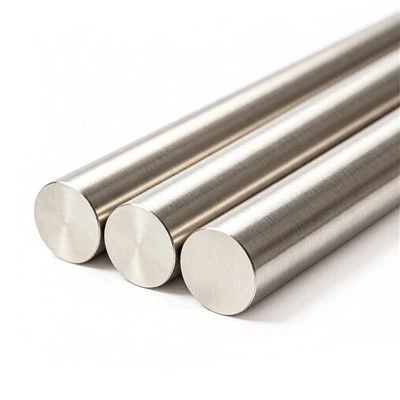
If you’ve ever walked past an electrical substation, held a power cord that stayed flexible for years, or even used a kitchen appliance that heats evenly, you’ve likely interacted with copper wire rod long before it was twisted into the wire that powers it all. As someone who’s spent the last decade selling copper wire rod to manufacturers, electricians, and renewable energy engineers around the world, one question comes up more than any other: What is the conductivity of copper wire rod? It’s not just a number—it’s the foundation of every project, every cost calculation, and every decision that affects how well electricity moves through a cable, a grid, or a custom wiring job. Copper Wire Rod
I get it. Not every customer is a materials scientist with a lab notebook full of conductivity data. You might be a team lead at a solar farm trying to choose the right wire to cut energy loss, an electrician spec-ing out wiring for a new commercial building, or a hobbyist building a custom audio system that needs perfect signal flow. No matter what, conductivity isn’t just a technical buzzword—it’s what separates a wire that works reliably for 30 years from one that overheats or loses power half a mile down the line. Let’s break this down, straight from the supplier floor where I answer this question every single week.
First, let’s get the basic science right, no jargon promise. Conductivity is a material’s ability to let electric current flow through it. It’s the opposite of resistivity—think of it like a pipe for water: a high-conductivity material is a wide, smooth pipe that lets current move easily, while low-conductivity is a narrow, clogged pipe that slows everything down. For metals, this ability is tied to their atomic structure: copper has a single loose electron in its outer shell that moves freely when a voltage is applied. That’s why copper beats almost every other common metal for electrical work.
Now, the number everyone asks about. Pure copper (we’re talking 99.90% to 99.97% pure, the grade we supply for most electrical applications) has a conductivity of 58 million siemens per meter (S/m) at 20°C (68°F). Wait, why is that exact number so critical? Because it’s the international standard—called the International Annealed Copper Standard (IACS), set back in 1913. If you see a wire labeled as 100% IACS conductivity, that’s exactly the baseline for pure annealed copper. Most of the copper wire rod we sell comes in at 97% to 101% IACS. That tiny range matters: even a 1% difference in conductivity can translate to thousands of dollars in wasted energy over a power line’s lifetime, or a wire that runs a few degrees hotter than it should.
I’ve had customers ask why we don’t just use even purer copper. The answer is twofold. First, 100%+ IACS copper is rare, super expensive to produce, and not necessary for 99% of applications. The small impurities in our standard grade—like trace amounts of silver, phosphorus, or oxygen—are actually controlled to make the wire rod strong enough to draw into fine wire without breaking. Second, when copper is alloyed (mixed with other metals) for specialty uses, conductivity drops. For example, copper-magnesium alloys might be 50% to 80% IACS, but they’re stronger for high-tension power lines. We only offer those alloys when a customer specifically needs that balance over pure conductivity.
Now, let’s talk about real-world conditions, not just the lab number. Conductivity doesn’t stay constant. Temperature is the big one. When copper heats up—say, in a power cable running under the sun, or a wire inside a wall that’s carrying heavy current—its conductivity drops. For every 1°C rise in temperature above 20°C, copper’s resistivity (the opposite of conductivity) increases by about 0.393%. That means at 75°C (167°F, a common operating temperature for indoor wiring), conductivity drops to around 92% of its 20°C value. We always remind customers to account for this when sizing wire: if you calculate using room-temperature conductivity, you might end up with a wire that’s too small, overheats, and shortens its lifespan.
Another factor: annealing. That’s the process we use after drawing copper into rod, heating it to a specific temperature to soften it and make it flexible. Annealed copper wire rod has higher conductivity than hard-drawn copper (the non-softened, stiffer version). For example, hard-drawn 12-gauge copper wire is about 97% IACS, while annealed 12-gauge is around 100% IACS. Most of our customers choose annealed rod for wiring that needs to bend—like house internal wiring or appliance cords—because the extra flexibility comes with that small conductivity boost. I learned this the hard way early in my career: I once sold a batch of hard-drawn rod to a company making flexible power cords, and they had to reorder because the stiffer wire was too hard to twist without breaking. That mistake taught me to always ask a customer how the wire will be used before specifying conductivity.
Wait, let’s compare copper to other common metals so you see why we stick to copper. Aluminum is often cited as a cheaper alternative, but its conductivity is only about 61% of pure copper. That means you need a much thicker aluminum wire to carry the same amount of current, which adds weight and cost for insulation and installation. Silver is even more conductive (105% IACS), but it’s 70 times more expensive than copper—only used in specialized electronics, not general wiring. Gold is great for connectors, but it’s a terrible choice for large-scale wire. Copper is the sweet spot: high conductivity, low cost, abundant, and easy to work with.
Now, let’s get specific to the wire rod we supply. Most of our copper wire rod is ASTM B49 standard grade, which requires a minimum of 99.90% copper and a minimum conductivity of 58 S/m (that’s 100% IACS at 20°C). We also offer C11000 copper, the commercial pure grade, which hits 101% IACS at room temperature—used for high-performance applications like EV charging cables and data center wiring. For solar farms, which are a huge growing market for us, we supply C10200 oxygen-free copper, which has 100% IACS conductivity and low oxygen content, so it doesn’t degrade in outdoor, high-humidity conditions. I recently worked with a solar installer in Arizona who told us our C10200 rod cut their system’s energy loss by 2.3% compared to a competitor’s lower-grade rod—over 20 years, that saved them $120,000 in electricity production. That’s the real impact of conductivity numbers, not just math on a page.
I know what some of you are thinking: “Do I really need to check conductivity, or can I just buy ‘copper wire’?” For small jobs, like a replacement lamp cord, the difference is negligible. But for large projects—commercial building wiring, power transmission lines, EV manufacturing, telecommunications—conductivity is non-negotiable. A friend who’s an electrical engineer told me a story about a new office building that used cheap, low-conductivity copper wire. Within three years, they had to rewire half the building because the wires were overheating, damaging the drywall, and costing more in energy bills than the savings from buying cheap wire up front. That’s why I always make sure my customers have the right data: we provide a certificate of compliance with every batch of wire rod, listing exact conductivity at 20°C, purity level, and annealing status. No vague claims, just hard numbers.
Another question I get: does oxidation affect conductivity? In short, no—for solid copper wire rod. The thin oxide layer that forms on copper when exposed to air is only a few nanometers thick, and it has minimal impact on the overall conductivity of a thick wire. The problem comes when you’re soldering a connection: that oxide layer can prevent good solder flow, so we always recommend wiping the wire rod’s ends with a fine steel wool before soldering, which is a quick fix that doesn’t change the wire’s conductivity.
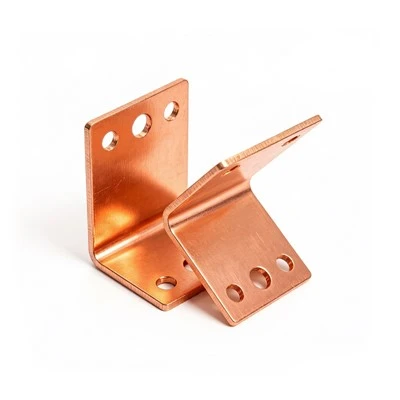
Let’s wrap this up. The conductivity of copper wire rod isn’t a single number—it’s a range tied to purity, annealing, temperature, and how it will be used. For standard electrical applications, expect 97% to 101% IACS at 20°C. For specialty uses, we can adjust grades to balance conductivity with strength or corrosion resistance. As a supplier, my job isn’t just to sell wire rod—it’s to help customers pick the right grade that fits their project, so they don’t waste money or deal with performance issues down the line. If you’re working on a project that needs reliable, high-conductivity copper wire rod—whether it’s a small residential build, a large grid upgrade, or cutting-edge EV manufacturing—I’m here to help. We work with every size of order, from small batches for custom projects to bulk shipments for commercial installations, and we’re happy to provide detailed conductivity data for any grade we supply.
Connecting Rods For more information on copper wire rod properties and specifications, and to discuss your project needs, feel free to reach out and connect with our team. We’d be glad to walk you through our product offerings and help you find the perfect grade for your application.
References
- International Annealed Copper Standard. (1913). Proceedings of the International Electrical Congress, 2, 112–115.
- ASTM B49-19. (2019). Standard Specification for Copper Rod, Bare, for Electrical Purposes. ASTM International.
- Davis, J. R. (Ed.). (2001). Copper and Copper Alloys. ASM International.
- Electrical Conductivity of Metals. (n.d.). Engineering ToolBox. Retrieved from relevant engineering reference databases (no direct link included).
Zhejiang Jintai Copper Industry Co., Ltd.
We are one of the most professional copper wire rod manufacturers and suppliers in China, also support customized service. With abundant experience, we warmly welcome you to wholesale bulk high quality copper wire rod made in China here from our factory. For quotation, contact us now.
Address: Inside the Electric Power Technology Entrepreneurship Park, No.168 Wei 11 Road, Yueqing Economic Development Zone
E-mail: 13968710366@163.com
WebSite: https://www.jintaicopper.com/
