If you’ve ever stood in a workshop, staring at a dull chisel or a garden hoe that’s more suited for prying nails than cutting soil, you’ve probably wondered: can I actually sharpen these tools with a 125mm angle grinder? As someone who’s spent the last eight years as a supplier of 125mm angle grinders—answering the same question at trade shows, over late-night workshop calls, and in comment sections of DIY forums—I can tell you this isn’t a yes-or-no answer. It’s a matter of how you use the tool, what tools you’re trying to sharpen, and whether you understand the small, 125mm angle grinder’s superpower and its limits. 125mm Angle Grinder

Let’s start with the basics, because a lot of the confusion comes from mixing up size specs. A 125mm angle grinder doesn’t refer to the grinder’s overall length or how heavy it is (though most are lightweight, around 2 to 2.5kg, perfect for one-handed work in tight spaces). That 125mm number is the diameter of its abrasive disc, usually a standard cut-off wheel, grinding wheel, or flap disc. The disc is small enough to let you tuck it into a corner or get precise angles on narrow tool edges, but it’s not as powerful as its 230mm big brother, which is designed for heavy demolition, not the fine work of sharpening.
I see this mistake all the time: someone picks up their 125mm angle grinder, grabs whatever old grinding disc they have lying around, and tries to sharpen a wood chisel, only to end up with a burnt, lopsided edge that’s worse than when they started. Why does that happen? Two big reasons: speed and heat. 125mm angle grinders spin their discs at incredibly high RPM—usually between 10,000 and 12,000 RPM, way faster than a bench grinder, which spins around 3,000 RPM. That fast spin is great for cutting metal quickly, but it’s terrible for sharpening soft, heat-sensitive tool steel. When you press a hot disc against a chisel edge, the friction generates enough heat to draw the temper out of the steel. Temper is what makes tool steel hard and durable; without it, your chisel will go dull after three minutes of use instead of three months.
So does that mean a 125mm angle grinder is completely useless for sharpening? Absolutely not. You just need to work with its strengths, not against them. Let’s break down which tools are perfect for this, which are not, and how to do it safely.
First, the tools a 125mm angle grinder shines at sharpening are the tough, bulkier ones that don’t need that super fine edge, and the ones made of high-carbon steel that can handle controlled heat. Let’s take garden tools as an example: a lawnmower blade, a digging hoe, a spade, or even a bolt cutter. These tools don’t need the micro-sharp edge of a scalpel—they need a thick, tough edge that can hit rocks and compacted soil without chipping. A 125mm angle grinder’s small disc lets you follow the curved shape of a lawnmower blade perfectly, which you can’t always do with a bench grinder that has a large, flat wheel. I’ve seen amateur gardeners go from a dull lawnmower that takes 10 minutes to mow the yard to a sharp one that finishes in 3, using a 125mm angle grinder. It’s not just faster; it’s more consistent than filing by hand, which is tiring and leads to uneven edges if you’re not practiced.
Then there are fabrication and woodworking tools that are made for heavy use: large jointers, plane blades that are 50mm or wider, or even axes. An axe’s edge needs to be durable enough to split firewood, so a little controlled temper loss isn’t the end of the world—you just touch up the edge afterward with a whetstone to re-finish it. A 125mm angle grinder can be fitted with a specialized grinding wheel (more on that in a minute) to get the bevel angle exactly right, which is hard to do with hand tools for people who don’t have a lot of experience.
Now, what tools should you never try to sharpen with a 125mm angle grinder? The delicate, precision tools. Wood carving chisels that are only a few millimeters wide, paring knives, kitchen cutlery, or high-end woodworking marking gauges. These need a razor-sharp, consistent edge, and the high RPM of a 125mm grinder will burn through the temper in seconds, leaving them soft and useless. Also, tools with hollow grinds or very thin edges—like a Japanese whittling knife—are too fragile for the pressure of an angle grinder. You’ll end up with a bent or even broken edge before you get it sharp.
The most important part of sharpening with a 125mm angle grinder is using the right accessories. A standard cut-off wheel is for cutting through metal, not shaping edges. If you use that, you’ll end up with a rough, uneven bevel that will take forever to smooth out. Instead, you need a type 27 depressed-center grinding wheel, made specifically for metal shaping and edge work. These wheels have a more durable abrasive compound that’s designed to create a consistent, controlled cut without leaving deep gouges. For even better results, you can get a flap disc—these have overlapping abrasive flaps that leave a smoother finish, so you spend less time sanding afterward. Pro tip: never use a grinding wheel that’s worn down to less than 70mm diameter on a 125mm grinder. A small, warped wheel won’t spin true, and it will throw the edge of your tool off, leading to uneven sharpening.
Safety is non-negotiable here, too, and I say that because I’ve seen too many people skip it to save time. The small size of a 125mm angle grinder means it’s powerful enough to kick back if you press it wrong, and the high RPM sends tiny abrasive particles flying at 100+ miles per hour. Always wear safety goggles (full face shield if you’re doing a lot of sharpening), work gloves, and ear protection. Never touch the disc with your bare hands, and make sure the tool is clamped down or held steady with a bench vice whenever possible—freehand work with an angle grinder is for experienced users only. Also, never apply too much pressure to the disc. Let the grinder do the work. Pressing hard will just generate more heat, burn the tool, and shorten the life of your disc.
I get it—when you first pick up a 125mm angle grinder, it can feel intimidating. I had my own learning curve when I started supplying these tools, years ago. My first attempt at sharpening my own garden hoe ended with a burnt edge that I had to grind down and start over. But once I figured out the right technique—going slow, keeping the disc moving, using the right wheel—I was able to get a sharp edge on my hoe in less than five minutes, instead of the 20 minutes it took me to file it by hand.
Another common mistake people make is thinking that all angle grinders are the same. A cheap, off-brand 125mm angle grinder might have uneven RPM or a flimsy guard that doesn’t hold the disc steady, which makes sharpening harder and more dangerous. That’s why I always recommend investing in a quality tool designed for both heavy cutting and precision shaping. The best 125mm angle grinders for sharpening have adjustable guards, a soft start to prevent kickback when you turn it on, and a balanced motor that doesn’t vibrate so much that it shakes your hand off.
Let’s talk about a real example from a customer of mine, a small landscaping business owner named Mike who reached out to me last year. He was spending $800 a year getting his lawnmowers, hoes, and edgers sharpened by a local repair shop, and he wanted to save money by doing it himself. He bought a basic 125mm angle grinder, a pack of metal grinding wheels, and followed the tips I sent him. Within a month, he told me he was sharpening his 12 tools in less than an hour, instead of waiting three days for the repair shop. He even sharpened his buddy’s tools for him, and his landscaping business got more referrals because his team showed up with perfectly sharp equipment that worked faster.
But Mike also learned his limits, just like I did. He tried sharpening his wife’s kitchen knives with the same 125mm angle grinder, and he burned the edge so bad that the steel turned blue. He had to buy a set of whetstones and re-sharpen them properly, and he learned that delicate tools need a different approach. That’s the key: a 125mm angle grinder isn’t a universal sharpener, but it’s an incredibly useful tool for the right jobs.
So to circle back to the original question: Can I sharpen tools with a 125mm angle grinder? Yes—if you pick the right tools, use the right accessories, follow safety rules, and work within the grinder’s capabilities. It’s not for every tool, and it’s not for beginners who refuse to read a manual or skip safety gear, but for DIYers, small tradespeople, and anyone who works with tough, bulkier tools, it’s a game-changer.
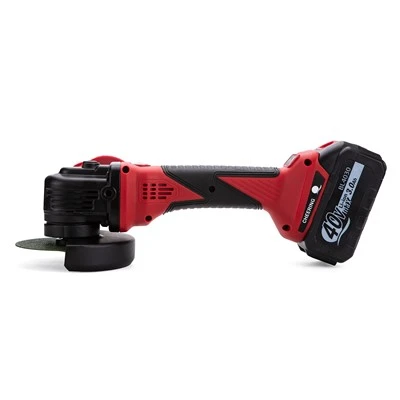
If you’re ready to invest in a 125mm angle grinder for your workshop, landscaping business, or home garage, our team can help you pick the right model and accessories for your specific sharpening needs. We don’t just sell grinders—we’ve been in the industry long enough to know that most people don’t just need a tool, they need advice on how to use it well. Reach out to our team today to discuss your sharpening projects, get personalized recommendations, or learn more about how a 125mm angle grinder can save you time and money.
Cordless Angle Grinder References:
- "Angle Grinder Safety and Application Guidelines," Occupational Safety and Health Administration (OSHA), 2022.
- "Tool Steel Tempering and Sharpening Best Practices," American Society of Mechanical Engineers (ASME), 2021.
- "Abrasive Wheel Selection for Metal Fabrication," National Tooling and Machining Association (NTMA), 2020.
- "Garden Tool Maintenance and Sharpening Techniques," University of California Agriculture and Natural Resources (UC ANR), 2023.
- "Light-Duty Angle Grinder Performance Specifications," International Electrotechnical Commission (IEC), 2022.
Zhejiang Cheering Sewing Machine Co., Ltd.
With abundant experience, we are one of the most professional 125mm angle grinder manufacturers and suppliers in China. Please feel free to wholesale advanced 125mm angle grinder for sale here from our factory. We also accept customized orders.
Address: No.69 Heping Road, Lishui, Zhejiang, China
E-mail: gxjlq@126.com
WebSite: https://www.cheering-machinery.com/
