When customers first reach out to my team as a Corner Socket supplier, one of the most common questions we get isn’t about design, installation, or even pricing—it’s technical. Folks will lean across the table, type slowly into their browser, or ask over a coffee: “How many amps can a corner socket handle?” It makes sense, really. A corner socket isn’t just an afterthought for home renovation. It’s a small, critical piece of hardware that powers everything from a kitchen countertop’s sous vide machine to a workshop’s power tools. Get the amp rating wrong, and you’re looking at overheating, tripped breakers, or even safety hazards that no homeowner or contractor wants to deal with. Corner Socket
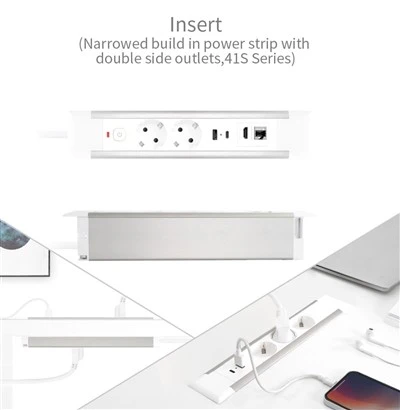
I’ve been in this corner socket business for 12 years, and I’ve answered that exact question hundreds of times. The answer isn’t a one-size-fits-all number, though. It depends on a mix of factors most people don’t think about until something goes wrong: the socket’s build quality, the gauge of the wiring in your home or building, how many devices are plugged in at once, and even the environment where the socket is installed. Let’s break this down so anyone can understand, no electrical engineering degree required.
First, let’s start with the basics. Amps, or amperage, measure the amount of electrical current flowing through a circuit. A socket’s amp rating is the maximum amount of current it’s designed to carry continuously—push past that, and you’re risking overheating the socket’s internal components, the wiring it’s connected to, or both. For standard residential corner sockets, most are rated for 15 amps or 20 amps. That’s the baseline you’ll see on just about any mass-produced unit sold at big box stores. But here’s the thing: not all 15-amp or 20-amp sockets are created equal.
As a supplier, we test every batch of our corner sockets to ensure they meet strict standards. A cheap 15-amp socket might feel flimsy, with thin internal metal contacts that wear out quickly and can’t handle the full 15 amps consistently, especially if you’re plugging in high-wattage devices. Our sockets, on the other hand, use thick brass contacts that are gold-plated for better conductivity and corrosion resistance. We’ve tested our standard corner sockets to safely carry 15 amps continuously, and our heavy-duty line can handle up to 20 amps, provided they’re installed on a circuit rated for 20 amps. That’s a key point to remember: the socket’s rating only works if the circuit it’s wired into can support the same amperage. If you put a 20-amp corner socket on a 15-amp circuit, the socket can still only draw the full 15 amps before the breaker trips, but you won’t get the extra capacity if you upgrade your circuit later.
Next, the wiring gauge matters more than most people realize. Electrical wires are measured in gauge—lower numbers mean thicker, better wires. For 15-amp circuits, you need at least 14-gauge copper wire. For 20-amp circuits, it’s 12-gauge copper. If your corner socket is wired with thinner wire than that, even a 15-amp socket will struggle to handle its rated current. The wire will heat up before the socket does, which is a fire hazard. I once had a customer come to us after installing a cheap corner socket in his kitchen. He’d wired it with 16-gauge wire, which is only for low-voltage applications like doorbells. When he plugged in a microwave (which pulls around 12 amps), the wire overheated and melted the plastic around the socket, leaving a small burn mark on his countertop. That’s the kind of mistake we see all the time, and it’s why we always ask customers about their wiring when they ask about amp limits.
Another big factor is how many devices you’re plugging into the corner socket. A lot of people see a corner socket with multiple outlets and assume it can handle more amps than a single outlet. That’s not true. Each outlet on a multi-outlet corner socket is connected to the same circuit, so the total current from all devices combined can’t exceed the socket’s rating. For example, if you have a 15-amp corner socket with two outlets, that means you can’t plug a 10-amp space heater and a 8-amp power tool into it at the same time—total load would be 18 amps, which is 3 amps over the socket’s limit. Even if the plug fits, the socket can’t handle that current, and it will overheat over time. We always advise our customers to calculate the total wattage of all devices they’ll plug into the socket, then convert that to amps using a simple formula: watts divided by volts equals amps. For most US homes, voltage is 120, so a 1,800-watt hair dryer is 15 amps, right at the limit of a 15-amp socket.
Environment also plays a role in how many amps a corner socket can handle. If the socket is installed in a damp area—like a bathroom corner or a patio under a covered awning—its amp rating goes down. Moisture increases conductivity, which can cause short circuits or make the socket’s internal components heat up faster. Our outdoor-rated corner sockets are tested to handle 10% less amperage than their indoor counterparts, so a 20-amp outdoor corner socket is actually rated for 18 continuous amps to account for humidity and temperature fluctuations. If you’re installing a socket in a dusty workshop, dust can build up in the outlet slots over time, creating a barrier that traps heat. We recommend reducing the maximum load by 1 or 2 amps for sockets in workshops or other dusty environments.
Wait, you might be wondering: why can’t I just use a circuit breaker or an extension cord to handle more amps? That’s a common misconception. Extension cords, especially thin ones, add resistance to the circuit, which makes the socket and wiring work harder. Plugging a high-amperage device into an extension cord connected to a corner socket is a fast way to overheat the cord, the socket, or both. Circuit breakers are designed to protect the whole circuit, not individual sockets. If your circuit breaker trips, that means the entire circuit has exceeded its limit, not just one socket.
Let’s get real about what happens when you exceed a corner socket’s amp rating. It’s not always an immediate fire—though that’s a risk. More often, you’ll start to notice small signs: the socket feels warm to the touch when devices are plugged in, the plugs are hard to insert or remove, or the devices start to power off unexpectedly. Those are warning signs. If you ignore them, the internal contacts in the socket can warp, the plastic casing can melt, or the wiring behind the wall can fray. All of that leads to expensive repairs, and in worst cases, home fires.
As a corner socket supplier, we don’t just sell products—we give customers the information to use them safely. That’s why we don’t just say “our sockets handle 15/20 amps”; we walk through all the factors that change that number. For a homeowner renovating their kitchen, that might mean making sure their countertop circuit is 20 amps, upgrading the wiring to 12-gauge, and choosing a heavy-duty corner socket that can handle the sous vide, microwave, and coffee maker they want to plug in. For a contractor installing sockets in a workshop, that means using a dust-resistant socket with a lower amp rating in a dusty space, or adding a separate circuit for power tools.
I’ve seen too many people cut corners on corner sockets because they think it’s a trivial product. But a corner socket is one of the most used electrical fixtures in a home or commercial space. It’s in every room, on every countertop, in every workshop. Get its amp rating right, and it will work reliably for decades. Get it wrong, and you’re asking for trouble.
So to answer the original question: how many amps can a corner socket handle? It depends on the socket’s build, your wiring, your devices, and where you’re installing it. For a standard indoor residential corner socket, from a reputable supplier (like ours), that’s 15 to 20 amps, provided your circuit matches and your wiring is correct. For heavy-duty, commercial, or outdoor use, that number goes up to 20 amps, with adjustments for environment. Always check the socket’s rating, calculate your total load, and never exceed that number. If you’re not sure, don’t guess—ask an electrician, or reach out to us as your corner socket supplier, and we’ll walk you through the right choice for your space.
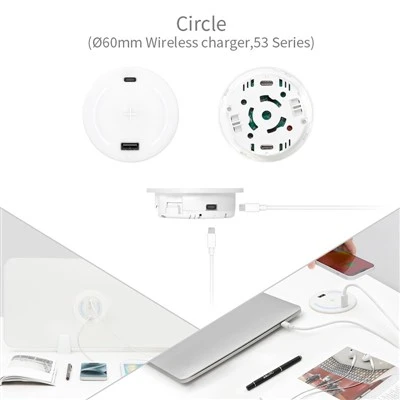
If you’re planning a renovation, a new build, or just need to replace an old corner socket, we’re here to help with the right products and the technical guidance you need. We don’t just sell hardware—we make sure you have the information to stay safe and get the job done right. Reach out to our team to discuss your specific needs and find the perfect corner socket for your project.
90 Degree Rotatable Box References
- National Electrical Code (NEC) 2023, Article 210: Branch Circuits
- Underwriters Laboratories (UL) Standard 498: Attachment Plugs and Receptacles
- Copper Development Association: Electrical Wire Gauge and Ampacity Guidelines
- International Association of Electrical Inspectors (IAEI): Residential Wiring Safety Standards
Cixi Mingye Communication & Electronic Co., Ltd.
Cixi Mingye Communication & Electronic Co., Ltd. is one of the most professional corner socket manufacturers and suppliers in China, featured by quality products and good service. Please rest assured to wholesale durable corner socket at competitive price from our factory. Welcome to contact us for custom service and ODM service.
Address: West Industrial District,Guanhaiwei Town,Cixi city,Zhejiang Province,China
E-mail: enquiry@officelink.com.cn
WebSite: https://www.officelinkelectric.com/
