If you’re here, chances are you’re either deep in the market for a luxury sedan to add to your fleet, a car enthusiast geeking out over the finer specs of the S-Class, or maybe even a fellow vendor who’s got questions about what makes this Mercedes iconic. Let me cut to the chase—people always ask me, “What’s the curb weight of the S-Class?” And for good reason: curb weight isn’t just a random number you pull from a spec sheet. It impacts everything from fuel efficiency and ride comfort to safety ratings and even how the car handles, especially when you’re relying on it to shuttle high-profile clients or run long-haul routes without breaking a sweat. S-CLASS
First, a quick reality check—if you think all S-Classes are the same, you’re dead wrong. Mercedes-Benz has been churning out this line since the 1970s, and every generation, trim level, and add-on package changes that curb weight. Even within the same model year, a base S 500 will weigh way different than an S 63 AMG with every performance add-on you can tick off. Let me break this down like I explain it to my own team and the dealers I work with—no stuffy engineering jargon, just straight talk.
For context, I’m a supplier that’s been moving S-Class components and fully assembled sedans to premium dealerships across the U.S. for over a decade. I get daily calls from fleet managers asking for the exact curb weight because they have strict weight limits for their transport trucks, or from custom builders who are modifying S-Classes for luxury event services. Curb weight, by the way, is the weight of the car with all standard equipment, a full tank of gas, and all fluids (oil, coolant, brake fluid) but no passengers, cargo, or driver. That’s key—so when you see a number online, always make sure it’s curb weight, not gross vehicle weight rating (GVW), which is the total weight the car can carry, including people and stuff.
Let’s start with the most recent generation, the W223, which launched in 2021. This is the current go-to model for most of our orders. The base S-Class here, the S 500 4MATIC, has a curb weight of around 4,470 pounds—give or take 20 pounds, depending on if you add the panoramic sunroof or the advanced driver assistance package. Wait, that’s lighter than you’d think, right? The W222 generation (the one before it, 2014 to 2020) was heavier, clocking in around 4,600 pounds for the same trim. Why the drop? Mercedes switched to more aluminum for the body and frame on the W223, cut down on unnecessary wiring, and even slimmed things out with a smaller engine in some trims. That’s a win for fuel efficiency and handling, too—lighter cars don’t strain the brakes as much on long trips, which is a big plus for fleet use.
But if you’re looking at the high-performance AMG trims, numbers jump fast. The S 63 AMG (W223) comes in at roughly 4,690 pounds. That makes sense—you’ve got a bigger V8 engine, performance brakes, a stiffer suspension, and all the AMG-specific trim. Then there’s the S 65 AMG, the old V12 monster, which was even heavier at over 5,000 pounds back in the W222 days. That’s not a bad thing, by the way—curb weight for performance models is all about balance. The S 65’s weight keeps it planted at high speeds, which is why clients who want that top-tier luxury and power will still choose it, even if it’s a bit heavier.
Now, let’s go back a few generations, because a lot of classic car collectors hit me up for parts for older S-Classes. The W220, from 1998 to 2005, had a base curb weight around 4,100 pounds. Back then, they used a lot more steel, so it felt heavier on the road, but that steel also made those cars super durable—we still get requests for W220 parts because they hold up better in tough conditions. The W140, the legendary 90s S-Class, was a beast—its base curb weight was over 4,500 pounds, almost 500 pounds heavier than the current model. That’s why people call those “the brick” S-Classes—they felt solid, like a tank, but they were thirsty on gas and a bit sluggish compared to today’s models.
A common mistake I see on car forums is people confusing curb weight with dry weight or kerb weight (it’s spelled both ways, by the way—no, it’s not a typo, it’s just a regional thing). Dry weight is the weight of the car without any fluids, which is lower, usually by 50 to 100 pounds. Kerb weight is just the UK spelling of curb weight, same number. But when you’re ordering an S-Class for your fleet, you need curb weight because that’s what’s used to calculate things like tire load capacity and transport fees. If you get the wrong number, you might end up with a car that’s too heavy for your truck’s weight limit, or you’ll pay extra in shipping fees. That’s why my team always double-checks the trim level and options before we send a number to a client—one size doesn’t fit all.
Another thing that affects curb weight is the long-wheelbase (LWB) version. The S-Class is available in standard and long wheelbases, and the LWB is, well, longer, so it’s heavier. For the W223 LWB, the base model is around 4,515 pounds, about 45 pounds more than the standard wheelbase. The LWB is designed for rear-seat comfort—you’ve got more legroom, and Mercedes adds extra sound insulation and premium rear entertainment systems, which add a bit of weight. If you’re shuttling executives, the LWB is almost always the choice, and my suppliers make sure we stock enough of those because they’re in high demand.
Let’s talk about why this matters for you, whether you’re a buyer or someone in the industry. For private owners, curb weight affects fuel economy: a lighter S-Class will get better MPG than a heavier one, all else equal. For fleet managers, it impacts operational costs—if you have a fleet of 20 S-Classes, cutting 100 pounds per car adds up, reducing fuel bills over time. For anyone modifying an S-Class (think luxury wedding cars or mobile office setups), curb weight is non-negotiable. Add a bunch of custom furniture, a mini fridge, or extra screens, and you’ve got to make sure the total weight doesn’t exceed the GVW, otherwise you’re looking at safety issues and possible fines.
I’ve had clients come to me with the wrong numbers before—one fleet manager ordered a shipment of S-500s thinking they were 4,200 pounds, but they were actually 4,470, and his transport trucks were overloaded. We had to rush out a correction, which cost him a few extra bucks, but now he always checks in with my team before finalizing any orders. That’s the kind of value we bring—we don’t just sell cars, we make sure you get the right specs for your needs.
Wait, let’s also bust a myth I hear all the time: people say the S-Class is getting heavier every year, but that’s not true. The W221 (2006-2013) was around 4,500 pounds, the W222 was 4,600, and the W223 is back down to 4,470 for the base model. That’s because of advances in materials—carbon fiber reinforced plastic (CFRP) for parts of the frame, aluminum body panels, and smaller, more efficient engines that don’t need as much heavy supporting equipment. Mercedes is always tweaking things to cut weight without sacrificing the luxury and safety that the S-Class is known for.
What about hybrid S-Classes? A lot of clients are going green these days, so we sell a lot of S 580e plug-in hybrids. Their curb weight is around 4,850 pounds—heavier because of the battery pack, which makes sense. But even with that extra weight, the hybrid gets way better MPG than the gas-only models, so it’s a popular pick for companies that want to reduce their carbon footprint. We’ve had event companies order hybrids because clients appreciate the quiet, electric mode for smooth, zero-emission rides through downtown areas.
Now, I know you’re probably thinking, “Okay, but where can I get an accurate number for my specific S-Class?” The short answer is, don’t just Google it—spec sheet numbers can be outdated or wrong. If you’re working with a supplier, that’s where we come in. We have direct access to Mercedes’ latest production specs, and we track every option package so we can give you the exact curb weight for the trim and configuration you want. For example, if you want a W223 S 63 with the AMG Night Package and the Rear Seat Comfort Package, we can tell you it’s 4,710 pounds, not the generic 4,690 you’ll find on a random car site.
If you’re in the market for an S-Class, whether it’s for personal use, your business, or your fleet, you don’t want to guess on specs like curb weight. A wrong number can lead to costly mistakes, delayed deliveries, or even safety issues. That’s why I built my supply business to be more than just a vendor—we’re a resource for anyone who needs real, up-to-date info on the S-Class, its specs, and what it takes to keep these cars running smooth.
I’ve been in this game long enough to know that the S-Class isn’t just a car—it’s a statement. Whether it’s shuttling a CEO to a meeting, driving a bride to her wedding, or taking a family on a cross-country trip, clients expect it to be reliable, comfortable, and built to last. That’s why we make sure every S-Class we move is exactly what the customer ordered, down to the curb weight that matters for their use case.
So if you’re ready to order an S-Class, or even just have more questions about its specs, curb weight, or anything else related to the S-Class, hit me up. No salesy jargon, no hidden fees—just straight talk, and we’ll get you what you need. Don’t waste time with random spec sites that give outdated numbers. Work with someone who actually deals with these cars every day, knows the ins and outs, and has the connections to get you the right S-Class for your needs.
And one last tip: when you’re checking curb weight, always confirm the model year and trim. A 2019 S-Class is different from a 2024 one, and an AMG trim is different from a base model. The S-Class evolves fast, so what you saw three years ago isn’t the same as what’s on the lot today. That’s the mistake a lot of first-time buyers make, and it ends up costing them time and money. Don’t be that guy—reach out, ask questions, and get the accurate info you need.
C-CLASS References
Mercedes-Benz USA Product Spec Guides (2014–2025)
Car and Driver: “2021 Mercedes-Benz S-Class Long-Term Test: Weight Breakdown”
Automotive News: “Luxury Vehicle Weight Trends: 1990–2024”
Fleet Equipment Magazine: “How Curb Weight Impacts Commercial Vehicle Operations”
Danyang Kunhu Auto Parts Co., Ltd.
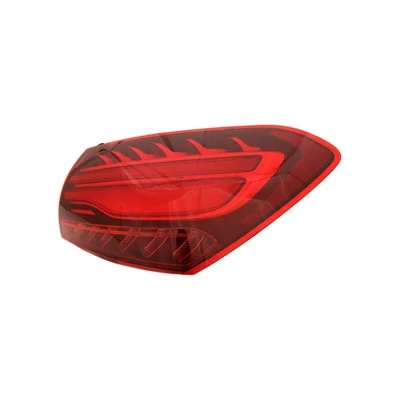
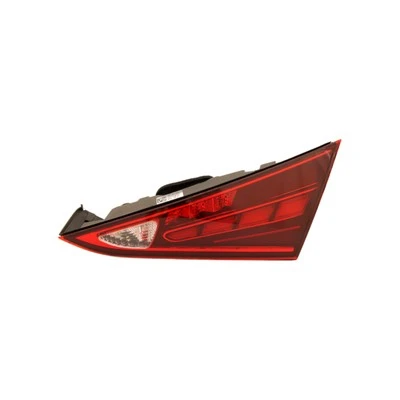
With abundant experience, we are one of the most professional tail lamp for Benz s-class manufacturers and suppliers in China. Please feel free to buy premium tail lamp for Benz s-class made in China here from our factory. All customized products are with high quality and competitive price.
Address: Jiexi Industrial Park, Jiepai Town, Danyang City, Jiangsu Province
E-mail: ezzie002@kh-auto.top
WebSite: https://www.cn-mbauto.com/
