When someone reaches out to me asking, “What makes aluminum strips so versatile?” I always start with the mechanical properties—because those are the backbone of why we rely on aluminum strips for everything from tiny electronic components to large-scale architectural cladding. As an aluminum strip supplier with over 12 years in the business, I’ve seen first-hand how misunderstanding these properties can lead to missteps for a manufacturer: a part that cracks during stamping, a panel that bends out of shape mid-install, or a component that fails under repeated stress. So let’s break this down, in plain, practical terms no engineering textbook required, because that’s how I learned to talk to my clients. Aluminum Strip
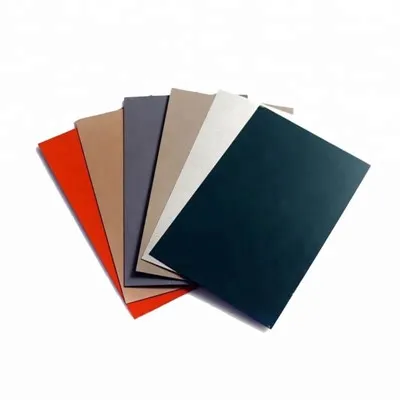
First, I need to define what we mean by an aluminum strip, just to set a common baseline. We’re not talking about cast aluminum blocks or extruded aluminum beams here. A strip is a flat, rolled product, usually between 0.001 inches (0.025mm) and 0.25 inches (6.35mm) thick, with a width greater than twice its thickness—perfect for slitting into precise, consistent cuts for custom parts. The mechanical properties I’m talking about are the traits that describe how the strip reacts to force, stress, and manipulation, not just its chemical makeup (though chemistry plays a key role here too). Let’s go through the most critical ones, one by one, with real-world examples from jobs my team has fulfilled.
Tensile strength is probably the first property clients ask about. That’s the maximum amount of pulling or stretching force a strip can take before it breaks, and it’s measured in pounds per square inch (PSI) or megapascals (MPa). Pure aluminum (like 1100 grade) has a low tensile strength—around 13,000 PSI (90 MPa) in its annealed (soft, easy to form) state. That’s why we use it for things like foil wrap or gasket material, where softness matters more than heavy load-bearing. But if you need a stiffer strip, we go for alloyed grades: 3003 aluminum, which is the most common general-purpose strip we supply, has a tensile strength of around 22,000 PSI (150 MPa) annealed, and can jump to 35,000 PSI (240 MPa) when it’s work-hardened (strain-hardened) during rolling. I’ll never forget a client in the automotive parts industry who came to us with a broken door hinge component; they’d used annealed 1100, which couldn’t handle the repeated opening and closing stress, so we switched them to work-hardened 3003, and they haven’t had a failure in five years. For even higher tensile strength, we stock 5052 aluminum, which hits 42,000 PSI (290 MPa) in its H32 work-hardened state—ideal for marine brackets or RV framework, where saltwater corrosion and load strength are non-negotiable.
Next, yield strength, which is often confused with tensile strength, but it’s way more important for most manufacturing jobs. Yield strength is the amount of force a strip can take before it deforms permanently—meaning it won’t bounce back to its original shape once you remove the force. If you’re stamping a part, bending a bracket, or rolling a strip into a can end, you need to know the yield strength to set your tooling correctly. Go too hard, and the part will twist or bend permanently; go too soft, and it’ll stay in place but won’t hold its intended shape. For example, annealed 1100 has a yield strength of just 5,000 PSI (35 MPa)—super easy to bend, which is why it’s used for electrical conduits that need to curve around tight corners. But annealed 3003 has a yield strength of 11,000 PSI (75 MPa), so it’s stiff enough to hold a straight line for ventilation ductwork, but still flexible enough to be cut and formed without cracking. I once had a custom metal fabricator call me in a panic because their punch press was producing 20% defective brackets; they’d set their machine to hit the tensile strength of annealed 3003 instead of the yield strength, so every part was bending too much. Once we adjusted the tooling to match the yield strength, their defect rate dropped to zero, and they reordered 10,000 feet of strip from us that same week.
Then there’s elongation, which is how much a strip can stretch before it breaks—and that’s make-or-break for forming processes. If a strip has low elongation, it will crack or tear when you bend, stamp, or draw it into a shape. Elongation is measured as a percentage: for example, a strip that stretches 10% of its original length before breaking has 10% elongation. Annealed pure aluminum has a crazy high elongation, around 45%—you can pull it like taffy almost without breaking it, which is why it’s perfect for deep drawing parts like battery casings or food containers. But work-hardened 3003 only has around 10% elongation, which makes it stiffer, but means it can’t handle deep draws. That’s where 5052 comes in: its annealed state has 25% elongation, so it balances good formability with higher strength. I learned this the hard way early in my career, when a client tried to use work-hardened 3003 to draw a deep, narrow heat sink fin; the strip cracked halfway through the draw, ruining their batch of parts. Now I always ask clients for a full description of their forming process—whether it’s bending, stamping, deep drawing, or slitting—so we can match the elongation of the strip to their needs.
Hardness is another mechanical property that’s closely tied to these others, and it’s easy to measure on the factory floor with a simple durometer. Hardness tells you how resistant the strip is to scratching, denting, and wear, which is critical for parts that will be handled, stacked, or used in high-wear environments. We measure aluminum strip hardness on the Brinell scale (HB) or the Rockwell scale (HRB). Annealed 1100 has a Brinell hardness of around 28 HB, so it soft enough to be cut with a regular utility knife, but it will dent if you bump it with a hard tool. Work-hardened 3003 jumps to around 55 HB, so it’s much more scratch-resistant—great for decorative trim or appliance panels that need to look new for years. 5052 H32 comes in at 65 HB, so it’s hard enough to hold up to outdoor elements and heavy use, which is why it’s our top pick for outdoor sign frames. I always warn clients not to confuse hardness with strength, though. A super hard strip might be strong, but if it has low elongation, it will crack when formed. Last year, a client building custom guitar cases ordered a hard 6061 aluminum strip, thinking it would be the most durable, but they didn’t realize 6061 in its T6 temper has only 10% elongation, so they couldn’t bend the edges to fit the case lid. We switched them to 5052 H32, which had the right hardness for durability and enough elongation to form the curved edges, and they’ve been a repeat customer ever since.
Flexural modulus, or stiffness, is another property that’s often overlooked but essential for flat parts like panels or shelves. Flexural modulus is how much a strip resists bending when a force is applied across its surface—think of holding a sheet of paper at both ends vs. a sheet of cardboard: the cardboard is stiffer, right? That’s the flexural modulus. For aluminum strip, it’s roughly 10 million PSI (70 GPa), which is much stiffer than steel per pound, but the thickness of the strip has a huge impact here. A 0.01-inch thick strip is way more flexible than a 0.1-inch thick strip, even if they’re the same alloy. For example, a thin 0.005-inch annealed 1100 strip is used for gaskets that need to conform to irregular surfaces, while a 0.2-inch thick 5052 strip is used for workbenches that need to hold heavy tools without bending. I had a construction client come to me with sagging metal shelf panels for a warehouse; they’d used 0.08-inch 3003 strips, but they needed 0.15-inch thick 5052 strips to get the stiffness required for 500-pound loads. Swapping the thickness and alloy fixed the sagging issue, and they now use our strip for all their warehouse shelving.
We also can’t talk about mechanical properties without mentioning temper, which is how we adjust these traits during the rolling and annealing process at our mill. As a supplier, we stock strips in common tempers: O (annealed, softest, most formable), H12 (work-hardened 1/4 hard), H14 (1/2 hard), H16 (3/4 hard), H18 (full hard), and H32 (stabilized work-hardened, good for outdoor use). Each temper shifts the tensile, yield, and hardness properties to fit a specific need. For example, H18 temper is as hard as we get for non-heat-treatable alloys like 3003, perfect for parts that need to stay rigid but still be cut. Heat-treatable alloys like 6061 and 7075 add another layer: 6061 T6 has a tensile strength of 45,000 PSI (310 MPa), which is stronger than many steel alloys, so it’s used for aerospace parts and bicycle frames, though it’s less formable than 5052.
A common misconception I hear from new clients is that all aluminum strips are the same, just different colors or thicknesses. But two strips with the same thickness and alloy can have completely different mechanical properties depending on how they’re processed. Last month, a small electronics manufacturer told me their supplier had sent them two batches of 0.02-inch 3003 strips, and one batch kept cracking during stamping while the other worked fine. The difference was in the temper: the bad batch was H18, too hard for their stamping tool, while the good batch was H14, with just the right balance of strength and elongation. That’s why I always work with clients to review their part design, manufacturing process, and end use before making a recommendation—because getting the mechanical properties right saves them time, money, and defect costs in the long run.
Now, you might be wondering: how do these properties translate to real-world results for your business? If you’re a fabricator, knowing the yield strength will help you set your stamping or bending tooling to avoid defects. If you’re an architect, understanding tensile strength and stiffness will help you choose a strip that can hold up to wind loads for facade panels. If you’re a medical device maker, hardness and corrosion resistance (which ties to mechanical stability) will ensure your parts last through repeated sterilization cycles. As a supplier, that’s what we do: we don’t just send you a roll of aluminum strip with a thickness number—we provide a product that meets the exact mechanical specs your application needs.

If you’re working on a new project, or you’ve been having issues with defective parts, I encourage you to reach out to our team to talk through your requirements. We can help you test small samples of different alloys and tempers, adjust thickness to get the right stiffness, and make sure you get an aluminum strip that performs exactly as you need. Don’t let a bad batch of parts or a failed prototype slow you down—let’s work together to get the mechanical properties right from the start.
Aluminum Foil Jumbo Roll References
ASM International. (2019). Aluminum Alloy Data Sheet. In ASM Handbook Volume 2: Properties and Selection: Nonferrous Alloys and Special-Purpose Materials.
Davis, J. R. (Ed.). (2001). Aluminum and Aluminum Alloys. ASM International.
Kleiner, M., et al. (2014). Metal Forming: Processes and Products. Springer.
Henan Yongsheng Aluminum Industry Co., Ltd.
We are one of the most reliable aluminum strip manufacturers and suppliers in China. With abundant experience, we warmly welcome you to buy high-grade aluminum strip for sale here from our factory. All custom made products are with high quality and competitive price.
Address: Gongyi City Industrial Cluster District, Huiguo Town, Gongyi City, Henan Province
E-mail: eric@ysaluminum.cn
WebSite: https://www.ysaluminummill.com/
