Hey folks, let’s cut to the chase: if you’re in the power distribution game, you’ve definitely heard of Ring Main Units (RMUs) — those workhorse pieces of kit that keep electricity flowing smoothly through residential neighborhoods, commercial parks, and even industrial hubs. But today, I want to talk about one of the unsung heroes inside every RMU: the cable connections. As someone who’s been supplying RMUs for almost a decade now, I can’t tell you how many times our clients come to us asking, “Why do the cables matter so much here? Can’t we just throw any old connectors in?” Spoiler alert: they can’t. And if you skip this part, you’re setting your whole system up for a massive headache down the line. Ring Main Unit

First, let’s get on the same page about what an RMU actually does, just to ground this. An RMU is a compact, enclosed switchgear unit that’s usually installed underground or in small pad-mounted boxes. Its whole job is to distribute medium-voltage (MV) power — think 1kV to 36kV — without all the bulk of traditional switchgear. It forms a “ring” circuit, where power comes in from one end, loops through the RMUs, and goes back out, so if one section goes down, the system can reroute power around the ring in seconds. That’s why you see RMUs all over places where a blackout would be a nightmare: hospitals, shopping centers, apartment complexes.
Now, the cable connection here isn’t just a little wire crimp — it’s the bridge between the RMU’s internal components (like circuit breakers, load switches, fuses) and the external cable that carries power to and from the next RMU in the ring. Let’s break down the core functions, because there are more than you might think, and each ties directly to why our clients rely on us to get this right.
First function: reliable power transfer, plain and simple. This isn’t like your home’s extension cord, where a loose connection might just make your lamp flicker. In MV systems, even a tiny gap or poor fit between the RMU’s busbar (the metal bar that carries current inside the unit) and the external cable can cause a massive voltage drop, overheating, or even an arc flash. Arc flashes are no joke — they can reach 35,000°F, which is hotter than the surface of the sun, and they’re one of the top causes of workplace injuries in power distribution. When we design our RMUs, we use cable connectors that are precision-machined to match both the RMU’s busbar size and the specific cable cross-section our clients are using. For example, a 24kV system for a small apartment complex uses a different connector than a 12kV system for a solar farm tap. We test every connector during assembly to make sure it can carry the rated current without overheating — even when it’s exposed to extreme temperatures, humidity, or the occasional vibration from heavy equipment nearby. Last year, a client out in rural Texas called us up saying their old RMU’s cable connections were overheating during the summer heatwaves, and they’d had to shut down part of their system twice. We swapped their generic connectors for our custom-machined ones, and they haven’t had a single issue since. That’s the kind of real-world impact this function has.
Second function: physical and electrical insulation, because RMUs are in some pretty tough spots. Most RMUs are installed outdoors, underground, or in damp, dusty areas — so the cable connections have to protect both the internal RMU parts and the external cable from the elements. Wait, let’s clarify: the external cable itself has insulation, but the connection point is where two different materials meet, and that’s a weak spot. If water seeps into the connector, it can create a path for electricity to leak, cause a short circuit, or even corrode the metal parts over time. That’s why our cable connections use insulated terminals that are matched to the cable’s jacket type — whether it’s XLPE (cross-linked polyethylene, the most common for MV cables) or EPR (ethylene propylene rubber). We also use silicone or heat-shrink insulation for the exposed parts of the connector, not just cheap vinyl that cracks after a few years. A lot of budget RMU suppliers cut corners here, using one-size-fits-all insulation that doesn’t stand up to UV rays or moisture. We don’t do that. Every connector we provide is rated for the environment it’s going into — for underground installations, we use water-resistant seals that prevent groundwater from getting in; for coastal areas, we use corrosion-resistant aluminum or tin-plated copper connectors that won’t rust in salt air. That’s not just a “nice to have” — it’s what keeps your RMU working for 20+ years, which is the expected lifespan of a good unit.
Third function: fault isolation and system safety, which ties straight to the RMU’s whole “ring” design. Remember I said the RMU forms a ring circuit? If a fault happens — like a cable break or a short circuit in one section — the RMU’s switchgear has to isolate that fault so the rest of the ring keeps running. The cable connection is the link that lets the switchgear do that. If the connection is loose or faulty, the switchgear might not detect the fault correctly, or it might not be able to disconnect the cable properly, which means the fault can spread to the whole ring. Let’s use an example: a commercial park has four RMUs connected in a ring. RMU 2 has a faulty cable running to RMU 3. If the cable connection between RMU 2’s busbar and the external cable is weak, when that cable fails, the RMU 2’s load switch might not trip fast enough, so the fault current flows back through the ring to RMU 1 and RMU 4, causing a blackout for the whole park. But with a good cable connection, the load switch detects the fault current immediately, trips, isolates RMU 2, and the power reroutes from RMU 1 to RMU 4, so only one part of the park goes down — and it’s fixed in minutes, not hours. That’s a huge difference for a business that can’t afford to lose revenue from a blackout. We test our cable connections in fault conditions too — we simulate short circuits and fault currents up to 20kA — to make sure they hold up when things go wrong, not just when everything’s running smoothly.
Wait, there’s a fourth function that a lot of people miss: ease of installation and maintenance. Power line crews are busy, they’re working in tight spaces, and they don’t have time to fumble with complicated connectors that take hours to put together. Our cable connections are designed for quick, tool-free (or tool-minimal) installation. For underground RMUs, we use pre-insulated connectors that just slide onto the busbar and clamp tight with a torque wrench — no special crimping tools needed, which saves time on site. And when it’s time for maintenance — like inspecting the RMU or replacing a cable — the connections come apart easily, without damaging the busbar or the cable. A few months ago, a client told us that switching to our cable connections cut their installation time per RMU by almost two hours, because their crews didn’t have to fight with flimsy connectors that kept coming loose. Maintenance was easier too, since they could check the connection without having to strip back a bunch of insulation or replace parts. That’s a big deal for fleet teams that handle dozens of RMUs every month.
Now, let’s talk about why this matters for you, especially if you’re in the market for an RMU supplier. A lot of new suppliers pop up these days, offering RMUs at half the price of established brands, and their cable connections are almost always the reason. They use cheap, untested connectors that don’t hold up to heat, moisture, or fault currents. We’ve seen it time and again: clients who go with the cheapest option end up spending way more on repairs, replacements, and downtime than they would have if they’d gone with a reliable supplier like us.
Let’s get real with a quick story: Last year, we had a client in a major city that installed 10 budget RMUs for a new residential development. Six months later, three of them had failed because their cable connections had corroded from groundwater seepage — the cheap connectors didn’t have proper seals. They had to shut down the whole development’s power for 12 hours to replace the RMUs, costing them an estimated $50,000 in lost rent and emergency repairs. When they came to us, we quoted them a fair price for RMUs with our quality cable connections, and we offered to replace the seven still-working units (they’d been installed around the same time) for free as part of a service package. They took us up on it, and now they’re one of our repeat clients, telling all their peers to avoid the cheap stuff.
So, if you’re out there looking for an RMU, don’t sleep on the cable connections. Ask your supplier: What materials do your connectors use? Are they tested for MV fault currents? Are they rated for the environment where they’re going to be installed? Do you offer support for installation and maintenance? If a supplier can’t answer those questions clearly, that’s a red flag.
At the end of the day, the cable connection in an RMU isn’t just a small part — it’s the lifeline that connects the unit to the rest of the power system, keeps power flowing safely, and prevents costly downtime. We don’t just supply RMUs; we supply the whole package, including high-quality cable connections that are designed to stand up to whatever your site throws at them.
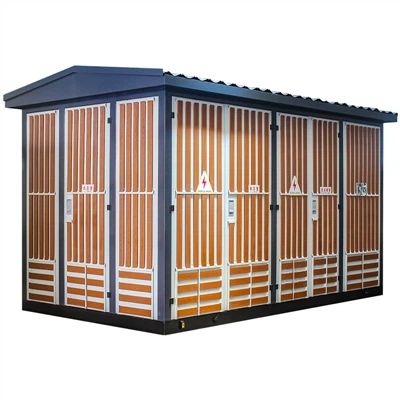
If you’re ready to chat about your project, whether it’s a small residential development, a large industrial park, or anything in between, we’re here to help. We can walk you through the right connector type for your system, share test data, and even offer on-site support if you need it. Just reach out to get the conversation started.
High-Voltage Switchgear References
- IEEE Std. 1386-2018, Standard for Metal-Enclosed Ring Main Units for Medium-Voltage Power Distribution Systems
- IEC 62271-200, High-voltage switchgear and controlgear assemblies – Part 200: AC metal-enclosed switchgear and controlgear for rated voltages above 1 kV and up to and including 52 kV
- National Electrical Manufacturers Association (NEMA) Publication PB-2, Switchgear and Controlgear Accessories for Medium-Voltage Applications, 2021
- Power Distribution Research Association (PDRA), “Cable Connection Reliability in MV Ring Main Units,” 2022
Jiangxi Yihong Electric Power Technology Co., Ltd.
Address: Chating Industrial Park, Guangxin District, Shangrao City, Jiangxi Province
E-mail: 15779933057@163.com
WebSite: https://www.yihcn.com/
