Working as an auto connector supplier, I get asked the same question at least once a week—usually over a coffee with a procurement manager, a quick chat at a trade show, or a random LinkedIn message from an engineer buried in a prototype lab: “How do you keep those small connectors from melting under the hood?” It’s a fair question. Under the hood of a modern car, every component is fighting a constant battle against heat: engines run hot, exhaust systems radiate, and the electrical systems that power everything from infotainment to ADAS generate their own significant load. For a connector, which is basically the bridge between two wires or modules, overheating isn’t just a nuisance—it can lead to corroded pins, melted insulation, intermittent connections, or even a full electrical failure. Over the past 12 years in this business, I’ve learned that heat dissipation in auto connectors isn’t about one magic trick; it’s a mix of intentional design, careful material selection, and rigorous testing that’s tailored specifically to the harsh environment a car lives in. Auto Connector
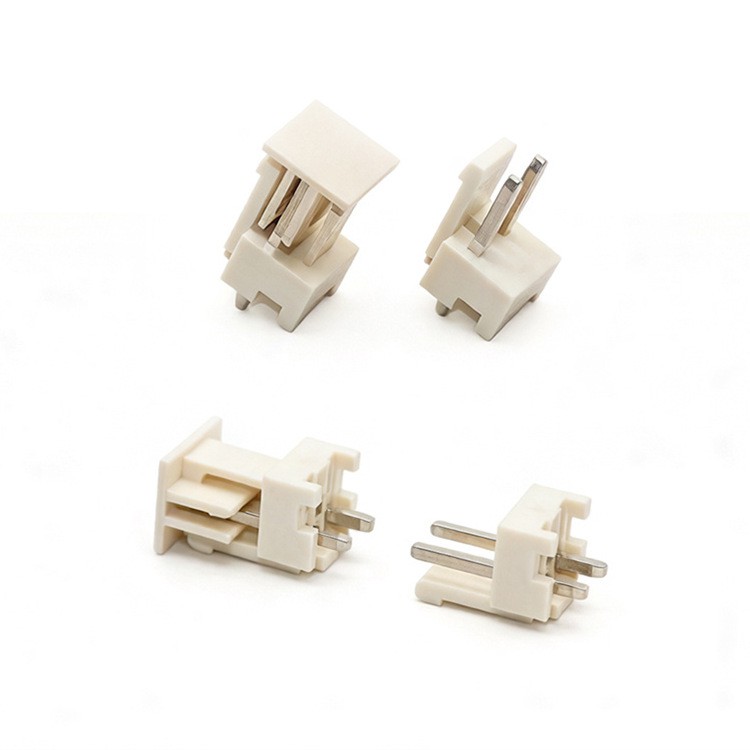
Let’s start with the basics that most people don’t think about: every time electricity flows through a connector, there’s a little bit of energy lost as heat. That’s resistive heat, right? The same thing that makes a toaster warm up. For a high-power connector, say the ones that connect to an electric vehicle’s battery or the starter motor of a gas car, that heat adds up fast. If the connector can’t get rid of that heat, it will get hotter and hotter, making the electrical resistance go up, which makes even more heat—a vicious cycle called thermal runaway. The first line of defense here is the contact interface, the metal pins and sockets that actually touch to carry current. I won’t bore you with all the metallurgy jargon, but the gist is that we choose metals that have high electrical conductivity but also good thermal conductivity. Pure copper is great for conductivity, but we often add a small amount of tin or nickel plating to the surface for corrosion resistance, because corroded metal has higher resistance and generates more heat. For connectors that handle really high current—like the ones in EV charging systems—we even use copper alloys with small amounts of chromium or zirconium, which boost both strength and thermal conductivity, so the contact points can move a little with engine vibration without losing their tight fit (a loose fit means higher resistance and more heat).
Once the heat is generated at the contact points, it has to get out of the connector, and out of the car. That’s where thermal management design comes in. One of the simplest and most effective tricks we use is ensuring the connector body is made of a material that doesn’t just hold everything together, but also conducts heat away from the pins to the surrounding area. Traditional connector bodies used to be made of plain plastic, but plain plastic is a terrible conductor of heat—it insulates, basically. These days, we use thermoplastics filled with mineral additives, like carbon fiber or glass beads, that give the plastic a lot more thermal conductivity. The filler doesn’t affect the plastic’s ability to be molded into tight, precise shapes (critical for locking pins in place and keeping water out), but it lets heat move through the body at a rate that’s 10 to 20 times higher than standard plastic. For really extreme cases, like connectors mounted right on an EV’s power inverter, we add small metal heat sinks to the connector. Not the big, bulky ones you see on a computer CPU—we make them small, lightweight, and shaped to fit exactly where the connector sits, so it touches both the connector body and the car’s frame or other metal part that can carry the heat away to cool air.
I’ve seen so many designs fail because engineers forget about the path the heat has to take once it leaves the connector. It’s not just about moving heat through the connector itself—you have to make sure it can get to a place where the heat can dissipate into the air. For example, if a connector is tucked away in a tight spot next to the engine, where there’s little airflow, we’ll design the connector to route wires that carry less current away from the high-power pins, so the heat has a clear path to the edge of the connector, where it can meet airflow. We also avoid trapping heat inside the connector body by adding small vent holes, but not just any vents—they’re shaped and sized to keep water, dirt, and salt out (salt is an even bigger enemy than heat, by the way, because it causes corrosion that raises resistance over time). Those vents let hot air escape from inside the connector, so it doesn’t build up like steam in a closed pot.
Another big factor is how connectors are routed and installed in the car, and that’s something our team works closely with automakers on during the design phase. I remember a project a few years ago with a mid-sized automaker that was having issues with a high-power connector for their new hybrid’s battery pack. At first, they mounted the connector right under the battery, where the heat from the battery itself and the exhaust pipe below it made temperatures spike to 120°C, way over the 85°C we had tested for. We didn’t have to redesign the connector—we just suggested moving it 10 centimeters away from the exhaust, on a section of the frame that got more cross airflow when the car was moving. That small change cut the connector’s operating temperature by almost 20°C, and it never had a heat-related issue after that. It’s easy to assume the connector has to be right next to the component it’s connecting, but a little bit of extra space for airflow makes a huge difference.
Testing is where we really prove that our heat dissipation solutions work, though. We don’t just run a connector under current in a lab at room temperature—we put it through the same conditions it will see in a real car. Our in-house test lab has chambers that can heat up to 150°C, simulate high humidity, and blast connectors with salt spray to mimic winter roads and coastal driving. We hook up temperature sensors directly to the pins and the connector body, run them at full current for thousands of hours, and check for things like resistance changes, plastic deformation, and even how the plating holds up. For EV connectors, we also do what’s called thermal cycle testing: heat the connector up to 120°C, then cool it down to -40°C, 1,000 times, to make sure the materials don’t expand and contract in a way that breaks the heat paths or loosens the pins. Last year, we had a connector that failed an early thermal test because the heat sink we had designed was too thin, so it didn’t draw enough heat away. We adjusted the thickness by just 1.5 millimeters, and it passed the next test with room to spare. Small changes, big results.
A lot of people in the industry are starting to talk about thermal interface materials as a new tool for heat dissipation, and we’ve started using them on some of our highest-power connectors. These are gels or pastes, similar to what you’d use on a computer CPU, that we apply between the connector body and the heat sink, or between the connector and the car’s frame. They fill in all the tiny gaps between two surfaces that regular contact can’t, so heat can flow more easily between them. The key here is choosing a thermal interface material that’s stable under automotive conditions—some gels dry out after a few hundred hours at high temperature, which makes them useless. We use ones that are rated for 1,000 hours at 150°C, so they last as long as the car itself.
I’d be lying if I said we don’t face new challenges as cars get more advanced. Electric vehicles today have batteries that can carry hundreds of kilowatts of power, which means their connectors handle currents of 300 amps or more, compared to 10 amps or less for older gas car connectors. That’s 30 times the current, so heat becomes a way bigger problem. We’ve had to adjust our contact designs to be larger, use better copper alloys, and add more aggressive heat sink systems. Even autonomous vehicles, which have dozens of sensors and high-speed data connectors, generate heat from the processing units they’re connected to, so those small, delicate connectors need just as much attention to heat management as the big high-power ones. A few months ago, we designed a connector for a lidar system that has to stay at a stable temperature within 5 degrees Celsius, even when the car is sitting in 45-degree desert sun. We used a combination of a high-thermal-conductivity plastic body and a thin aluminum heat sink mounted to the car’s roof, where airflow is constant, and it’s worked perfectly in field tests.
The biggest mistake I see people make when thinking about auto connector heat is treating it as an afterthought. Too many engineers will design the electrical system, pick out the wires and modules, and then just grab a random connector to connect them, without thinking about heat. That’s how you end up with connectors that fail, cars that get recalled, and warranty costs that go through the roof. For us, heat dissipation is baked into every connector we design, from the initial sketch to the final testing. It’s not an extra feature; it’s part of making a connector that’s reliable over 15 years and 250,000 kilometers, which is the standard most automakers hold to these days.
At the end of the day, auto connectors are small, unassuming parts, but they’re critical to a car’s performance and safety. A bad heat design can turn a minor electrical issue into something that puts passengers at risk, especially in EVs where the high-voltage systems need to be controlled perfectly. That’s why we don’t cut corners on heat dissipation: we use the right materials, test in real-world conditions, and work side-by-side with our customers to make sure their connectors not only work, but work well, no matter what the car is asked to do.
If you’re an engineer or procurement manager working on a new vehicle project—whether it’s a gas car, hybrid, or EV—and you’re worried about heat affecting your connectors, we’re here to help. We understand that every application is different, and we can customize connector designs, materials, and thermal management solutions to fit your specific needs. We don’t believe in one-size-fits-all, and we’re ready to work with you to solve whatever heat-related challenges you’re facing. Reach out to our team to start a conversation about your project, and let’s make sure your connectors stay cool, reliable, and ready for whatever the road brings.
Automotive Connector References
- Bosch Automotive Electrics and Automotive Electronics, 7th Edition, SAE International, 2020.
- Thermal Management of Electrical Connectors, Automotive Engineering International, Vol. 28, No. 4, 2021.
- SAE J1128: Test Standard for Low-Voltage Electrical Cable and Connectors, Society of Automotive Engineers, 2022.
- Electric Vehicle High-Voltage Connector Design Guidelines, International Council on Electrical Engineering, 2023.
- Materials for Thermal Management in Automotive Components, Journal of Automotive Materials and Manufacturing, Vol. 11, No. 2, 2022.
Wenzhou JKUN Connector Co., Ltd.
As one of the most professional auto connector manufacturers and suppliers in China, we’re featured by quality products and low price. Please rest assured to wholesale bulk customized auto connector from our factory. For quotation and free sample, contact us now.
Address: No.2667, Ningkang East Road, Yueqing City, Zhejiang Province, China
E-mail: sales@cnjkun.com
WebSite: https://www.jkunjcj.com/
