Hey everyone, if you’ve ever dipped your toes into the plastic packaging, construction core materials, or even automotive interior parts space, you’ve probably run into PP hollow sheets—those lightweight, rigid, corrugated panels that feel like a step up from regular cardboard but way more durable. As someone who’s been deep in the PP hollow sheet extrusion line game for years, I can’t tell you how many times customers ask me, “What’s the big deal about the cutting system? I thought extrusion lines just make plastic, so cutting’s a afterthought, right?” Spoiler alert: if you skip nailing the cutting system, you’re basically wasting all the money you spent on the extruder, die head, and rollers. Let’s break this down like we’re geeking out over a common project, not a 100-page technical manual. PP Hollow Sheet Extrusion Line
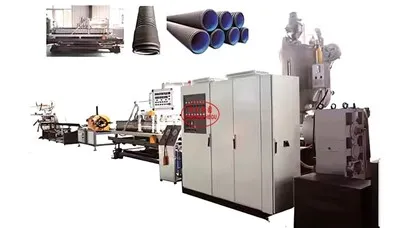
First off, let’s ground this: the PP hollow sheet extrusion line’s cutting system isn’t just one hunk of metal that chops the sheet into bits. It’s the final stop before your product goes to the warehouse, the one that turns a long, continuous 100+ meter web of fresh PP into the clean, accurate parts your customer actually wants. If it cuts too early, the sheet’s still hot and warps—ruins the flatness. Cut too late, and it’s cooled so much it’s brittle, so you get ragged edges that no packaging company will accept. And forget a lopsided cut; a 2mm misalignment on a 1.2m wide sheet? That’s just scrap, not product.
So, let’s start with what this system interacts with, because you can’t design a cutting system in a vacuum. The PP comes out of the extrusion die at like 180-220°C, goes through a series of calibrating rollers that set its thickness (usually 2mm to 10mm, sometimes thicker for structural use) and corrugated pattern, then a cooling ring or air blower drops it to like 40-60°C before it hits the cutting station. The cutting system has to sync perfectly with the line’s speed—we’re talking precision cuts every 0.5 seconds if the line’s running at 50m per minute. Mess up that sync, and you either cut the sheet mid-flight (yep, I’ve seen that) or have to stop the entire line to fix it, which kills productivity fast.
Now, the core components of this cutting system—let’s make this real, not jargon-heavy. First, there’s the sheet alignment station, right? Before anything cuts, the sheet can drift left or right on the rollers from tiny variations in die pressure. We have edge sensors (they’re like little eyes that read the sheet’s edges) that send signals to a tiny motor that shifts the cutting assembly left or right by a fraction of a millimeter to keep it dead center. No alignment, and your cuts will be uneven widths—your customer ordered 1200mm wide sheets, they’re going to send them back. Been there, fixed that, learned to never skip the alignment sensors.
Next, the cutting unit itself. This is the heart, and here’s where most new line buyers go cheap, only to regret it. There are two main types, and each has its place. First, the rotary cutting system—this is the workhorse for high-volume lines, which is what most of our customers run. It’s two cylindrical knives (upper and lower) spinning at exactly the same speed as the sheet. The gap between the knives is super precise, like 0.1mm max—too wide, and you get a ragged, torn edge; too narrow, and the knives chip or crack, which means downtime for blade replacement. For PP, which is a semi-crystalline plastic, you don’t want a shearing action that’s too harsh—so the rotary knives are usually sharpened to a micro-bevel, not a razor edge, to avoid leaving burrs.
The other type is the guillotine cutting system, which is usually for lower-volume lines or when you need custom lengths. It’s a big blade that drops straight down like a guillotine, cutting the entire width of the sheet at once. But here’s the thing with guillotines: the blade has to be perfectly sharp, and the sheet has to be completely stationary when it cuts, which means the line has to slow down or stop briefly every time you cut. That’s fine for small batches, but if you’re running 1000 sheets an hour, you’re losing way too much time. I’ve had a customer switch from a guillotine to rotary system and boost their output by 30% overnight—game changer.
Wait, and you can’t forget the edge trimmers. The PP sheet that comes out of the die has these tiny excess “flash” edges along the sides, right? Those are thinner, ragged, and would ruin the sheet’s edge quality. So most cutting systems have a pair of side trim knives that cut those flash edges off before the main cross cut. That trim material? It’s all recycled right back into the extruder, so nothing goes to waste—nice little closed loop that saves customers money on raw material.
Now, the unsung hero of the cutting system: the control panel. I know, it’s just a screen with numbers, but it’s the brains that makes everything work. You input the length you want your sheets to be (say, 1000mm for a box liner), and the control system tracks how fast the sheet is moving with an encoder (that’s just a little wheel that rolls on the sheet and counts rotations to measure distance). When the sheet hits exactly 1000mm, it triggers the rotary knives to cut. You can adjust the speed of the knives in real time, tweak the edge alignment, even set different lengths for different parts of the run—like if a customer wants some sheets at 800mm and some at 1200mm in the same batch, you don’t have to stop the line to change anything. That’s the kind of flexibility that keeps our customers coming back.
Let’s talk common mistakes people make with these systems, because I’ve seen them all. First, buying cheap knives. A good rotary blade for PP is made of high-speed steel or carbide, which can last months even on 24/7 runs. A cheap blade? It’ll dull in a week, leaving burrs that make the sheets unfit for packaging, and you’re wasting half a day replacing blades. Second, not calibrating the gap between the upper and lower knives. Too big, and you get that ragged edge; too small, and the knives bind, stall the line, and maybe even break the drive motor. Third, ignoring maintenance. The alignment sensors get covered in plastic dust, the encoder wheel gets gunked up, the knife edges get dull—small, regular checks (10 minutes a shift) prevent big, expensive breakdowns. I had a customer who skipped monthly calibration, and his line was producing 15% scrap every day—once he fixed the cutting system, that scrap was zero.
And here’s something a lot of people don’t realize: the cutting system isn’t just about cutting. It’s about post-cut handling too. After you cut the sheets, they need to be stacked neatly, right? If the cutting system spits sheets out at an angle, they’ll stack crooked, take up more space in the warehouse, and be a pain to load onto trucks. That’s why good cutting systems have a discharge conveyor that’s synchronized to the cut length, so sheets lay flat and aligned, ready for packing. No one wants to handle a pile of misaligned PP sheets for hours—trust me.
Now, let’s tie this all together, because why does this matter for someone who’s looking to invest in a PP hollow sheet line? If you’re a packaging company that makes fruit trays or shipping crates, your sheets need to be consistent, no ragged edges, precise lengths—otherwise your boxes don’t close right, or your trays leak. If you’re a construction company using PP sheets for formwork, you need them straight and flat, because a warped sheet will mess up concrete pouring. The cutting system is what delivers that consistency.
I’ve worked with hundreds of customers over the years, and the biggest win is when someone realizes the cutting system isn’t an afterthought. It’s not something you can skimp on to save a few bucks upfront. A quality cutting system will pay for itself in less than a year from reduced scrap, higher output, and less downtime. A cheap cutting system? It’ll end up costing you more in repairs, scrap, and lost production than the extra cost of a good system.
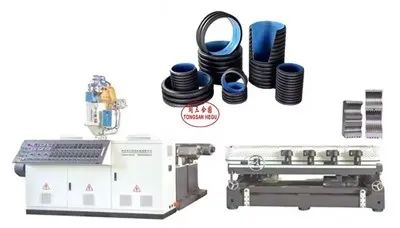
If you’re in the market for a PP hollow sheet extrusion line, don’t hesitate to reach out to talk through your specific needs—whether you’re running small batches for custom parts, high-volume for packaging, or need something for structural applications. We’ll walk you through exactly what kind of cutting system works for your output, desired sheet size, and budget, no jargon, no pressure. Just honest advice from someone who’s been in this space long enough to know what works and what doesn’t.
Single Wall Corrugated Pipe Machine Reference
- Rosato, D. V., & Rosato, M. G. (2000). Extrusion Processes for Plastics. Hanser Gardner Publications.
- Harper, C. A. (2002). Handbook of Plastics, Elastomers, and Composites. McGraw-Hill.
- Plastics Industry Association. (2021). PP Hollow Sheet Manufacturing Guide. Plastics Industry Association.
Qingdao Tongsanhegu Plastic Machinery Manufacturing Co., Ltd.
With abundant experience, we are one of the most reliable pp hollow sheet extrusion line manufacturers and suppliers in China. We warmly welcome you to buy durable pp hollow sheet extrusion line for sale here from our factory. Quality products and reasonable price are available.
Address: West of Xixinzhi Village, Sanlihe District Jiaozhou, Qingdao City, Shandong Province, China
E-mail: info@tongsanhegu.com
WebSite: https://www.tongsanhegumachine.com/
