Hey folks, let’s cut to the chase—if you’re here, it’s probably because your fridge just died after a brownout fried its control board, your workshop’s CNC machine is acting glitchy every time the AC kicks on, or you’ve been Googling “reliable voltage stabilizer” for the third night in a row and still can’t figure out who to trust. Been there, spent countless hours digging through sketchy Amazon reviews, half-baked Reddit threads, and “bargain” Facebook Marketplace listings that turned out to be just empty boxes labeled with a fancy logo. I get it—voltage issues aren’t just annoying, they’re straight-up expensive. Replacing a ruined appliance or fixing a commercial machine that’s out for a week? That’s not pocket change, and no one wants to waste their cash on a stabilizer that dies after two months. Votage Stabilizer
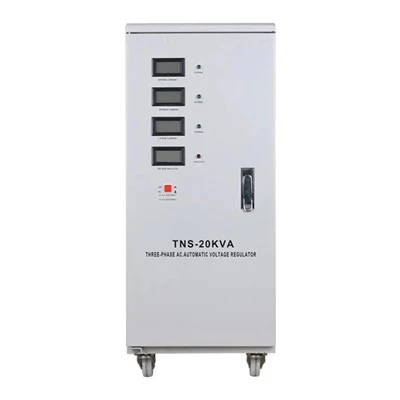
Full transparency here: I’m not some big corporate suit hiding behind a website with a 10-step menu. I’ve been working in voltage stabilization for over a decade, and lately, I’ve been chatting with tons of people—small business owners, homeowners, even a few field techs—who’ve gotten burned by cheap stabilizers from no-name brands. They pull power from random overseas factories, use flimsy parts, and their “5-year warranty” is just a dead link on their contact page. So let’s break this down like we’re hanging out at a coffee shop, no jargon, no hype—where do you actually buy a reliable voltage stabilizer, and how do you not get scammed?
First up: Forget the random market stalls or the “discount” appliance stores that sell stabilizers as an afterthought. I’ve seen these guys pass off auto-transformer stabilizers (the ones that use moving parts, so they wear out fast) for heavy-duty line-interactive models that last. Wait—what’s the difference? Let’s keep it simple: auto stabilizers work by physically sliding a contact along a coil. That means after a couple thousand adjustments, the contact wears down, and suddenly your voltage jumps too high or too low. Line-interactive stabilizers use solid-state relays—no moving parts, so they handle 100,000+ adjustments without breaking a sweat. That’s the difference between a stabilizer that lasts 2 years and one that lasts 15. So when you’re shopping, don’t just ask “what size is this?” ask “is this solid-state line-interactive?” If the sales rep can’t answer that, walk away. Even if it’s $50 cheaper.
Next, let’s talk about where to shop, split into two groups: homeowners/renters and small-to-medium business owners or industrial users. For homeowners, a lot of people automatically hit Amazon. But here’s the tea: Amazon’s got great stuff, but it’s also full of counterfeit stabilizers that mislabel their voltage range. I’ve had a customer tell me she bought a 2000VA stabilizer on Amazon that was actually only 1200VA—her washing machine kept tripping it, and the seller just said “we don’t cover that” in the fine print. If you do go Amazon, look for brands that have their own service centers in your country, not just a warehouse. Like, if you’re in the US, a brand that can send a replacement part in 2 days, not 2 weeks from China. Also, skip the “no-name” Amazon brands—stick to ones that specialize solely in voltage stabilization, not 100 other products like laptop chargers and phone cases. For renters, you might not need a huge whole-house unit—we make compact, plug-and-play ones for 110V appliances (fridges, TVs, laptops) that you can take with you when you move, and they’re way more reliable than the $30 ones at the local hardware store.
Now for small business owners—this is where the stakes are higher. If you run a bakery, your oven and mixing machine? A voltage spike could ruin a whole batch of dough, not to mention the machine itself. If you’re a contractor with power tools on a job site? Fluctuating voltage makes saws overheat and drills lose torque. A lot of business owners make the mistake of buying a cheap bulk stabilizer from a wholesale site like Alibaba, but again—no support, no testing, and half the time the unit’s rated for way less than it says. For commercial and industrial needs, the best bet is a specialized electrical supplier that works directly with stabilizer manufacturers (hi, that’s us!) because those suppliers do pre-shipment testing. Wait—what’s pre-shipment testing? Every single unit we sell gets run through 100+ voltage cycles, tested for overload, and checked for efficiency before it leaves our warehouse. A lot of cheap brands skip that—they just pack a box and ship it. So when you’re talking to a supplier, ask if they offer pre-shipment testing. If not, keep looking. Also, for industrial stuff, you’ll need stabilizers that can handle three-phase power—make sure the unit is rated for both single and three-phase if you have heavy machinery, because mixing those up is a quick way to burn out a whole system.
Wait, let’s also talk about red flags to watch for—this is stuff I’ve seen a hundred times, so trust me on this. First, prices that are way too low. A reliable solid-state line-interactive stabilizer for a home fridge isn’t going to be $20. That’s just not possible—parts cost money. If it’s priced 30% lower than every other similar unit, it’s probably a used unit, a refurbished one with cheap parts, or a counterfeit that won’t work when you need it. Second, no warranty. Any real stabilizer brand will offer at least a 1-year warranty, and many offer 5 or 10 years for heavy-duty units. If the “warranty” is just a line that says “contact seller for details” and the seller doesn’t have a working phone number or local address, that’s a scam. Third, vague specs. If a sales rep can’t tell you exactly how much voltage it can correct (like, does it handle 90V-270V input to get 110V/220V output?) or its efficiency rating, walk away. Those are non-negotiable numbers, not “trade secrets.”
Another thing a lot of people miss: support. What happens if your stabilizer breaks after 6 months? Can you call someone and get a replacement part, or do you have to ship the whole unit back to China and wait 2 months? We have a team of techs on call 5 days a week—if you have an issue, you can call us, and if it’s a minor fix, we’ll walk you through it over the phone, no need to ship anything. If it’s a part that needs replacing, we ship it to you for free under warranty, no questions asked. No holding you responsible for shipping costs, no making you fill out 10 forms. That’s the kind of support you can’t get from a random Amazon seller or a market stall.
Now, let’s circle back to why this matters so much lately. Power grids in a lot of places are getting more unstable—more people using AC, more heatwaves straining the grid, brownouts and spikes happening more often than they did 10 years ago. A reliable stabilizer isn’t a luxury anymore, it’s an investment in protecting your stuff. I’ve had customers come to us after their cheap stabilizer failed during a hurricane—their generator was kicking on, but the voltage spike still fried their entire home’s wiring. A good stabilizer would have absorbed that spike like it was nothing.
So, putting this all together: here’s your game plan for buying a reliable voltage stabilizer. First, figure out what you need—how many appliances/machines you’re powering, what voltage your grid uses (110V or 220V), and if you need single or three-phase. Second, skip the super cheap options, skip no-name brands, and prioritize solid-state line-interactive units. Third, shop with suppliers that offer local support, clear warranties, and pre-shipment testing—whether that’s a specialized electrical distributor, a reputable online brand with local service, or a manufacturer that works directly with small buyers (again, that’s us).
Wait, I should be clear—we’re not just a big faceless supplier. We’re the team that answers calls at 2pm on a Saturday when someone’s stabilizer failed right before a holiday weekend. We don’t do minimum order quantities for small businesses—if you need one unit for your home workshop or 10 for a new café, we work with you. We’ve tested every stabilizer we sell, so we stand behind them. If you’re tired of wasting money on stabilizers that die, if you’re dealing with constant voltage issues at home or work, you don’t have to keep Googling. We can walk you through sizing the right unit, answer any questions you have about specs or warranties, and make sure you get a stabilizer that actually works when you need it.
Just to wrap this up without all the extra fluff: buying a reliable voltage stabilizer isn’t about scrolling through endless listings or picking the cheapest option. It’s about knowing what to look for, who to buy from, and making sure the thing you’re investing in is built to last. If you’re ready to stop stressing about voltage spikes and brownouts, and get a stabilizer that’s actually worth your money, we can connect. We don’t do pushy sales tactics, we don’t hide fine print, and we definitely don’t sell anything that we wouldn’t use in our own workshop.
Forklift Charger References:
Electrical Safety Foundation International. Voltage Regulation for Residential and Commercial Applications. 2022.
Institute of Electrical and Electronics Engineers. Solid-State Voltage Stabilizer Performance Standards. 2021.
National Electrical Manufacturers Association. Line-Interactive Voltage Stabilizer Guidelines. 2020.
Huizhou Qiangfeng Power Technology Co., Ltd.
As one of the most professional votage stabilizer manufacturers and suppliers in China, our products have good reputation in the market. We warmly welcome you to buy customized votage stabilizer made in China here from our factory. If you have any enquiry about quotation, please feel free to email us.
Address: No.28, Hu’ao Avenue, Shiwan Town, Boluo County, Huizhou City, Guangdong Province
E-mail: Komco@Jinlidianqi.cn
WebSite: https://www.qfautobatterychargers.com/
